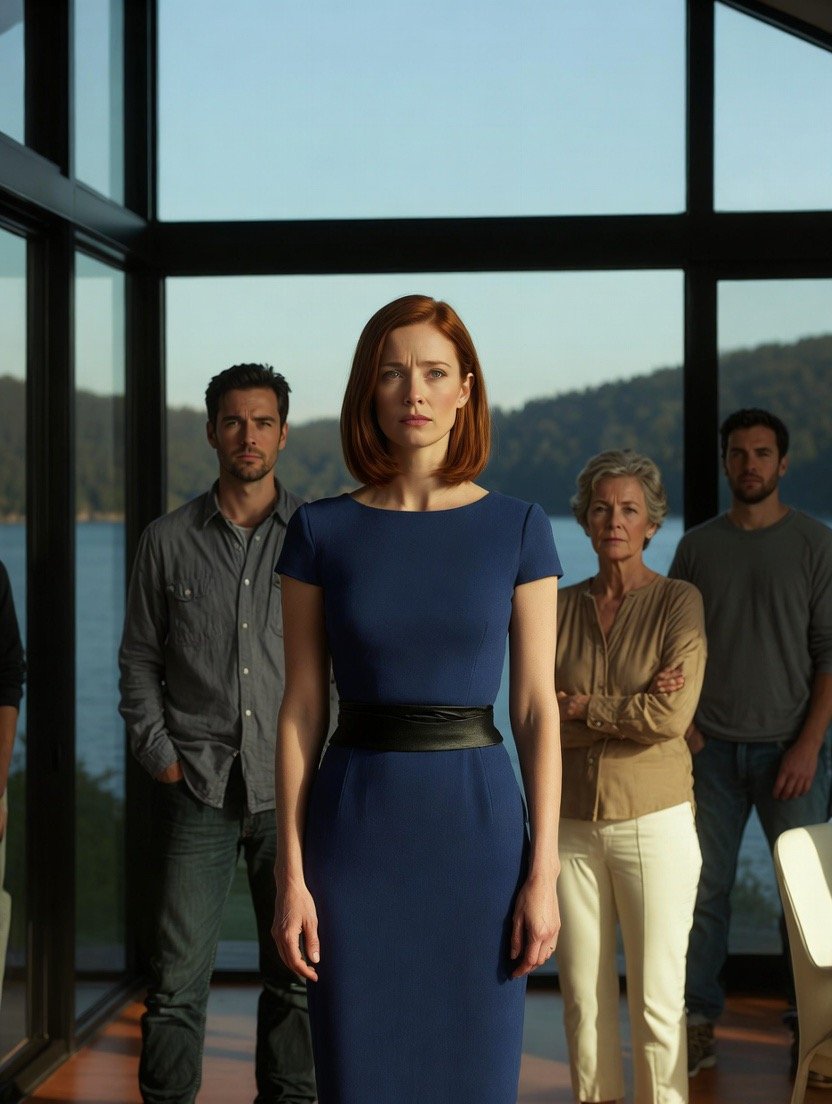
The morning after the confrontation, she asked if I would walk with her around the neighborhood. “I don’t even know where to start,” she said as we strolled past waterfront mansions. “Sorry, seems inadequate.”
“Why did you do it?” I asked.
The question had haunted me for years. She was quiet for a long moment. “At first, it was just flattering to have someone like Ethan interested in me.
Mom kept saying what a good match we’d be. How much more I deserved someone successful than you did.”
She glanced at me. “I know how awful that sounds now.”
“And later when you knew how much it hurt me?”
“By then, I was trapped in mom’s narrative.
If what we’d done wasn’t justified, then I was just terrible. It was easier to believe you’d be fine, that you didn’t need Ethan like I did.”
She stopped walking. “The truth is, I was weak.
I let mom make my decisions because taking responsibility for my own life was scary.”
Her honesty surprised me. “When did that change?”
“Watching you yesterday, successful, confident, genuinely happy with Daniel. It made me see what taking control of your own life actually looks like.”
She sighed.
“I’m 35, living in our parents’ guest house in a failing marriage with no career or purpose. Mom still buys my clothes and tells me how to wear my hair.”
I felt an unexpected pang of empathy. While my mother had betrayed me, she had infantilized Vanessa, keeping her dependent and diminished.
“It’s not too late to change that,” I said carefully. “How?”
The desperation in her voice was palpable. I considered my response.
“Start with something small but meaningful. Get a job. Any job that’s yours alone.
Open a bank account and only your name. Build from there.”
Over the following days, we had several similar conversations. I didn’t offer forgiveness.
That would take time. But I did offer perspective and practical advice. To my surprise, Vanessa listened.
My relationship with my mother remained the most complicated. After the confrontation, she retreated into cool politeness, maintaining the fiction that she had acted in everyone’s best interests. On their final evening with us, however, as Daniel and my father discussed baseball in the living room and Vanessa helped our housekeeper with dishes, my mother found me alone on the deck.
“You’ve done well for yourself,” she said, an admission that clearly cost her. “Better than I expected.”
“Thank you,” I replied, not taking the bait of her qualified praise. “I still believe I did what was necessary at the time,” she continued.
“But I recognize that my methods were perhaps overly controlling.”
Coming from my mother, this was the closest thing to an apology I was likely to receive. “I won’t pretend what you did didn’t hurt me deeply,” I said. “But I’ve built a good life.
A life that makes me happy.”
She nodded, looking out at the water rather than at me. “Your father wants us to seek counseling. Family therapy, he calls it.”
I couldn’t hide my surprise.
“And you agreed?”
“It’s important to him.”
She smoothed her slacks, a nervous gesture I remembered from childhood. “Would you would you consider joining us occasionally? Not regularly, of course.
I know you’re busy.”
The request, halting and uncomfortable, revealed vulnerability I’d never seen in her before. “I’ll think about it,” I promised, not ready to commit, but unwilling to refuse outright. She accepted this with a nod, and we stood in silence watching the sunset.
Two women with a broken past and an uncertain future, but perhaps a sliver of possibility between us. The most surprising conversation came from Ethan, who asked to speak with me privately before their departure. Daniel raised an eyebrow when I mentioned the request.
“Are you comfortable with that?”
“Yes,” I assured him. “There’s nothing he could say that would affect us.”
Ethan and I sat in the garden, the space between us filled with history and regret. “I wanted to thank you,” he began, which was not what I expected.
“For what?”
“For not hating me,” he said simply. “You would be justified.”
I considered this. “Hate requires energy.
I’d rather direct it elsewhere. Besides, I’ve come to understand how thoroughly you were manipulated.”
“That doesn’t excuse my choices,” he said, showing more self-awareness than I remembered. “I betrayed your trust.
I let myself be convinced that what we had wasn’t real or valuable.”
“Seeing you with Daniel, the way he looks at you, the respect between you, it’s made me realize what I gave up.”
I tensed, worried this was heading toward an inappropriate confession. He noticed and quickly added, “I’m not saying this to disrupt your life or suggest anything inappropriate. I just… I want you to know that I recognize what I lost, the person I hurt.
My biggest regret isn’t the failed startup or the career setbacks. It’s that I let someone else define what should have mattered most to me.”
His sincerity seemed genuine, his regret palpable. “What will you do now?” I asked.
He sighed. “Start over, I think. Vanessa and I have been pretending for years.
Neither of us is happy.”
“I’m sorry to hear that,” I said, and meant it. Despite everything, I didn’t wish them misery. “Don’t be.
It’s time for both of us to face reality and make better choices.”
He stood to leave, then paused. “You deserved better, Clara. I’m glad you found it.”
After they left, our house felt simultaneously emptier and lighter.
The confrontation had been painful, but necessary, clearing away festering wounds and replacing them with cleareyed understanding. I couldn’t change the past, but I could choose how it affected my future. In the months that followed, we established new patterns of connection.
My father and I spoke weekly by phone and video chat as his condition deteriorated. I flew to Boston twice to spend time with him. Difficult visits that nevertheless brought peace to both of us.
When he passed away eight months after our reunion, I stood beside my mother and sister at his funeral. United in grief, if not in full reconciliation. After my father’s death, Vanessa surprised everyone by following through on her promises to change.
She filed for divorce from Ethan, moved into her own apartment, and found work as an administrative assistant at a community college. The position was modest, but represented independence she’d never known. We maintained cautious but increasingly warm contact, rebuilding a relationship that had been poisoned since childhood.
My mother remained my mother, critical, controlling, resistant to change. But our confrontation had shifted the power dynamic permanently. She could no longer rewrite history or manipulate me.
I engaged with her on my terms or not at all. It wasn’t a warm relationship, but it was an honest one. With my family receding to their appropriate place in my life rather than dominating it, Daniel and I focused on our future.
Our company continued to thrive, expanding internationally and developing new security protocols that became industry standards. Two years after the family confrontation, we welcomed our daughter, Emma, followed 18 months later by our son, Noah. Becoming parents ourselves cast my family history into sharper relief.
As I held my children, I made silent promises never to play favorites, to see and celebrate them for exactly who they were, to let them chart their own courses with support rather than control. Watching Daniel with our children, patient, attentive, delighting in their uniqueness, I often reflected on how completely my life had transformed from what it might have been. Had my mother not orchestrated that betrayal, had Ethan and I married as once planned, would I have found this level of fulfillment?
The painful truth was that their betrayal, while devastating, had ultimately freed me to build something far better than I might have otherwise. This wasn’t about forgiving the unforgivable or finding silver linings in trauma. It was about recognizing that our worst moments don’t define us unless we let them.
That sometimes the path forward requires leaving behind not just people who hurt us, but also dreams and expectations that no longer serve us. The ultimate victory wasn’t financial success or professional recognition, though those were gratifying. It wasn’t even the beautiful family Daniel and I created, precious as they were.
The victory was internal, the knowledge that I had rebuilt myself from broken pieces into someone stronger, wiser, and more compassionate than before. On my daughter’s third birthday, as our home filled with friends and laughter, I caught sight of myself in a window reflection. The woman looking back bore little resemblance to the devastated girl who had once fled her family’s betrayal.