Bennett, when was the last time your parents contacted you before your grandfather’s death?”
I kept my voice steady. “Eight months ago, Your Honor.
My mother called asking if I could lend them money for what she described as a ‘business opportunity.’ I declined. Before that, it was about fourteen months, when my father needed a reference for a job application.
Before that, I can’t remember.”
“And during your entire childhood and young adulthood, who was your primary source of financial and emotional support?”
“My grandfather, Richard Bennett.
He paid for my education, attended my school events, provided guidance and encouragement. My parents…” I paused, choosing my words carefully. “They provided the legal minimum required.
Food, shelter, clothing.
But beyond that, my grandfather was the only family member who was actively involved in my life.”
Judge Patterson made a note. “I see.
And yet your parents are now claiming deep concern about your ability to manage money.” He looked at their attorney. “Counselor, I’m going to give you an opportunity to present your case.
But I’m going to be frank—this is not looking good for your clients.”
My parents’ attorney stood, clearly scrambling.
He presented their case as best he could—arguing that I was young, inexperienced with wealth, that the inheritance was large enough to warrant oversight, that my parents as legal next of kin had a responsibility to protect family assets. He tried to paint me as isolated, without proper support systems, potentially vulnerable to scams or poor investment decisions. He suggested that my company—which he clearly knew nothing about until ten minutes ago—might be inflated in value, might be unstable, might not represent true financial acumen.
It was a weak case, and he knew it.
You could see it in his body language, in the way he kept glancing back at my parents with barely concealed frustration. Jennifer’s response was devastating in its simplicity.
She presented financial records showing that I’d been completely self-sufficient since graduating college, paying my own rent, managing my own bills, building savings. She presented documentation of Bennett Analytics—incorporation papers, tax returns, employee records, client contracts, funding agreements.
She presented statements from my business partners, my accountant, my bank, all testifying to my financial responsibility and business acumen.
And then she presented something else—Richard’s will itself, with a clause I’d forgotten about. A clause that specifically stated:
“Should any member of my family contest this will or attempt to claim my estate through legal action, they shall be permanently barred from any future inheritance or benefit from my estate, and Lucas Bennett shall receive an additional one million dollars from my charitable foundation to aid in his legal defense.”
Richard had anticipated exactly this scenario. He’d known my parents well enough to predict they’d try something, and he’d built in protection.
The courtroom was completely silent as Jennifer read that clause aloud.
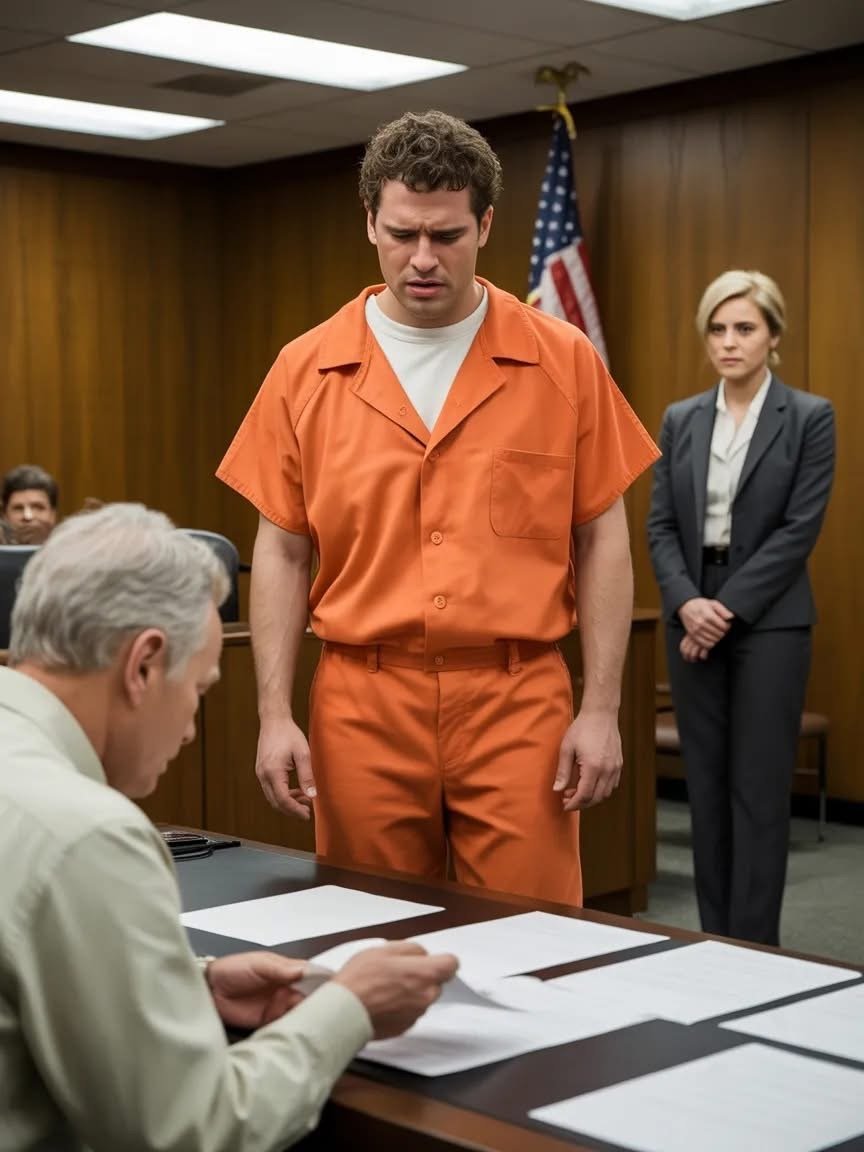
Judge Patterson removed his glasses, rubbed the bridge of his nose, and looked at my parents with something approaching pity. “Let me make sure I understand the situation fully.
Your father—Mr. Richard Bennett—specifically left his estate to his grandson, who is demonstrably capable of managing significant wealth through his successful business.
He included language specifically discouraging legal challenges.
You proceeded to file such a challenge anyway, falsely claiming your son was incompetent, despite having virtually no relationship with him for the better part of a decade. Is that an accurate summary?”
Neither of my parents answered. Claire was staring at the table.
Greg’s face had gone pale.
“Your Honor,” their attorney said weakly, “my clients acted in what they believed to be good faith—”
“Your clients,” Judge Patterson interrupted, “acted in transparent self-interest while lying about their son’s capabilities and their relationship with him. This case is not only without merit, it’s actually offensive.” He put his glasses back on.
“Motion to dismiss this case is granted. The will of Richard Bennett stands as written.
Lucas Bennett retains full control of his inheritance with no restrictions or oversight.”
He wasn’t finished.
“Furthermore, I’m going to say something I rarely say in cases like this. Mr. and Mrs.
Bennett, you should be ashamed.
Your father—” he pointed at Greg, “—clearly understood something about character and worth that you’ve failed to grasp. He built a legacy and left it to someone he trusted.
Instead of respecting that choice, you’ve attempted to manipulate the legal system for personal gain while actively disparaging your own son.”
Claire’s voice was shrill, desperate. “This isn’t fair!
We gave him life!
We raised him! We deserve something!”
Judge Patterson’s gavel came down hard enough to make several people jump. “Mrs.
Bennett, you’ll be silent, or I’ll hold you in contempt.
You didn’t raise him—by your own admission and all available evidence, you provided the legal minimum while his grandfather provided actual parenting. You don’t deserve anything except the consequences of your own choices.”
He gathered his papers.
“This case is dismissed with prejudice, meaning it cannot be refiled. Mr.
and Mrs.
Bennett, I’m formally warning you that any further attempts to claim this estate, harass your son, or contest your father’s will may result in criminal charges for elder abuse, fraud, and vexatious litigation. Do you understand?”
Greg nodded stiffly. Claire looked like she wanted to argue but her attorney grabbed her arm, shaking his head sharply.
“Good.
We’re adjourned.”
The gavel came down with a finality that seemed to echo long after the sound faded. I sat there for a moment, not quite believing it was over.
Jennifer touched my shoulder gently. “Lucas.
We won.
Completely.”
I looked at her, then at my parents who were gathering their things in furious silence, refusing to meet my eyes. Their attorney was already distancing himself, probably calculating how quickly he could drop them as clients. Outside the courtroom, in the marble hallway with afternoon sun streaming through tall windows, Jennifer turned to me with a mixture of exasperation and respect.
“A twelve-million-dollar company, Lucas?
You didn’t think that was relevant information to share with your attorney?”
“I didn’t think it would come up,” I said honestly. “I thought this was just about the inheritance.”
“Your parents claimed you were incompetent!
Your entire business is proof that you’re extremely competent!”
“I know. I just… I don’t like to talk about it.
I built it because I wanted to build something meaningful, not because I wanted to prove anything to my parents.
They don’t know about it because I don’t want them to. The moment they find out I have money or success, they’ll try to take it. Just like they tried to take Grandpa’s inheritance.”
Jennifer’s expression softened.
“That’s a very lonely way to live.”
“Maybe.
But it’s honest.” I looked back toward the courtroom. “My grandfather taught me that success isn’t about what you show people.
It’s about what you build when nobody’s watching. I built Bennett Analytics because I wanted to solve problems and help businesses grow.
I didn’t need an audience.
I especially didn’t need an audience that only cares when there’s profit in it.”
Over the following weeks, the story made its way through Chicago’s business circles. The lawsuit became something of a cautionary tale—greedy parents trying to claim a fortune from a son they’d neglected, not realizing he’d already built his own fortune through hard work and intelligence. Several investors who’d been considering backing Bennett Analytics’ expansion reached out, impressed by how I’d handled the situation with dignity.
But the most meaningful response came from my employees.
When word got around about what had happened, they organized a lunch in the office where our CTO, my friend Marcus from college, stood up and said, “We always knew Lucas was brilliant and determined. Now everyone else knows it too.
To a boss who builds something worth building.”
The toast made me uncomfortable in the best way. Because that’s what it was really about—not the inheritance, not the lawsuit, but the fact that I’d chosen to build something meaningful with my life instead of waiting for handouts or taking shortcuts.
Three months after the trial, while cleaning out my grandfather’s house to prepare it for sale, I found a letter tucked into his desk drawer.
It was addressed to me in his familiar handwriting, dated two months before he died. Lucas,
By the time you read this, I’ll be gone. I want you to know something that I never quite found the words to say while I was alive: watching you grow into the man you’ve become has been the greatest joy of my life.