Then I turned off my phone, started the engine, and drove home to Brooklyn. When I turned my phone back on forty minutes later, there were twelve missed calls. By the time I set it on my kitchen counter, it was 29.
By the time I finished making tea, it was 56. Fifty-six calls. They hadn’t called me fifty-six times in the last 23 years combined.
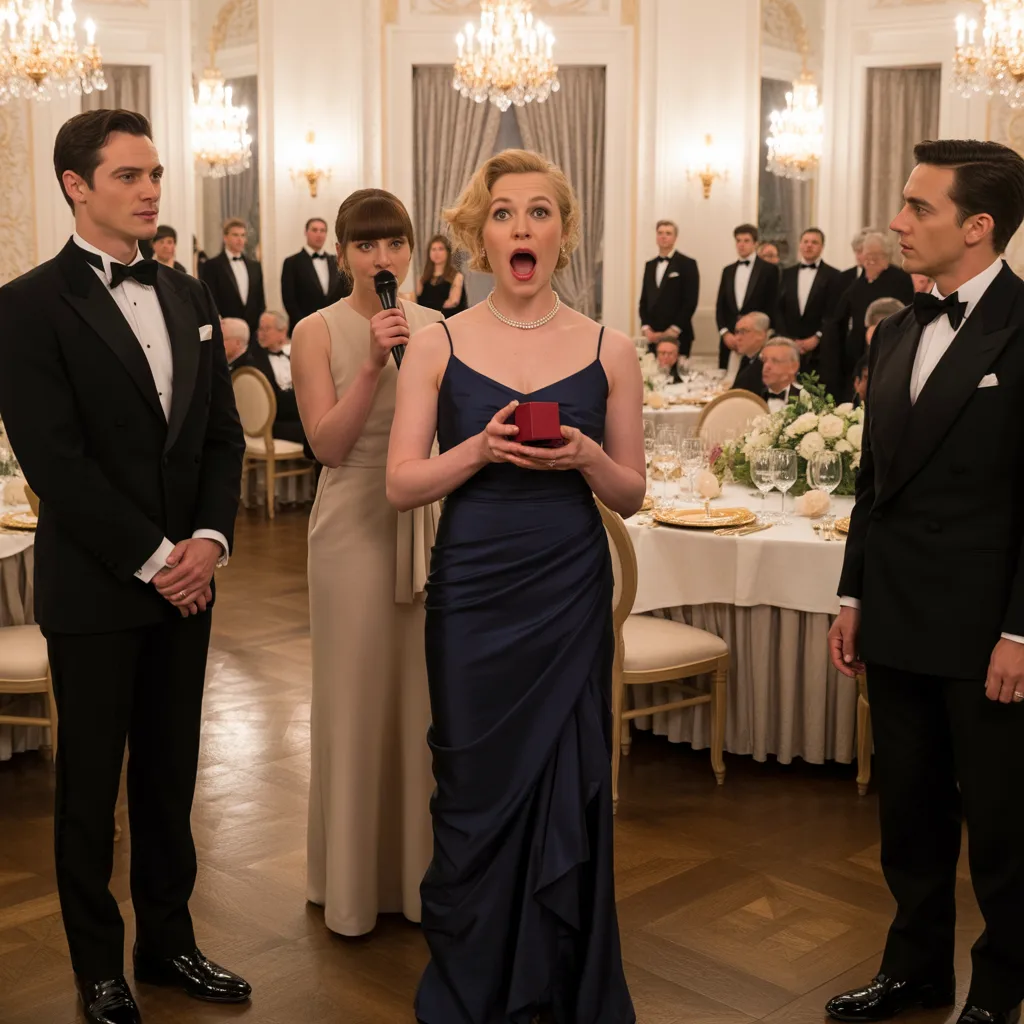
At 9:52 PM, five minutes after the transfer cleared, Meredith tried to buy a round of drinks at the ballroom bar. Her card was declined. She laughed, embarrassed, pulled out a second card.
Declined. A third. Declined.
At 9:58, Diane’s phone buzzed with a notification from the fiduciary firm. Action required. Significant asset movement in Paxton Family Trust.
She called Rebecca Stone directly. Rebecca, professional and bound by fiduciary protocol, said only that a beneficiary had exercised their right to withdraw segregated funds under the original trust agreement. Diane walked straight to Richard and pulled him to the coat check.
“What did you do?” she hissed. He didn’t know. She pulled up the trust portal on her phone.
The account balance, which that morning had read $42 million, now displayed $24,957,683.22. And in the transaction log, one line: segregated fund withdrawal — beneficiary: Laura C. Paxton.
Richard’s face went gray. Diane’s champagne flute trembled in her hand. For the first time in 23 years, the woman who controlled every room she entered looked like she’d lost the floor beneath her feet.
She called me. Then again. Then again.
I was already home. My apartment in Brooklyn Heights is a third-floor walk-up in a brownstone built in 1891. Original moldings, warped hardwood floors, a kitchen barely big enough for two people and a kettle.
I restored the built-in bookshelves myself — floor to ceiling, white oak, filled with architecture books and things that don’t have a category but felt right. I set my phone on the counter and let it vibrate. The messages came in waves.
Meredith: “Laura, what did you do?”
Diane, no longer velvet: “This is family money. You have no right.”
Richard. The simplest, and the one that hurt most.
“Laura, please call me. We need to talk.”
I didn’t answer. I ran a bath.
I took off the midnight navy dress and hung it carefully on the back of the bathroom door. I unclipped my mother’s pearl earrings and set them on the vanity. I stepped into the hot water and stayed there until my breathing slowed and the steam softened the edges of everything.
When I got out, I put on a sweater and made chamomile tea and sat in my chair and looked at the photograph of my mother on the wall. “I did what you asked, Mom,” I said to the empty room. “I found him.
And I found what you left for me.”
Then the intercom buzzed. On the screen: all three of them standing on my stoop at 11:15 on a Saturday night in October. Richard in his tuxedo, tie loosened, face the color of wet concrete.
Diane still in her cream silk gown, mascara tracked down both cheeks, clutching her Hermès bag like a lifebuoy. Meredith half a step behind, hugging her phone with both hands, eyes swollen and red. For 23 years, I had gone to them.
To their house, their dinners, their parties, their terms. I had driven to Westchester and sat at the small table and smiled through comments designed to shrink me. I had rung their doorbell like a guest in my own family.
Now they were at mine. I walked to my desk and pulled out the folder — the trust agreement, the transfer confirmation, and one more document I hadn’t shown anyone yet. I tucked it at the back.
I checked my reflection in the hall mirror. Cashmere sweater. Hair down.
No makeup. Clean, simple, mine. I pressed the intercom.
“Come up.”
Diane was first through the door, already drawing breath. “How dare you—”
I raised one hand. Not dramatically.
Just enough. “You are at my door, Diane. Lower your voice or leave.”
She stopped mid-word.
It was, I think, the first time in 23 years that anyone had said no to Diane Paxton on a doorstep. She looked at me as if I’d spoken a language she didn’t know I understood. “Come in,” I said.
“But I’ll be the one talking tonight.”
They sat in my living room the way people sit in a doctor’s office when the news is already bad. Richard took the armchair by the window — shrunken inside his tuxedo, a man built for conference rooms now compressed into a Brooklyn apartment that smelled like chamomile and old books. Diane stood.
Standing was control, and she wasn’t ready to give that up. Meredith perched on the edge of the sofa, arms crossed, not looking at anyone. Diane fired first.
“You stole from this family. That money belongs to your father.”
I opened the folder on my coffee table. I didn’t rush.
I didn’t raise my voice. I’d spent my career uncovering the original structures of buildings — finding the load-bearing walls beneath decades of bad renovations. That’s exactly what I was going to do now.
“That money never belonged to my father.”
I slid the trust agreement across the table. “It belonged to my mother. Catherine Hail Paxton.”
The room contracted.
“The trust agreement of 2004, drafted by Thomas Aldridge, designates $17 million — her family inheritance — as segregated funds within the Paxton family trust. Legally separate. Walled off.
Mine.”
Diane’s voice came out thin. “That’s a fake. Richard, tell her.”
She turned to my father.
Richard was staring at the document on the table. He didn’t look up. He didn’t deny it.
The silence was the loudest sound I’d ever heard. “You knew,” I said. Not a question.
“Didn’t you, Dad.”
His throat moved. His hands gripped the chair arms. When he spoke, his voice had the cracked quality of something that had been sealed for a very long time.
“Your mother set it up before she got sick. I should have told you.”
Diane turned to Richard as if she’d been struck. “You knew?”
Twenty-three years of silence.
Finally audible. I placed the amendment on the table. “Signed by my mother in 2006.
It names me, Laura Catherine Paxton, as sole beneficiary. No co-signature. No trustee approval.
I’m 34. I exercised my legal right tonight.”
I sat back. The documents lay between us on the coffee table, between my cup of chamomile tea and Diane’s trembling hands.
“I didn’t steal anything, Diane. I reclaimed what was always mine.”
Diane read fast. I watched her eyes scan the pages, searching for the crack, the loophole, the mistake.
She didn’t find one. My mother had been meticulous. Aldridge had been meticulous.
Twenty-three years of legal architecture built to hold. When she looked up, she’d shifted tactics. The fury gone, replaced by the quiver in the chin, the careful widening of the eyes.
Victim mode. Her most practiced performance. “Richard,” she breathed, turning to my father.
“She’s tearing this family apart. After everything I’ve done—”
I cut her off. Not with volume.
With information. “Speaking of what you’ve done — I know about the amendment you’ve been drafting.”
The performance collapsed. Instantaneous, like watching a mask crack down the center.
“Three weeks ago, at the house, I saw the folder on your desk. A draft amendment designed to remove me as beneficiary and transfer my mother’s funds to Meredith.”
Meredith’s head snapped up. “What?”
“I also confirmed that you’ve been calling the fiduciary firm repeatedly, requesting access to my mother’s trust provisions.
Details that Rebecca Stone correctly refused to share because you have no legal standing to receive them.”
Diane abandoned the tears entirely. What replaced them was raw, genuine. “So what?
That money’s been sitting there for 20 years doing nothing. Meredith deserves it more than you. At least she contributes to this family.”
“Mom.
Stop.”
Meredith’s voice was small but sharp. A crack in a wall I hadn’t expected. I looked at my sister, then back at Diane.
“Meredith deserves what, exactly? Seventeen million dollars that my mother earned, that my grandparents built over three generations? For Instagram sponsorships charged to a trust that isn’t hers?”
Richard’s voice surfaced, weak.
“Laura, that’s enough.”
I turned to him. His favorite word. Enough.
The word he used every time the truth got too close to comfort. “No, Dad. You don’t get to say enough tonight.
You lost that right when you watched two security guards walk me out of a ballroom and said nothing.”
The silence after that was different from the others. Not the silence of composure or control. The silence of a man hearing, for the first time, the cost of his own cowardice.