She didn’t stop playing when I entered. She simply nodded, the music filling the spaces between us. I sat on the bench beside her, the same way I had once sat on that church pew twenty years ago.
But this time my feet reached the floor. This time I wasn’t waiting for a miracle. I was living one.
“They are gone, Mom,” I said, the word settling into the room like something returned to its rightful place. “I know, Mary,” she murmured, her eyes fixed on the sheet music. “They were never really here.”
People like my biological parents believe that blood creates a permanent lien on a soul.
They believe that because they provided the DNA, they own the destiny. They think home is a place you can reclaim like lost luggage, that you can walk back through the same doors twenty years later and simply announce the repossession. But they are wrong.
Home is not a bench in a church. It is not a law firm’s letter or a biological match or a room someone claims to have kept ready when they moved four times in ten years. Home is the person who stays when the lights go out.
It is the woman who shells peas on a porch and tells you that you are enough, exactly as you are, and means it without calculation or condition. When they walked into Saint Agnes and said we’ve come to take you home, they didn’t know that I had been home for twenty years already. They looked at my life of service, my faith, my community, and they saw softness they could exploit.
They didn’t see what was actually there, which was a woman who had survived them. It has been a year since the funeral. My life at the parish continues.
We have expanded the food bank. We have built a sanctuary for runaway teenagers. I spend my days helping people who have been discarded find their footing, showing them that the world is bigger than the people who broke them.
I never heard from Elena or Richard again. I heard through the grapevine that Rebecca finally moved away, building a life outside the gravitational pull of our parents’ narcissism. I hope she finds her own Evelyn.
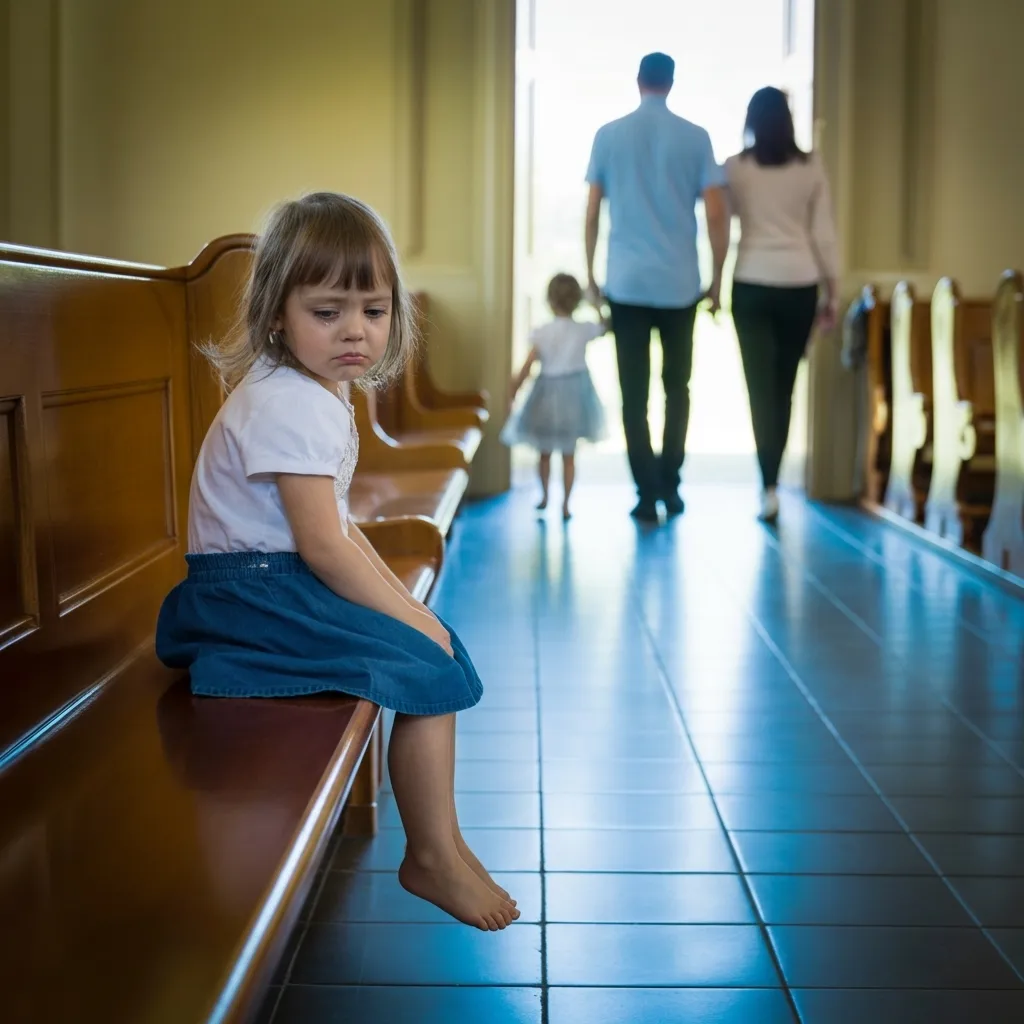
I hope she finds something that stays. Sometimes, when the church is empty and the sun is setting, I sit on that second-row pew. I look at the doors.
I remember the flash of white snow and the weight of the silence, and the sound of my own small shoes kicking rhythmically against the heavy wood while I waited for a miracle that arrived twenty years later in the form of a woman with arthritic hands and a house that smelled like lavender. I am not bitter. I am not angry.
I am simply a witness to my own survival. A family is not a bloodline. It is an architecture of choice.
A house built stone by stone through the simple, radical act of staying. I stood up from that pew, smoothed the fabric of my coat, and walked toward the altar. I had work to do.
I had a life to lead. And for the first time in my existence, the silence wasn’t a void. It was a peace.