The Invoice
My name is Maya Miller. I am twenty-six years old, and I live in a small apartment in the city. I looked around the garden.
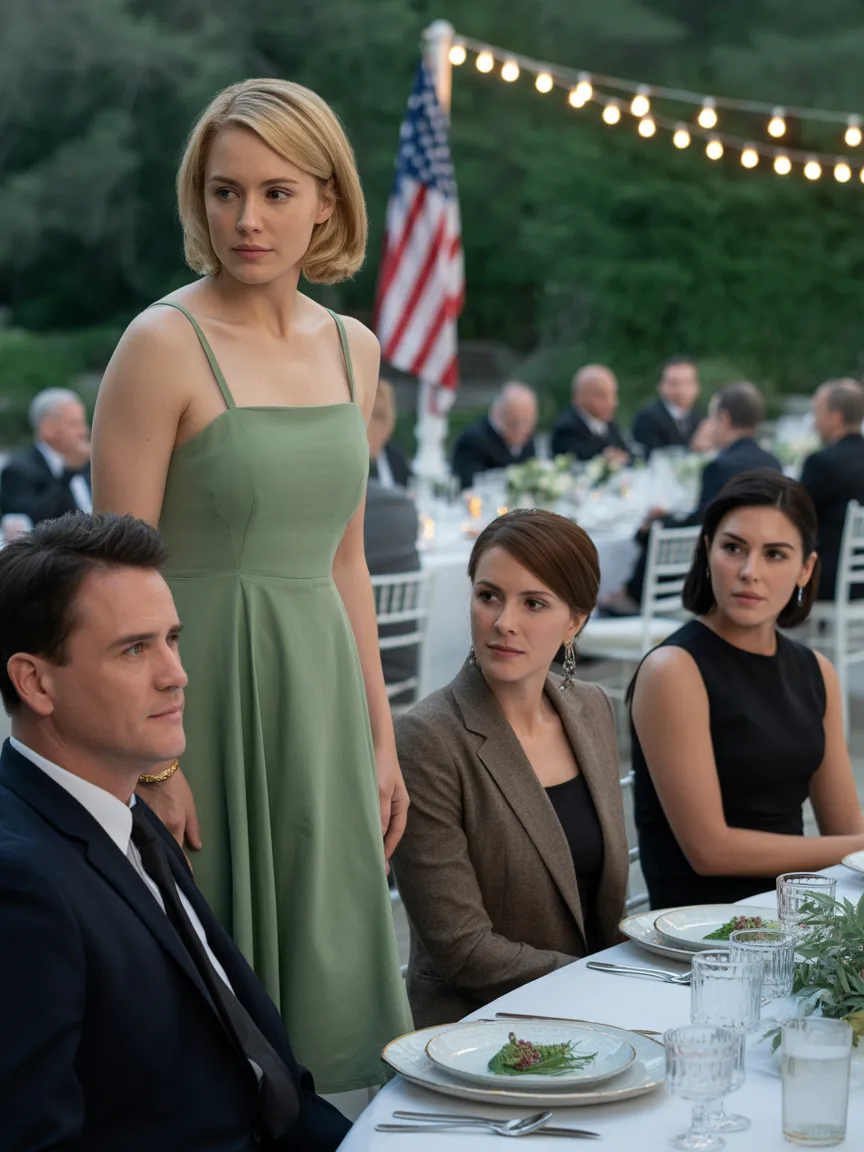
There were one hundred relatives standing on the perfectly cut grass, holding champagne glasses and smiling at me. It was my birthday. I thought they were there to celebrate me.
I was wrong. They were the audience for my execution. My father, William, stood at the front.
He waved me over with a smile that didn’t reach his eyes. He handed me a heavy leather portfolio. I thought it was a gift.
My hands shook as I opened it. Inside was a single piece of paper. An invoice.
Total: $248,000
Description: For room, board, and inconvenience. The silence in the yard was heavy. Before I could speak, my sister Brooklyn stepped forward, hand extended.
“Give me the car keys, Maya. It’s not yours anymore.”
Then my boss—a guest at the party—cleared his throat. He looked at the ground and told me I was fired.
He said my parents’ reference changed everything. I stood there holding the bill for my own life, and I realized this wasn’t a party. It was an erasure.
I turned my back on them without a word. The driveway was long, lined with expensive cars. My car sat there, the one Brooklyn had just claimed.
I walked past it. I could feel their eyes on my back, waiting for me to break, to turn around and beg. I didn’t give them that satisfaction.
I walked out through the iron gates. The heavy metal clicked shut behind me with a sound like finality—not a prison door closing, but opening. My apartment was three miles away.
I was wearing high heels—nude pumps, expensive and tight, shoes meant for sitting, not walking on asphalt. The first mile was pure shock. My mind replayed the scene on loop: my father’s smile, the leather portfolio, Brooklyn’s greedy hand, my boss looking at his shoes.
By the second mile, physical pain started. My heels rubbed against my ankles. Blisters formed and popped.
I took the shoes off and walked barefoot, the warm concrete scraping my soles. The pain was good. It was real.
It grounded me. I started to understand this wasn’t an accident. You don’t type up an invoice for $248,000 by accident.
You don’t invite someone’s boss to their birthday party to fire them by accident. This was planned. Coordinated.
Deliberate. But why? Then it hit me.
I was independent. I paid my own rent. I bought my own furniture.
I didn’t need them. And that was the problem. When I reached my apartment building, my feet were bleeding.
I climbed the stairs and unlocked my door. The small space smelled like lemon cleaner and old books. It was mine.
I dropped the leather portfolio on the floor and went straight to my desk. I opened my laptop, and the screen glowed blue in the darkening room. My father thought he was smart.
He dealt in contracts and handshakes. He thought power was money and shouting. He didn’t understand my world.
I’m a data analyst. I understand patterns. I understand how to find things people want to hide.
I opened a terminal window, the black box with its blinking cursor waiting for commands. “Okay,” I said to the empty room. “You want a war?
We’ll have a war.”
They thought they’d taken everything—my car, my job, my family. But they forgot who I was. I pulled out the invoice and read it again.
Room and board for eighteen years: $180,000. Clothing: $25,000. Medical expenses: $15,000.
Education: $20,000. Inconvenience fee: $8,000. Eight thousand dollars for the inconvenience of having a child.
Normal parents don’t keep a tab. When you have a child, you agree to take care of them. You don’t send a bill eighteen years later.
But my parents weren’t normal. They were narcissists. To them, I wasn’t a person—I was an investment that had failed to provide returns.
They wanted their money back. And looking at this invoice now, I realized something. This wasn’t a bill.
It was a confession. My phone buzzed for two hours—texts from cousins, messages from friends who’d heard the gossip. I ignored them all.
But I couldn’t ignore my job. That was the first pillar they’d knocked down, and I needed to fix it immediately. My boss Gary was weak, scared of my father who was a big donor to the company.
But Gary wasn’t the top of the ladder. I searched my contacts for David Henderson, the regional director. Six months ago, I’d stopped a massive data breach on a Sunday when no one else answered their phones.
I’d saved the company millions. David had given me his personal cell number. “If you ever need anything, Maya, you call me.”
I hoped he meant it.
He answered on the third ring. “This is David.”
“David, it’s Maya from data analytics. I was just terminated by Gary at a private party because of a personal dispute with my parents.”
Silence.
Then: “Excuse me, you were fired when?”
“Two hours ago. At my parents’ house. My father told Gary to fire me.
Gary did it in front of a hundred people.”
I kept it simple. Facts only, no emotion. “That is highly irregular and illegal,” David said, his voice sharp now.
“I know. I’m one of your top analysts. My performance reviews are perfect.
I saved the network six months ago. I’m being punished because my father is a donor. I’m calling because I respect this company.
I don’t want to file a wrongful termination lawsuit. I just want to do my job.”
The lawsuit threat was subtle but present. “Give me ten minutes, Maya.
I’ll call you back.”
Eight minutes later, my phone rang. “Maya, I spoke to Gary. He confirmed the story.
He admitted he acted under pressure from your father.” David’s voice was stone. “Gary is no longer the manager of your department. The termination is void—it never happened.
I’m moving you to the senior security team reporting directly to headquarters. Gary can’t touch you. Your parents can’t touch you.”
I exhaled a breath I didn’t know I’d been holding.
“And Maya? We’re adding a retention bonus. Ten percent raise, effective immediately.
We don’t like outside influence in our company.”
When I hung up, I smiled for the first time that night. Not a happy smile—a grim, tight smile of satisfaction. They’d tried to cut my income, to make me destitute so I’d crawl back.
Instead, their friend was fired. I got promoted. I got a raise.
But I wasn’t done. Reclaiming my job was defense. I needed offense.
I turned back to my terminal window. It was time to look at the family finances. Two years ago, my father asked me to set up his home Wi-Fi and computer.
“You’re good with machines? Fix it,” he’d barked. I fixed it.
And I set up a back door—not to spy, but so I could reset his password remotely when he forgot it. Now that back door was my weapon. I typed the command.
Access granted. I was in his computer. No two-factor authentication.
No complex firewalls. He was arrogant, thought no one would dare touch him. I navigated through folders: finances, tax returns, bank statements.
My parents were rich but not as rich as they pretended. They bled cash to look important. Then I found the folder labeled “Trusts.”
My heart skipped.
My grandmother had passed away five years ago. She’d loved me—the only one who really did. My parents told me she’d left everything to them to manage for the family.
I opened the file: Grandma Rose Estate Distribution.pdf. “I hereby bequeath the sum of $500,000 to my granddaughter, Maya Miller, to be held in trust until she reaches the age of twenty-one.”
I stopped breathing. Half a million dollars.
She’d left it specifically to me. I was twenty-six now. Where was the money?
I traced the account. The money had been deposited five years ago. Then the withdrawals started.
Withdrawal: $85,000 – Mercedes-Benz dealership. I froze. The Mercedes Brooklyn drove.
The one she bragged about. “Daddy bought it for me because I’m his favorite,” she’d said. He didn’t buy it.
I did. My grandmother’s money—my money—paid for Brooklyn’s car. I kept looking.
Withdrawal: $20,000 – kitchen renovation. The new kitchen I wasn’t allowed to cook in. Withdrawal: $10,000 – Paris vacation.
The trip they took without me. The balance remaining: $4,512. They’d stolen half a million dollars.
Spent my inheritance on themselves and Brooklyn. Then handed me a bill for $248,000. I sat back, shaking.