Sometimes you witness something that rearranges your sense of the people around you and you don’t quite know what to do with that yet. By evening the street had gone quiet. I sat on my porch steps with Mrs.
Higgins’ letter in my lap and the deed to my house on the step beside me and watched the light shift through the trees. My daughter kicked, slow and steady, like a reminder. I looked up at Mrs.
Higgins’ porch. The crossword puzzle was probably still on the table where she’d left it. The sweet tea glass.
All the ordinary objects of an ordinary morning she had not known would be her last. She had used Walter’s rainy day fund. The savings she had been keeping for fifty-one years in a house she had shared with a man who packed hospital bags a month early and who she still talked about like he was standing just around the corner.
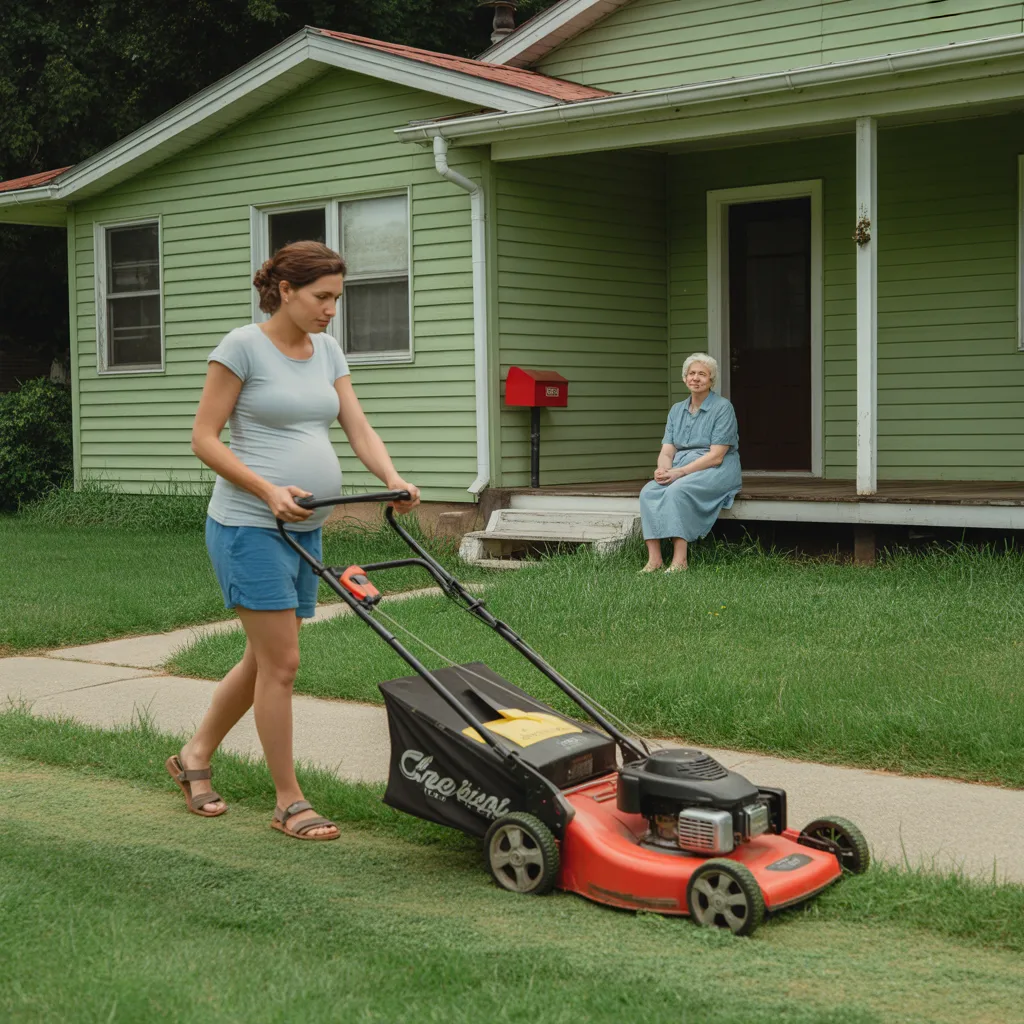
She had taken that money to a bank and signed papers for a neighbor she had known only well enough to wave to in the mornings. Because one letter slipped from a stack and she saw the word foreclosure and she could not ignore it. Because I had taken an hour out of the worst morning of my year to mow her lawn.
“Thank you,” I said into the dusk. “I’ll pay it forward. I promise.”
A warm breeze moved through the leaves overhead.
It was probably just wind. I chose to take it as acknowledgment anyway. I looked down at my belly and smiled through the last of my tears.
I already knew her name. Mabel.