
The morning my phone lit up with forty-six missed calls, Chicago was pretending to be gentle. A thin winter sun was leaking through the blinds of my little downtown studio, turning the steam from my coffee into a soft, ghostly ribbon. The L rattled somewhere in the distance, a low metallic heartbeat under the city.
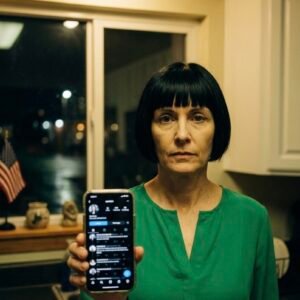
On my kitchen counter, my laptop screen glowed with a familiar banking portal, a world of balances and flags and alerts. Right in the center of it all, my phone buzzed again. “New voicemail,” the notification banner read.
“9:47 p.m., Kimberly Owens.”
I didn’t have to tap it to know which one it was. I could hear it word for word, the way you can still feel the sting from a slap that landed days ago. You’re out.
Don’t come back. We’re moving on without you. Thirty-one seconds that tried to erase twenty-eight years.
Below that notification sat the proof that her script hadn’t worked the way she’d planned: forty-six missed calls from Mom, from my little sister Savannah, from relatives I hadn’t heard from in months. And sandwiched between all those calls, one tidy text from my bank. Unusual activity detected on shared mortgage account ending in 9834.
Please contact us. I took a slow sip of coffee, let the bitterness settle on my tongue, and scrolled once more to the short text I had sent at 9:48 p.m., exactly sixty seconds after the voicemail had hit my phone. Okay.
Four letters and a period. That was all I’d given her. She thought that message meant I was hurt and stunned, wandering around my apartment with my heart in pieces.
What it actually meant was that I had already gone to work. —
I’m Kayla Owens. On paper, I’m a cybersecurity risk analyst for a mid-size firm in the Loop.
In practice, for the past six years, I’ve been an unpaid chief financial officer for a family that treated my paycheck like a birthright and my boundaries like a suggestion. If something broke, I fixed it. If a bill was due, I paid it.
If there was an emergency, my card took the hit. I was the daughter who “made it,” which in my mother’s vocabulary meant the daughter who could be guilted into Venmo transfers at 2:00 a.m. and long-term commitments she never had to sign her own name to.
Mom—Kimberly—lived in a glass high-rise on the lake, one of those places with a concierge desk and a lobby that smells like money and lemon cleaner. She liked to joke that I worked with “computers and hackers” and that none of it made sense to her, but it didn’t need to, because “that’s what kids are for.”
Savannah, my younger sister by four years, was the proud owner of Blessed Salon, a minimalist, white-on-white space in a trendy neighborhood where haircuts cost more than my weekly groceries used to. Her Instagram was a curated shrine to “entrepreneurial life”—latte art, ring light selfies, clients in designer sneakers.
If you scrolled far enough, you’d think she built it all herself. You wouldn’t see the nights I spent hunched over my laptop, running penetration tests for clients on one screen and researching small business loans for her on another. You wouldn’t see the Subway sandwiches I ate at midnight in the office kitchen while my mother texted me photos from a wellness retreat in Florida that I’d quietly paid for.
You’re out. Don’t come back. I’d spent years believing that if I ever stopped paying, the whole house would collapse and it would be my fault.
Somewhere along the line, their survival had become my job description. But if there’s one thing I’ve learned from a decade of tracking breaches and patching vulnerabilities, it’s this:
When a system is compromised, you don’t beg the attacker to stop. You lock the doors.
By the time Mom’s voicemail finished playing the first time, I already knew what I was going to do. Not because I was vindictive. Because I was finally done being a walking line of credit with a beating heart.
Access is a privilege, not a birthright. At 9:49 p.m., I opened my laptop and logged in to the utilities portal for the condo on Lake Shore Drive—the place my mother called “our home” when she bragged to her book club, and “my house” when she was angry with me. The electric bill?
In my name, auto-drafted from my account. Gas? Same.
Water? Same. For six years, the light in her fridge came on because my routing number said so.
I didn’t cut anything off. I’m not reckless. I simply removed my bank information, updated the contact email to hers, and changed the listed phone number to her cell.
I gave the bills back to the person who actually lived there. Next came insurance. Her private, top-tier health insurance plan—$1,450 a month—had been quietly running through my corporate benefits.
When she bragged to the neighbors about having “the good coverage,” she never mentioned the overtime hours I pulled to keep that premium comfortably deducted. I toggled the plan to individual coverage, removed myself as the payer, and watched the confirmation screen load slowly, like a curtain about to be pulled back. It felt like hitting a giant red DECLINED button on years of entitlement.
Savannah was trickier. She had a secondary card on one of my credit lines that I’d justified as “for emergencies only” when we set it up. In practice, her emergencies looked a lot like Italian espresso machines and luxury shampoo displays.
“Clients expect a certain vibe,” she’d told me last month, eyes wide and earnest, when I questioned a $3,000 charge for an imported machine. “You want me to succeed, right?”
That night, I scrolled to her card number, hovered for half a second, then pressed Report Lost or Stolen. A small pop-up appeared: Are you sure?
I clicked Yes. Somewhere across town, in a supply warehouse full of glossy product, my sister’s favorite piece of plastic went from lifeline to dead weight. I wasn’t done.
The condo was the biggest piece. Technically, Mom and I were co-owners. Legally, that meant my name sat on the deed and my account bled $3,200 every month like clockwork.
It was the kind of mortgage most people would kill for. My mother liked to remind me of that whenever I hinted at needing a break. “Plenty of kids don’t help at all,” she would say, shaking her head as if I were being dramatic.
“God blessed you with a good job so you could share. That’s what family does.”
For a long time, I believed that. But family doesn’t leave voicemails like the one sitting in my inbox.
I drafted a formal notice to the lender. In clear, unemotional language, I explained that as a fifty-percent stakeholder, I was halting my voluntary contributions to the loan due to evidence of financial fraud and breach of trust by the co-owner. I didn’t threaten.
I didn’t rant. I just attached documentation, moved the funds I’d been using for the mortgage into a private account no one in that condo had access to, and saved a copy of the message. At 10:00 p.m., twelve minutes after my mother announced she was “moving on without me,” I closed my laptop and sat in the quiet glow of my studio.
For the first time in years, my life felt like it belonged to me. The weight didn’t crash down. It lifted.
The next day, I opened a file I had been avoiding for months. Family Ledger.xlsx. Most people have photo albums.
My line of work had taught me to keep receipts. On my screen, under a dark-mode grid of cells and formulas, the past decade of my life stared back at me in black and white. $280,000.
The number was bolded at the bottom, a quiet indictment. Two hundred eighty thousand dollars. That was the cost of being the “strong one.” That was the total I had poured into a family that now treated me like a defective appliance they were returning.
I scrolled through the line items. $10,000—equipment for Savannah’s salon. I could still smell the chemical tang of bleach from the night we assembled chairs in that space, my fingers raw from dragging furniture across concrete floors.
$6,000—Mom’s wellness retreat in Florida. While she posted poolside photos with captions about “self-care,” I spent my evenings in a windowless office, bathed in the light of dual monitors, hunting down vulnerabilities for clients who at least understood what my work was worth. Rent deposits.
Utility arrears. Credit card balances I’d paid off because “collections calls make your mother anxious, Kayla.”