“Warm sand,” she had said, standing in the doorway with the pride of a woman unveiling a renovation on one of those home shows she liked to watch on Saturday mornings.
I had smiled and told her it looked nice.
The truth was, after forty years as a nurse, I knew the color of a hospital corridor when I saw one. But by sixty-eight, and especially after the year I had just lived through, I had become very good at keeping certain thoughts to myself.
Three months earlier, I had sold the house where I had raised my children, buried my husband, and spent thirty-one years of my life. It sat on Clover Hill Road in Ashland, Ohio, a two-story place with a deep front porch, white siding that had slowly mellowed into cream over the years, and a maple tree in the yard that turned such a fierce red in October that people sometimes slowed their cars to look at it.
Carol had learned to ride a bicycle on that driveway.
My son had carved his initials into the back porch railing when he was nine and denied it for a week even though the evidence was sitting there in three clumsy letters. My husband, Tom, had taken his last breath in the bedroom we had shared since 1987.
I sold that house for two hundred sixty thousand dollars.
After commissions, closing fees, a few remaining medical bills, and the roof repair I had delayed for too long, I walked away with two hundred forty-two thousand.
Most of it went into a savings account at a regional bank where I had done business for years. I knew it was not the cleverest place for the money to sit.
I also knew I had not been ready, in the weeks after the sale, to make one more major decision.
The day I handed the keys to the young couple who bought the house felt less like a closing and more like a funeral nobody had thought to dress correctly for.
The title company had bad coffee in Styrofoam cups and a bowl of peppermint candies on the counter. The buyers were nice—mid-thirties, expecting their first baby, polite in the overly bright way people are when they know they are stepping into rooms where somebody else’s life happened. The young woman touched the key ring like it mattered.
I respected her for that.
Still, when I walked out with my folder of papers under my arm and my purse on my shoulder, I had to sit in my car for nearly ten minutes before I could turn the engine over.
Three weeks after that—three weeks after the keys, after the apartment lease, after I had stacked my remaining dishes in cupboards that were not mine—Carol called and said, “Mom, you shouldn’t be alone in that place.”
Her voice had been warm. Not performative warm.
Real warm, or what I took for real.
“Come live with us for a while,” she said. “Just until you figure out what you want next.”
Then Scott, my son-in-law, got on the phone and said there was plenty of room.
The guest suite had its own bathroom.
I could come and go as I pleased. I wouldn’t be underfoot. They wanted me there, he said.
Emma would love having me close by.
He said it like he meant it.
I believed him because I wanted to.
Grief does that to a person.
It doesn’t always make you dramatic. Sometimes it just makes you hopeful in places where you should have been more careful.
So I packed what mattered.
The rest went where things go when a life changes shape. My sister June in Columbus took my mother’s china and two lamps she had always admired.
A donation center out on Route 30 took bags of sweaters, extra pots, a coffee table Tom had hated for years and I had kept mostly out of stubbornness.
I kept the framed photographs, the quilt my mother made in 1979, Tom’s old watch though it no longer worked, my nursing certificates in their black folder, and the good kitchen knives I had bought one at a time over decades, because a woman who cooks for herself should not have to use dull blades if she can help it.
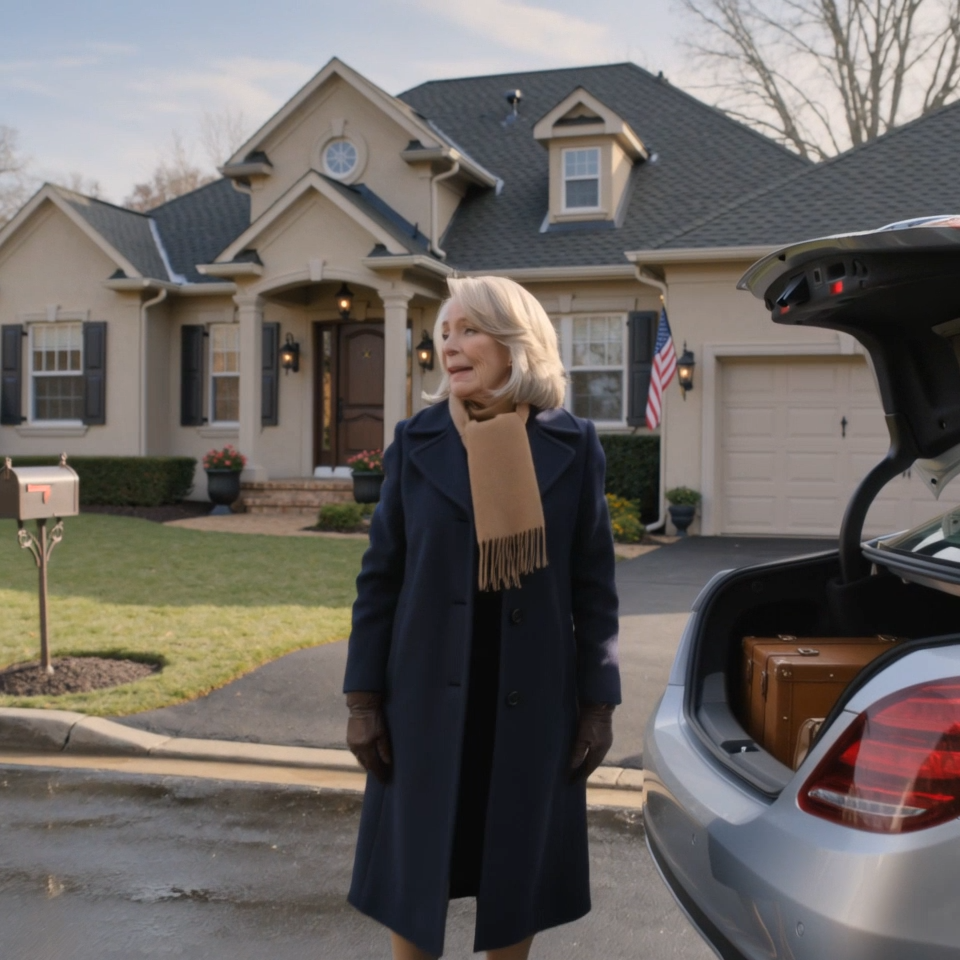
I drove nearly four hours south toward Cincinnati with my life packed in the back of my car.
Glendale had always struck me as the kind of suburb that looked expensive even when it wasn’t trying. The houses had deep lawns and careful shutters and front doors in tasteful colors. The mailboxes stood at nearly identical heights, as if the neighborhood had long ago agreed on how order should look.
There were wreaths on the doors before Thanksgiving and outdoor lights installed so neatly in December they looked less like holiday cheer and more like evidence of a good contractor.
Carol’s house was the largest on her street.
Four bedrooms, a three-car garage, white kitchen cabinets, a mudroom bigger than my first apartment, and a refrigerator that told you the weather if you touched the right square on the screen. They had renovated the kitchen twice in eight years, which was the sort of thing I still had difficulty understanding, but not my kitchen, not my money, not my concern.
They had done well for themselves.
Or rather, Scott’s family had done well for themselves, and Carol had married into a life that had a way of making money look less like money and more like a permanent atmospheric condition.
It was everywhere and nowhere at once—good schools, better appliances, vacations described casually, landscaping that never seemed to require any visible labor. Scott wore the same sort of quarter-zip sweaters all winter and the same sort of confidence all year long.
The first two weeks were easy in the way first weeks often are.
Everyone performs their best version of themselves.
Carol made Sunday brunch with blueberry pancakes and bacon on a sheet pan and cut fruit in a bowl too beautiful to be practical. Scott asked about my years at Riverside Methodist and seemed genuinely interested when I told him about night shifts and surgical recovery and the small, unglamorous things that actually keep people alive. Emma, thirteen years old and all knees and ponytail and sudden flashes of dry humor, showed me how to use a streaming app on the television and sat with me while we watched an old movie she had never heard of.
Halfway through it, she looked over and said, “People used to talk so fast in movies.”
I laughed and told her people used to talk fast in real life too.
They just didn’t have phones to interrupt them.
She grinned at that.
It was the kind of grin that comes from a child who still wants to know you, which is a sweeter thing than adults remember.
I helped with small things. I folded towels.
I unloaded the dishwasher when Carol forgot. I picked rosemary from the planter by the back door and showed Emma how to cut it fine for roasted potatoes.
Once, when she had a history assignment on the Underground Railroad and Ohio routes, I sat at the kitchen island with her for an hour and helped her organize her note cards.
I felt useful.
More than that, I felt included.
For the first time since Tom died, I did not feel like an afterthought in my own life. I felt like a person in the middle of things again. It is embarrassing how much comfort there can be in hearing another family move around a house while you drink your coffee.
Doors opening.
A backpack dropped. The garage door lifting.
Somebody upstairs asking where their charger is. Grief makes even ordinary noise sound like mercy.
If the story had ended there, it would have been a blessing.
But the trouble with certain kinds of betrayal is that they almost never begin with betrayal.
They begin with concern. With interest. With the careful placement of one hand where you do not yet realize it is being used to steer you.
The first mention of my money came over roasted chicken one Tuesday night.
Scott cut into his dinner, swallowed, and said in a casual tone, “You know, I have a friend with an office up near Kenwood who works with retirees.
Really sharp guy.
Helps people make their money do more than sit around.”
I looked up from my plate.
“I have an adviser,” I said. “A woman I’ve worked with for eleven years.”
He nodded immediately.
“Of course,” he said.
“Of course. I’m just throwing it out there.”
Carol passed the green beans and said nothing.
Emma asked if she could be excused when she finished.
The moment drifted on.
A few days later, Carol brought it up while we were loading groceries into the pantry.