I Lied About Failing My Entrance Exam So My Father Would Throw Me Out, But He Had No Idea I Had Recorded His Plan to Steal My Mother’s House(2/2)
She said it was all my mother’s fault. That she had always been playing the saint. Always leaving paper trails.
Always thinking she was special. I took the sealed envelope from my jacket. My mother had written it when she was sick, in the months before she died, sitting at the kitchen table in Brooklyn Heights with the ivy on the window and her rusted shears on the windowsill.
Mr. Santos had held it for four years and given it to me that evening at the party, and I had put it in my pocket without opening it because I had known, somehow, that the right moment had not arrived yet. This was the moment.
My hands trembled on the envelope. I recognized her handwriting before I had fully processed recognizing it, the way you recognize a voice in a crowd. I read the first lines and then my voice stopped working and Aunt Susan took the letter and read it to the room.
My Dianne. If you are reading this, it means you have turned eighteen and someone has tried to make you believe you need permission to be the master of your own life. Your house is not a prize or a debt.
It is a refuge. Your education is not a favor from Arthur. It is your right.
If he ever tells you that you are worthless, remember this: I saw your intelligence before you could even read. I saw your strength when you learned to walk and fell six times without crying. I saw your heart when you gave your lunch to a stray dog and pretended you were not hungry.
Do not sign anything out of fear. Do not return to a table where they call you a burden. I leave you the house because I want you to have a door that no one can close on you.
I leave you my love because that is the one thing no one can ever forge. When Aunt Susan finished, the room was quiet in the way of rooms where something has been said that changed the air. My father looked at the letter and said she didn’t know what she was doing.
Mr. Santos opened the second folder. He explained the clause my mother had built into the property structure.
Any attempt at coercion, impersonation, or fraudulent sale would trigger an immediate report and suspend any of my father’s management over assets connected to her estate. Celia turned on my father. “You said there were no safeguards.”
He looked at her with the particular loathing of a man who has just understood that the person he thought was his partner had not told him the full truth, which I noted had a specific justice to it given the circumstances.
The police arrived fifteen minutes later. Renata confessed immediately and completely. Celia tried to say I was unstable.
My father insisted it was a family misunderstanding. The notary looked at him and said, in the flat voice of someone who has been exercising patience for two hours and is now done, that family misunderstandings are not signed with fake IDs. As they were being led from the room, my father turned to me.
“You’ll regret this,” he said. “No one will take care of you like I did.”
I looked at him. For the first time in years I was not afraid of the answer, which meant the answer came out clean.
“You never took care of me,” I said. “You only took care of what you could take from me.”
We went back to the Manhattan ballroom. It was near midnight and the party had gone quiet in the way parties do when the host is absent and the guests have sensed that something has happened elsewhere.
Lily was sitting by the untouched cake with smeared makeup and her phone in her hands. When she saw me she stood up and asked what I had done and I told her to ask her mother. I went to the stage.
The music stopped. I told them everything. I told them about the exam score and the lie I had told my father and why.
I played them the recording from my phone. Celia’s voice and my father’s voice filled the ballroom in the particular flat quality of recorded audio, which strips away the warmth that people use when they are performing sincerity and leaves only the words themselves. Celia said: Dianne just turned eighteen, Arthur.
You can finally take that house. My father said: When she fails, I’ll kick her out. She’ll realize she’s nothing without me.
I stepped down from the stage. Lily came toward me. I thought she was angry.
Instead she asked if her mother had used her party as cover for what was happening across the city. I told her yes. Her eyes filled.
“I didn’t know.”
I looked at her, this girl who had received the warmth I had been waiting for and had not known that her receipt of it was part of the machinery of my deprivation. “Then learn fast,” I told her. “The love they give you to humiliate someone else is just another kind of cage.”
A week later, the brownstone in Brooklyn Heights smelled like dust and old wood and the absence of someone I missed with the particular physical ache of missing a person whose presence you used to take for granted.
I sat on the floor of the empty living room and cried. Not for my father. Not for Celia.
For my mother, who had thought of everything and could not stay to see it work. Mr. Santos came and told me the fraud attempt was documented.
Renata was cooperating. Celia and my father would answer for forgery and attempted fraud in a process that would be long and ugly but would proceed without my participation. The house was mine.
My university place was mine. He also told me my mother had established a trust for my education. Not a fortune.
Enough that I would never have to depend on my father for anything. I started university that fall. I walked onto campus with a new bag and her letter folded in my coat pocket, not because I needed to read it again but because I wanted to carry it.
Arthur called many times. I did not answer. He sent messages.
I am your father. Celia manipulated me. Your mother would not have wanted this.
I replied to the last one only: My mother built this. Then I blocked him. I fixed the house slowly over the months that followed.
Aunt Susan helped me paint the kitchen the yellow my mother had always wanted and never gotten around to using. I planted new flower boxes on the windows. Not to recreate the past exactly but to show that something could still grow on the same ground where they had tried to take everything.
The ivy came back on its own. My name is Dianne Reed. I scored 98.7.
My father believed that a hungry daughter with no house and nowhere to go would sign anything he put in front of her. He did not understand that my mother had spent her last years building something that would be there when I needed it. Not just a property.
Not just an account. A door that opened from the inside. She could not stay.
But she made sure I had the key. And this time, I opened it with my own name.
More in Stories

My Husband Left Me Outside for Two Hours with a Broken Leg Because He Didn’t Want to Hurt His Back Before a Boys’ Trip – His Grandpa’s Response Left Him Speechless
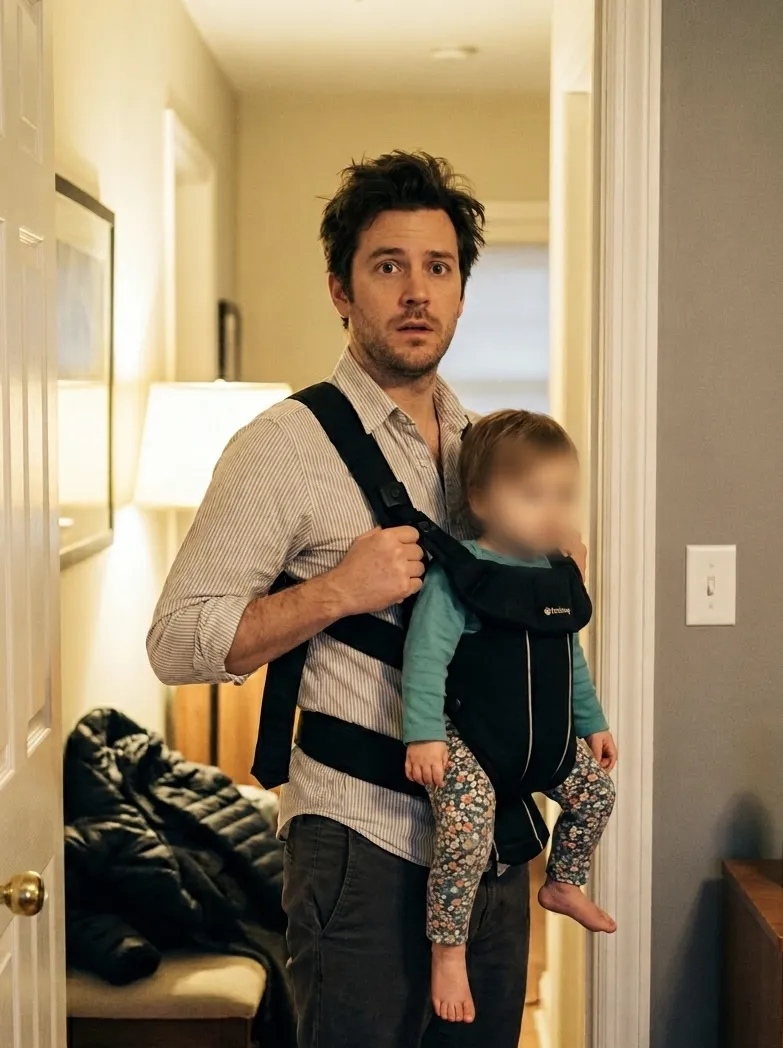
My Husband Found a One-Year-Old Baby at the Train Station and Brought Her Home – Then I Found a Note in Her Cradle: ‘Don’t Trust Your Husband’