My Husband’s Mistress Sent Me a Hotel Photo at 3 A.M., So I Forwarded It to His Entire Board of Directors(2/2)
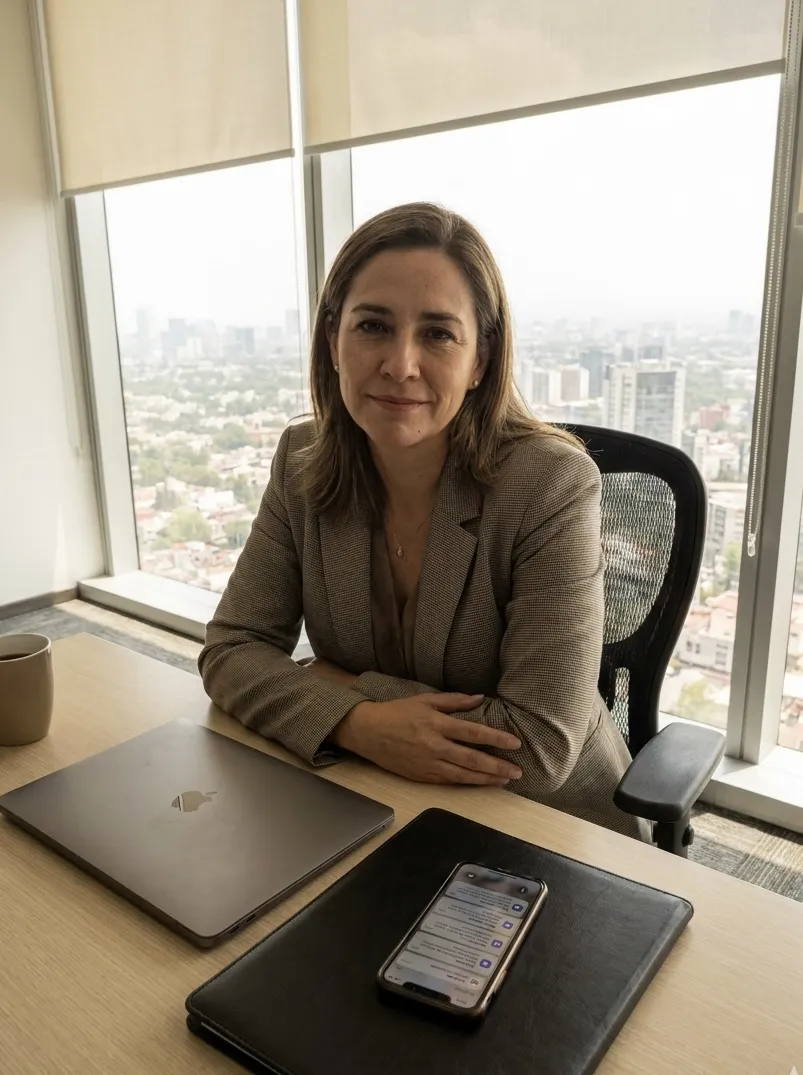
I suppose she deserved some credit for that. The plane touched down at Heathrow at six forty-five local time. I moved through customs with the ease of someone who has practiced being unremarkable and took a cab to a hotel in Mayfair where I had a reservation under my maiden name.
The room had a window overlooking a square with a garden at its center. I opened the window and sat on the edge of the bed and listened to London in the early morning, the particular sound of a city that has been doing this for a very long time and is not impressed by anyone’s personal crisis. I ordered coffee and toast from room service.
I ate it slowly, looking at the garden. My phone, the clean one, buzzed. Valerie.
The SEC has received the filing. Confirmation number attached. They’ll be in touch with the board within 72 hours.
Then, forty minutes later, a second message from a number I didn’t recognize. I traced it before I opened it. Untraceable, which meant it was someone who knew what they were doing.
It was Alexander. He had found a new phone somewhere. Borrowed one.
Used one he kept in a drawer for purposes I had long suspected and had now confirmed. The message was short. We need to talk.
Whatever you think you know, there are things I can explain. Call me. I read it once.
Then I typed a reply. I don’t think I know anything. I know what I documented.
Valerie has the original copies. Claire Ashworth has the rest. The SEC has the filing.
There’s nothing left to explain. I deleted the thread. Then I opened my laptop and found the document I had been drafting for six months in a folder buried inside a folder inside a folder on a cloud account Alexander did not know existed.
It was a business plan. The platform I had designed for Whitmore Global was broadly applicable beyond the logistics sector. The architecture could support supply chain management across three other verticals that Alexander had never bothered to pursue because they required the kind of patient technical development he had always found less interesting than acquisitions and press coverage.
I had spent six months developing the adaptation. I had spent three months talking to investors. Two of them, a venture capital firm in London and a family office in Singapore, had already indicated serious interest contingent on the intellectual property question being resolved.
Valerie expected the IP resolution to be straightforward once the original USPTO documentation was introduced. Alexander’s lawyers would argue. They always argued.
But the original filings said what they said, and federal records said it in a language that was very difficult to translate into anything other than what it was. I had a meeting with the London investors on Thursday. I ordered a second cup of coffee and opened the presentation.
Outside the window, the garden was catching the morning light, green and ordinary and entirely indifferent to everything I had been through in the last twelve hours. A woman in a yellow coat walked through the square with a dog. A man stopped to check his phone and kept walking.
The city moved through its Tuesday morning without needing anything from me. I sat in a hotel room in Mayfair with my coffee and my documents and the specific feeling of a person who has finally stopped carrying something that was never theirs to carry. Not a wife.
Not a shadow. Not the woman standing slightly behind the man accepting the award. The architect.
My name was in the federal filing. It had always been in the federal filing. I had simply been waiting for the right moment to make sure the world knew where to look.
On Sunday morning, Claire Ashworth’s article ran. The headline read: Who Really Built Whitmore Global? Documents Reveal the Woman Behind the Platform.
The sidebar was nine paragraphs. My name was in the first sentence. I read it at a cafe table near the square, with a proper English breakfast and the particular satisfaction of seeing the record finally corrected in a venue that Alexander had spent his entire career cultivating as proof of his own significance.
He had wanted to be in that publication. He had been in it twice before, both times in profiles that described him as a visionary. This time, the word visionary did not appear.
Several other words appeared instead. I finished my breakfast. I had a meeting in two hours.
I left a tip on the table, closed the newspaper, and walked out into the London morning, my name already moving through the world in exactly the way it had always deserved to. No luggage but my own. No ring.
No story but the true one. The architect. Moving forward.
More in Stories

My Husband Left Me Outside for Two Hours with a Broken Leg Because He Didn’t Want to Hurt His Back Before a Boys’ Trip – His Grandpa’s Response Left Him Speechless
My Husband Found a One-Year-Old Baby at the Train Station and Brought Her Home – Then I Found a Note in Her Cradle: ‘Don’t Trust Your Husband’