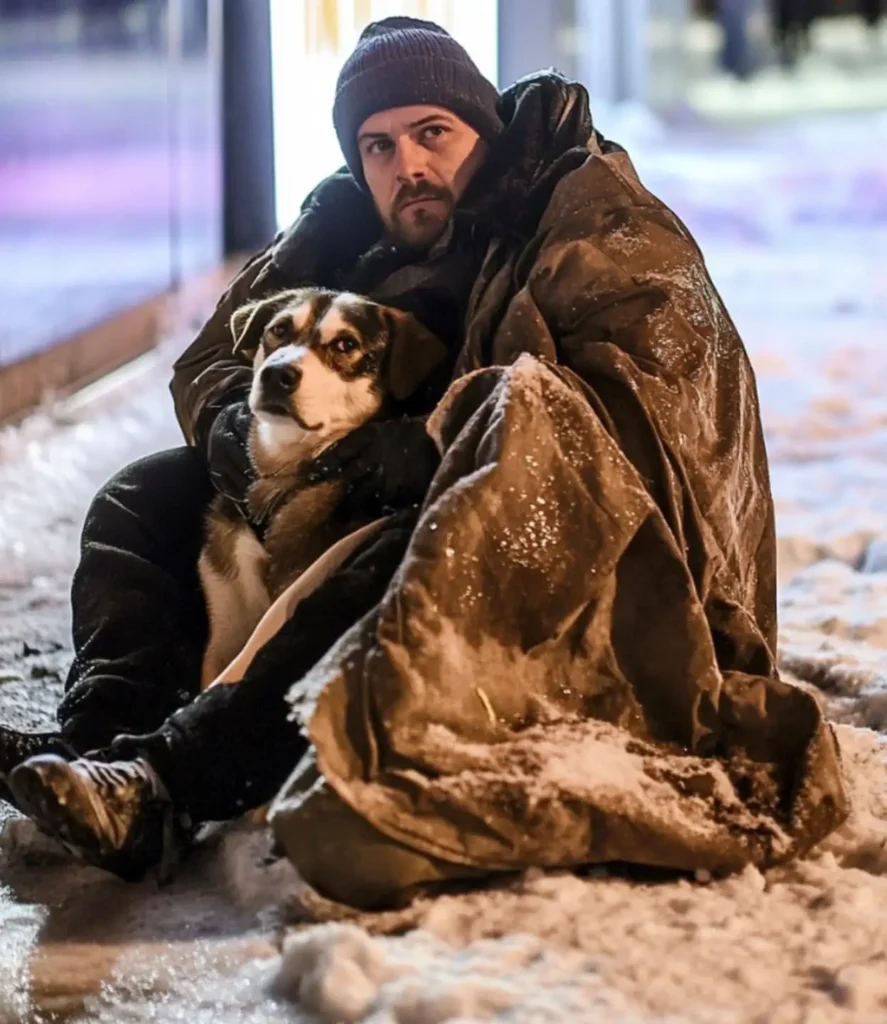
“Take Off That Uniform,” the Lieutenant Ordered. I Didn’t Flinch. But When My Jacket Slid Off, Revealing the Tattoo Beneath – 03-07-09 – the Air Left the Room. They Whispered About the Valley Ambush Like a Ghost Story. They Never Expected One of the Ghosts to Walk Back Onto Base. The Colonel Knew. And the Truth Was a Debt I Had Come to Collect.(2/2)
I wasn’t just running a drill. I was recreating the pressure cooker. I was forcing them to confront the paralysis, the indecision, the sheer terror that clamps down on your brain when everything goes sideways. I was inoculating them against the shock, burning the procedures into their muscle memory until they could perform them blind, deaf, and half-mad with fear.
I didn’t offer praise. I offered correction, sharp and immediate. I didn’t coddle. I demanded perfection, because perfection was the bare minimum required to keep someone breathing when the world was trying to tear them apart.
They hated it. I saw it in the panicked glances, the gritted teeth, the trembling hands. They were used to step-by-step instruction, controlled variables, positive reinforcement. I gave them none of that. I gave them the closest thing to the valley I could manufacture within concrete walls.
But they learned.
Under the relentless pressure, instincts began to kick in. They started communicating, shouting assessments over the noise. They moved with more purpose, applying dressings, clearing airways, treating for shock. They learned to work together, anticipate needs, cover each other’s backs.
They learned because the alternative – failure, simulated death – was made terrifyingly real.
After the first hour, I cut the simulation. The lights came up. The noise died. The smoke slowly cleared, revealing the carnage – dummies covered in blood, discarded wrappers, equipment scattered across the floor.
The medics stood panting, drenched in sweat, faces pale, eyes wide. The bravado was gone, replaced by a stunned, exhausted silence.
I walked among them, my voice quiet now but no less intense. “That,” I said, letting the word hang in the air, “was easy mode. Out there? It’s faster. It’s louder. The blood is real. The screams are real. And the cost of freezing is absolute.”
I let the silence stretch. Let the reality sink in.
“Clean it up,” I said finally. “We go again in thirty.”
The groans were audible, but no one argued. They started gathering equipment, moving with a new, weary purpose.
That night, after hours of relentless drills, one young Private lingered. Miller. The kid who’d dropped the tourniquet on day one but hadn’t hesitated since. His hands were steady now, but his eyes held a question.
“Ma’am,” he began, then stopped, unsure how to phrase it. “The… the tattoo. The date. Is it… true? What they whisper?”
I met his gaze. No softening. No drama. Just the flat truth. “It’s true.”
He swallowed hard. “How did you… how did you keep going?”
I thought for a moment, the faces of the fallen flashing in my mind. The weight of the ones I couldn’t save. “You don’t think,” I said quietly. “You just do. You do the next thing. You secure the airway. You stop the bleeding. You treat for shock. You move to the next casualty. And you keep doing the next thing until there are no more things to do, or until you can’t do them anymore.”
I looked at him, seeing the earnest fear in his young face. “And you remember why you’re doing it. You remember the man next to you. Because he’s doing the same for you. That’s all there is.”
He nodded slowly, understanding dawning in his eyes. It wasn’t about being a hero. It was about refusing to quit.
By the end of the second week, the atmosphere in the bay had transformed. The fear was still there – a healthy respect for the stakes – but it was overlaid with focus, with a grim determination. They moved faster, communicated better, worked together seamlessly. The whispers about my past had stopped, replaced by shouted commands and requests for assessment during drills.
They still saw the tattoo. But now, it wasn’t just a symbol of horror. It was a benchmark. It was proof that the impossible could be endured, that chaos could be navigated, that lives could be saved even when everything went wrong.
The resistance from the regular cadre softened. They watched my methods, initially skeptical, then grudgingly impressed. The medics were improving at an exponential rate. Their confidence was growing, grounded not in arrogance, but in competence hard-won under simulated fire.
The Colonel checked in periodically, his visits brief, his observations silent. He never questioned my methods. He just watched, nodded, and left. His backing was my shield, allowing me the freedom to teach the lessons the manuals left out.
But just as a rhythm was established, just as the training found its groove, the outside world intruded. The past, I was learning, never stayed buried for long.
The summons came one evening, delivered by a tight-lipped aide. Not to the Colonel’s office. To the main administration building. A secure conference room.
The Colonel was there, his face set in stone. And with him were the men in suits again. From Washington. This time, they weren’t asking for clarification. They were demanding answers.
Something had leaked. Fragments of my debrief after the valley, details that contradicted the official narrative, had surfaced in an internal investigation into procurement failures related to faulty communication gear used during that period. Suddenly, my firsthand account wasn’t just inconvenient history; it was potentially explosive evidence.
They didn’t want the truth about saving lives now. They wanted to know who to blame.
(Continued in Chapter 4: Reckoning)
Chapter 4: Reckoning
The secure conference room felt colder than the training bay, the silence more oppressive. The men from Washington—three of them this time, older, sharper, their eyes like polished obsidian—didn’t offer coffee. They didn’t bother with pleasantries. They sat across the long table, a stack of redacted files between us, their expressions radiating impatience and a barely concealed hostility.
The Colonel stood slightly apart, near the window, his posture rigid, his face unreadable. He was here as required, but this wasn’t his show.
The lead suit, a man with thinning gray hair and a permanent frown line etched between his brows, started without preamble. “Captain West. We’re reviewing the events surrounding Operation Viper’s Nest. Specifically, the equipment failures reported.”
He slid a heavily redacted document across the table. “Your initial debrief mentioned issues with communications gear. Can you elaborate?”
I looked at the document. Black lines obscured ninety percent of the text. It was a farce. They weren’t seeking information; they were seeking confirmation of a narrative they’d already constructed.
“The radios failed within the first thirty minutes, sir,” I stated, keeping my voice neutral. “Standard issue PRC-148s. Jamming, interference, possibly battery failure due to inadequate supply chain management—we never determined the exact cause under fire. Sat phones were ineffective due to the terrain. We were dark.”
“Were these failures reported prior to the operation?” another suit asked, leaning forward, his pen poised over a notepad.
“Concerns about intermittent signal loss with that model in mountainous terrain were noted in previous AARs from other units, sir. Whether those concerns reached the appropriate channels or were acted upon, I wouldn’t know.”
The first suit frowned. “So, you’re suggesting negligence?”
“I’m stating facts, sir. The comms failed. That failure significantly impacted our ability to request support or coordinate extraction. It directly contributed to the duration of the engagement and, consequently, the number of casualties.”
They exchanged glances. This wasn’t going the way they’d planned. They wanted a simple equipment malfunction story, something attributable to a specific faulty batch, a scapegoat they could isolate. I was pointing towards systemic issues, towards ignored warnings.
“Let’s move on to air support,” the third suit interjected smoothly, trying to regain control. “The official record indicates air assets were unavailable due to prevailing weather conditions.”
My jaw tightened. “With respect, sir, that’s incorrect. We had visual contact with multiple CAS platforms earlier in the day, prior to the ambush. Weather was not a factor during the critical hours of the engagement. Air support was requested repeatedly via alternate channels relayed through a sister unit miles away. It was denied. Reason given: LZ too hot, risk assessment unacceptable.”
The silence that followed was thick with unspoken accusations. Risk assessment unacceptable. A bureaucratic phrase that meant letting soldiers die rather than risking a pilot or an expensive aircraft.
“Are you questioning the command decision, Captain?” the first suit asked, his voice dangerously soft.
“I’m providing a factual account of the events as I witnessed them, sir,” I replied, holding his gaze. “Twenty-three men survived because we fought our way out when support was denied. Fifteen did not survive.”
The temperature in the room seemed to drop several degrees. They weren’t getting the answers they wanted. They were getting the truth, raw and inconvenient.
“Your… methods… during the engagement,” the second suit began, changing tack, “specifically regarding triage and treatment protocols. Were they strictly according to doctrine?”
I knew where this was going. They were looking for a way to discredit me, to paint me as reckless, perhaps unstable.
“Under mass casualty conditions with limited resources and no evacuation capability, doctrine becomes a guideline, not a straitjacket, sir,” I said, my voice hardening. “Decisions were made based on prioritizing salvageable casualties, conserving critical supplies, and maximizing the chances of survival for the greatest number. Textbooks don’t account for running out of morphine while men are screaming, or using ripped uniform strips for bandages when the aid bags are empty.”
“So you deviated from standard medical procedures?”
“I adapted standard procedures to catastrophic circumstances, sir. That’s why men are alive today who otherwise wouldn’t be.”
The first suit leaned back, tapping his pen on the table. “Captain, your… unique perspective… is noted. However, your presence here, the circumstances surrounding your survival, and frankly, that tattoo—” he gestured dismissively “—have created a certain… narrative. A potentially disruptive one. It might be best, for all involved, if your contribution to this training cycle were concluded. Perhaps a transfer to a non-operational role…”
He was trying to bury me. Bury the truth along with me. Send the ghost back to the shadows.
Before I could respond, the Colonel spoke.
He turned from the window, his voice quiet but resonating with absolute command. “Captain West stays.”
The suits looked at him, startled.
“Colonel, with all due respect—” the first suit began.
“Respect,” the Colonel cut him off, stepping towards the table, his eyes like chips of ice, “is earned. Captain West earned hers in that valley, under conditions none of you could comprehend, let alone survive. She is here, under my direct command, fulfilling a critical training requirement requested at the highest levels. Her methods are saving lives before these medics even see combat. Her ‘narrative,’ as you call it, is not disruptive; it’s essential. It’s the truth these young soldiers need to hear, not the sanitized version you prefer.”
He leaned forward, placing his hands flat on the table, his gaze sweeping over the three men. “This inquiry is over. Captain West’s testimony is clear. The failures were systemic, not individual. If you wish to pursue blame, I suggest you look higher up the chain, perhaps starting with the procurement officers who signed off on faulty gear and the analysts who ignored the intelligence warnings.”
He straightened up. “Captain West is dismissed. Gentlemen, you have your clarification. Have a safe trip back to Washington.”
The finality in his voice was absolute. The suits looked momentarily stunned, then quickly gathered their papers, their faces tight masks of fury and thwarted ambition. They filed out of the room without another word, without acknowledging me.
The door clicked shut behind them.
The Colonel turned to me. The hardness in his eyes softened slightly. “They won’t forget this,” he said. “Bureaucrats have long memories.”
“Neither will I, sir,” I replied.
He nodded. “Go train your medics, Captain. Show them how it’s done.”
I stood, picked up my folded jacket, and met his gaze. “Thank you, sir.”
He simply nodded again. “Earned, Captain. It was earned.”
Walking out of that building, back into the heat of the Texas afternoon, felt different. The weight hadn’t vanished entirely, but it had shifted. The truth was out, spoken aloud, defended. It wasn’t just my burden anymore.
When I reached the training bay, the medics were waiting, geared up for the next scenario. They looked at me, questioning looks in their eyes. They knew I’d been summoned. They knew it involved the valley.
I didn’t offer explanations. I just picked up the simulation remote.
“Alright, listen up!” I barked, my voice sharp, pulling them back to the present, back to the mission. “Next scenario: Complex ambush, multiple buildings, casualty retrieval under active fire. Smoke is live, sound is live. Let’s move!”
They scrambled, falling into formation, the apprehension replaced by focused intensity. As they moved out, Private Miller caught my eye and gave a slight, almost imperceptible nod.
The ghosts were still there. But we weren’t running from them anymore. We were learning from them. And that, I realized, was the only way to truly honor the fallen. Not by burying the truth, but by using it to forge the future.
More in uncategorized
I Thought My Mother Ruined My Life Until My Sister Told Me the Truth

‘I’m Divorcing You’: The Shocking Kinder Surprise I Got After Telling My Husband I Was Pregnant