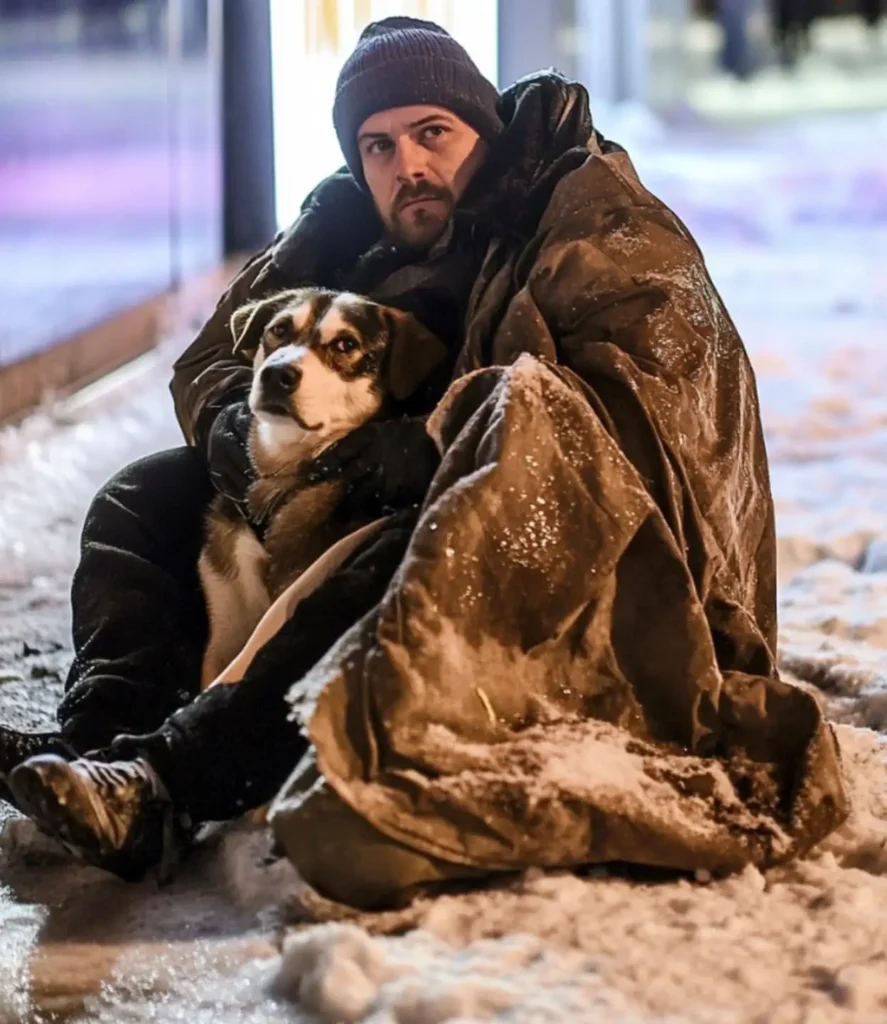
The Seven-Dollar Contract: When Angels Wear Leather(2/2)
Big Mike rose slowly from his chair, and the transformation was remarkable. Without raising his voice, without clenching his fists, without making any overtly threatening gestures, he simply became an immovable force. At six-foot-four and weighing close to three hundred pounds, most of it muscle earned through decades of physical labor and military discipline, Mike’s presence filled the space around their table like a gathering storm.
“Son,” he said, his voice a low, dangerous rumble that somehow carried clearly through the restaurant despite its quiet tone, “I strongly suggest you return to your booth. This family is enjoying some ice cream with us, and we’re having a pleasant conversation. There’s no need for you to interrupt.”
The stepfather’s momentum faltered for a moment, but his rage and his assumption that his authority over Sarah and Tyler was absolute drove him forward. “The hell they are!” he spat, his voice rising even higher. “That’s my wife and my kid, and they’re coming with me right now! You bikers think you can intimidate everyone, but I’m not afraid of you!”
“No,” Mike said, taking a single step forward. Behind him, the other fourteen members of Thunder Road Veterans MC rose silently from their chairs, creating a wall of leather and quiet determination that seemed to fill the entire corner of the restaurant. “That is a mother and a child who are now under our protection. You are not going to approach them. You are not going to touch them. You are going to return to your table, pay your bill, and leave this restaurant. And you are not going to follow them when they leave. Am I making myself perfectly clear?”
The contrast between the two men was striking and absolute. The stepfather was probably in his thirties, physically fit but soft around the edges, the kind of man who maintained his authority through psychological manipulation and the threat of violence against people smaller and weaker than himself. Big Mike and his brothers were men who had faced actual violence, who had learned to fight when fighting was necessary and to project overwhelming force when fighting could be avoided.
The stepfather looked at the wall of veterans that had materialized between him and his victims, and for the first time, probably in years, he found himself facing people who were not intimidated by his anger. These were men who had dealt with actual threats, who had learned to distinguish between bluster and genuine danger, and who were not impressed by the kind of domestic terrorism that had kept Sarah and Tyler living in fear.
He was a bully, and bullies are fundamentally cowards. When confronted with people who would not be intimidated, who would not back down, who possessed both the willingness and the ability to stop him, his false courage evaporated immediately. His face went from red with rage to pale with realization, and he began backing away from the table with the kind of stammering retreat that marked him as exactly what he was—a predator who only attacked those who couldn’t fight back.
“This isn’t over,” he muttered, but his voice lacked conviction. “I know where you live, Sarah. This isn’t over.”
“Yes, it is,” said a quiet voice from the back of the group. Jimmy “Shark” Martinez, a former Army Ranger who had earned his law degree on the GI Bill and now practiced family law with a specialty in domestic violence cases, stepped forward with a business card in his hand. “My name is James Martinez, and I’m an attorney. I’m going to be representing Mrs…” He looked at Sarah questioningly.
“Patterson,” she whispered. “Sarah Patterson.”
“I’m going to be representing Mrs. Patterson and her son in obtaining a restraining order against you, effective immediately. I suggest you leave now, because if you make any further threats against my clients, I’ll be filing additional charges for criminal intimidation. And just so we’re clear, every word you’ve said in this restaurant has been witnessed by fifteen military veterans who will be happy to testify about your behavior in court.”
The stepfather looked around the restaurant, realizing for the first time that every other customer was staring at him, that his public meltdown had been witnessed by dozens of people, and that his ability to operate in secrecy and isolation had just been permanently destroyed. Without another word, he turned and walked quickly toward the exit, his swagger replaced by the hurried steps of someone who suddenly understood that the balance of power had shifted irrevocably against him.
That confrontation in the restaurant was the end of the immediate threat, but it was just the beginning of what would become a months-long campaign to ensure that Sarah and Tyler were not just safe from immediate harm but permanently free from the fear that had dominated their lives.
The Thunder Road Veterans MC didn’t let Sarah and Tyler return home that night. While Shark accompanied Sarah to the courthouse to file emergency restraining orders and begin the legal process that would protect them, the rest of the club took Tyler to their clubhouse—a converted auto repair garage that served as their meeting place, community center, and informal headquarters for their various charitable activities.
The clubhouse was a revelation for Tyler. Instead of the dark, threatening environment he might have expected, he found a space that was part workshop, part family room, and part military museum. The walls were covered with photographs from deployments, awards and commendations, and pictures of club members with their families. There was a full kitchen where the wives and girlfriends of club members prepared meals for charity events, a workshop area where they restored vintage motorcycles and taught mechanical skills to local kids, and a lounge area with comfortable chairs where the older members gathered to share stories and mentor younger veterans who were struggling with the transition to civilian life.
They bought Tyler the biggest chocolate milkshake the local ice cream shop could construct, along with a cheeseburger and fries that disappeared with the enthusiasm of a child who might not have been eating regular meals. For the first time in months, possibly years, Tyler looked and acted like a normal seven-year-old boy—laughing at the veterans’ stories, asking questions about their motorcycles, and gradually relaxing as he realized that these intimidating-looking men were actually gentle, protective figures who had no intention of hurting him.
Meanwhile, Shark was working with a network of contacts he had developed during years of representing domestic violence victims. The legal system moved slowly under normal circumstances, but when a decorated combat veteran and experienced attorney showed up with clear evidence of child and spousal abuse, along with the implicit backing of an entire motorcycle club full of veterans, bureaucratic wheels began turning with unusual speed.
Emergency restraining orders were filed and approved within hours. Sarah’s injuries were photographed and documented by medical professionals who were part of Shark’s professional network. Tyler’s bruises were examined by a pediatric specialist who could testify about the pattern and age of his injuries. Most importantly, both Sarah and Tyler were interviewed by social workers and law enforcement officers who were trained to handle domestic violence cases and who understood the importance of building an airtight legal case before the abuser could retaliate or flee.
The stepfather—whose name was Derek Hoffman and who, they learned, had a history of domestic violence charges that had been dropped when previous victims had been too terrified to testify—made the mistake of trying to contact Sarah multiple times during the first week after the restaurant incident. Each phone call, text message, and attempt to approach her apartment was a violation of the restraining order and provided additional evidence for the criminal charges that were rapidly mounting against him.
But the Thunder Road Veterans MC didn’t rely entirely on the legal system to ensure Sarah and Tyler’s safety. Derek Hoffman received one final visit from Shark and three of the club’s most experienced members—men whose military backgrounds included specialized training in psychological operations and whose civilian careers had taught them exactly how to make someone understand that their behavior had consequences.
They didn’t threaten him. They didn’t touch him. They simply explained, in very clear and specific terms, what his future would look like if he made any further attempts to contact or harm Sarah and Tyler. They detailed the assault charges that would be filed against him, the prison sentence he was likely to receive, and the fact that fifteen military veterans now considered his behavior their personal responsibility to monitor and address.
More importantly, they explained that his actions were no longer secret. His employer had been informed about the domestic violence charges. His neighbors knew what kind of man he was. His family had been contacted and made aware of the situation. The isolation and secrecy that had allowed him to operate as a domestic predator had been permanently destroyed, replaced by a level of scrutiny and accountability that would make any future abuse impossible to hide.
Derek Hoffman left town within a week, apparently deciding that starting over somewhere else was preferable to facing the legal consequences of his actions and the ongoing attention of a motorcycle club full of veterans who had made his behavior their problem to solve.
But the Thunder Road Veterans MC didn’t just remove the immediate threat—they committed themselves to helping Sarah and Tyler rebuild their lives in ways that would prevent them from ever being vulnerable to abuse again. The club had a tradition of supporting military families and veterans in crisis, and they simply expanded that support to include a civilian family that had become part of their extended community.
They pooled their resources to help Sarah and Tyler move to a new apartment across town, in a complex that was safer and more affordable than their previous housing. The moving day became a club event, with fifteen Harley-Davidsons serving as the most intimidating moving truck escort in the city’s history. By the time they finished moving Sarah’s belongings, every neighbor in the complex knew that she and Tyler were under the protection of people who took that responsibility seriously.
The club members became Tyler’s surrogate uncles and mentors, filling the role that positive male figures should have played in his life from the beginning. They took him to baseball games and taught him how to work on motorcycle engines. They showed up for parent-teacher conferences at his school, a line of leather-clad veterans making it clear to everyone that Tyler was loved, supported, and protected by people who would not tolerate any form of bullying or mistreatment.
More importantly, they demonstrated to Tyler what actual masculinity looked like—strength used to protect rather than intimidate, authority exercised with responsibility and compassion, and the understanding that real men take care of people who are smaller and more vulnerable rather than exploiting that vulnerability for personal gratification.
Sarah, meanwhile, was receiving support that addressed both her immediate needs and her long-term independence. Shark helped her navigate the complex legal process of finalizing her divorce and ensuring that Derek could never gain custody or visitation rights with Tyler. Other club members helped her find steady employment and provided childcare during the transition period. The club’s wives and girlfriends became her social support system, helping her rebuild the friendships and connections that Derek had systematically destroyed during their relationship.
Several months after that initial encounter in the Denny’s, the Thunder Road Veterans MC was hosting their annual summer barbecue at the clubhouse—an event that brought together club members, their families, and the various people they had helped throughout the year. It was a celebration of community and the bonds that connected people who had committed themselves to protecting and supporting each other.
Tyler had become a fixture at these events, completely comfortable among the veterans and their families, treated as an honorary nephew by men who had learned to value the innocence and resilience of children. He had grown visibly in the months since they had first met him—not just physically, but emotionally. The haunted look in his eyes had been replaced by the normal confidence and curiosity of a healthy seven-year-old boy.
During the barbecue, Tyler approached Big Mike with a piece of paper folded carefully in his small hands. It was a drawing he had made with crayons and markers, depicting a scene that had clearly been important to him. The picture showed a massive, smiling Tyrannosaurus Rex wearing a leather vest and motorcycle boots, standing protectively over a small boy. In the background, a smaller, meaner-looking dinosaur was running away in obvious fear.
“This is for you,” Tyler said, handing the drawing to Mike with the ceremonial gravity that children bring to their most important gifts. “That’s you,” he continued, pointing to the T-Rex. “You’re the dinosaur who scared away the bad dinosaur and made sure he could never hurt anyone again.”
Big Mike accepted the drawing with the same solemnity that Tyler had offered it, understanding that this was far more than a child’s artwork—it was a testament to the transformation that had taken place in both their lives. He carefully folded the drawing and placed it in his wallet, next to the seven crumpled dollar bills that Tyler had offered as payment for a contract that had ultimately been fulfilled in ways none of them could have anticipated.
“Best payment I ever received for a job,” Mike said, his voice thick with emotion as he ruffled Tyler’s hair. “And the most important work any of us has ever done.”
Tyler’s response was a grin that lit up his entire face—the expression of a child who understood, in whatever way seven-year-olds understand such things, that he was safe, loved, and protected by people who would never let anyone hurt him again.
He had walked into that Denny’s looking for a hitman, carrying seven dollars and a desperate plan born from a child’s understanding of how to solve adult problems. Instead, he had found something infinitely more valuable—a family of protectors who had taught him the difference between violence and strength, between fear and respect, between the kind of men who hurt children and the kind of men who dedicate their lives to making sure that children are never hurt.
The Thunder Road Veterans Motorcycle Club had received many requests for help over the years, but Tyler’s seven-dollar contract remained the most important mission they had ever undertaken. It reminded them why they had committed themselves to service in the first place, and why some battles are too important to leave to anyone else to fight.
In the years that followed, Tyler would grow up surrounded by men who had shown him that true strength comes from protecting those who cannot protect themselves, that real courage is standing up for people who have no voice, and that the most important victories are won not on battlefields but in the quiet moments when someone who was drowning in despair discovers that they are not alone after all.
And sometimes, late at night when the clubhouse was quiet and the veterans gathered to share stories of their military service and their civilian missions, Big Mike would pull out that carefully preserved drawing of a T-Rex in a leather vest, and remember the day when a little boy’s desperate request for help had reminded them all why they had chosen to be the kind of men who answer when innocence calls for protection.
The seven-dollar hit job had indeed changed everything—not through violence, but through the kind of overwhelming love and protection that transforms victims into survivors and strangers into family.
More in uncategorized
I Thought My Mother Ruined My Life Until My Sister Told Me the Truth

‘I’m Divorcing You’: The Shocking Kinder Surprise I Got After Telling My Husband I Was Pregnant