The amount I had scraped together through sleepless nights and relentless focus. The amount that represented every inch of my independence. Before I could form a response, my dad took the phone.
“You’re successful now,” he said.
“You have money. We raised you.
We invested in you. It’s time you repay the family.”
There was a pause.
“Sell your home if you need to.”
Those last four words sliced through me.
Sell your home. As if the condo I had fought for—the one I’d mortgaged to save BuildFlow—was just an asset they could cash in. I swallowed hard.
“Dad, I can’t,” I said.
“This condo is all I have. It’s the foundation that kept my company alive.”
Silence.
Then a heavy sigh. “So you’re choosing yourself over your family.”
Something inside me snapped—not in anger, but in clarity.
“I’m choosing fairness,” I said quietly.
“Something I never got.”
My mom began to cry. My dad muttered something about ingratitude. I hung up before their guilt could crush me.
For the next week, the calls didn’t stop.
My phone lit up every few hours. Voicemails piled up.
Rosie texted paragraph after paragraph, each message dripping with entitlement. You’re the only one who can fix this.
You owe us.
Stop being selfish. I ignored them all. I worked, I slept, I ate in silence, my phone face down beside that same San Jose fridge, the flag magnet from back home now holding up one of our first signed BuildFlow invoices.
I thought the distance would hold.
I thought they would eventually accept my decision. I was wrong.
One warm autumn afternoon, my doorbell rang and didn’t stop. I wiped my hands on a dish towel and opened the door, expecting a delivery or a neighbor.
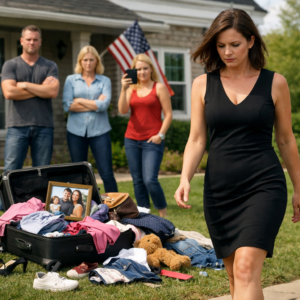
Instead, my parents stood on my doorstep with Rosie at their side.
My dad looked stern, jaw tight. My mom looked tired in a way I’d never seen before. Rosie stood with her arms crossed, the picture of a wronged princess.
“We need to talk,” my dad said, brushing past me into the living room like he still owned every space I stood in.
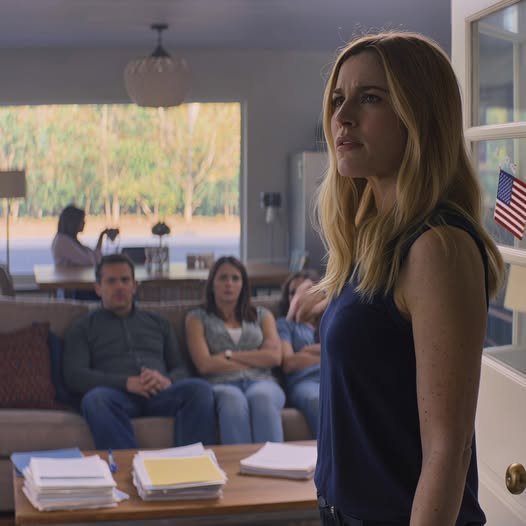
They settled on my couch, visibly uncomfortable in my small condo that didn’t match Rosie’s old luxury aesthetic. I stayed standing.
My mom started, voice trembling. “Ayla, what happened with Rosie’s company… no one could have predicted it.
The market changed.
She just needs time. We all do.”
I said nothing. My dad leaned forward, elbows on his knees.
“You have the ability to help,” he said.
“All we’re asking is that you sell this place. Use the money to save the family.”
Rosie finally spoke, her tone thick with accusation.
“You know I didn’t mean for things to fall apart,” she said. “But you’re doing well.
Why can’t you do something for us for once?”
That word—for once—nearly made me laugh.
I drew a steady breath. “For once?” I repeated. “All my life, you’ve been given everything.
Ballet classes, camps, cars.
A $725,000 loan. When I asked for $70,000 after years of working and planning and building, you said it was too risky.
Do you hear yourselves?”
Rosie rolled her eyes. “That was different.”
I stared at her.
“How?”
She opened her mouth and closed it again.
My dad cut in. “We believed in her dream,” he said. “She needed help.”
“And I didn’t?” I asked.
My voice stayed even, but the words vibrated in the air.
“When I asked for $70,000,” I continued, “I had a working prototype. Clients willing to sign contracts.
A plan. Everything you preach about responsibility, I lived it.
But you looked me in the face and said, ‘It’s too risky.’”
My mom’s eyes filled with tears.
“We didn’t want you to struggle,” she whispered. “I struggled anyway,” I said. The room went quiet.
Air thick enough to cut.
“When Rosie wanted a BMW to look successful,” I went on, “you borrowed three-quarters of a million dollars without question. When her company failed, you shielded her from consequences.
When the debt grew, you blamed bad luck. But when I built something real, when I fought for every inch of this life, you barely acknowledged it.”
My dad shifted, uncomfortable.
“We trusted you to take care of yourself,” he said.
I nodded once. “That’s exactly the difference,” I said. “You trusted me to survive alone.
You trusted her to be saved at every turn.”
Rosie huffed, folding her arms tighter.
“You’re being dramatic. This is family.
Families help each other.”
I looked at her with a kind of sadness I hadn’t expected. “Families also recognize effort,” I said.
“They acknowledge sacrifice.
They don’t demand their children destroy the very things they built.”
My dad’s voice sharpened. “So that’s it?” he asked. “You’ll let us lose everything?”
His words hit me, but not the way he intended.
For a moment, I saw them not as all-powerful figures but as scared people, terrified of losing their home, their image, the story they’d told themselves about being good parents who did everything for their kids.
Then I remembered the nights I coded until dawn, the meals I skipped, the mortgage paperwork I’d signed with shaking hands. I remembered the first time I saw BuildFlow’s balance sheet in the black.
I remembered every time I’d stood alone in a room and chosen myself because no one else would. “I’m sorry you’re struggling,” I said at last.
“But I am not selling my home.”
My mom sobbed.
Rosie scoffed. My dad shook his head slowly, like I’d personally steered the ship into the iceberg. They waited for me to crumble, to apologize, to explain.
Instead, I gave them the only answer I owed.
“No.”
It came out quiet. But it carried the weight of every year I spent being overlooked, every apology I swallowed, every dream dismissed.
Rosie shot to her feet. “You’re heartless,” she snapped.
I didn’t flinch.
“No,” I said. “I’m finally done being your backup plan.”
My dad’s face hardened. “You’ll regret this,” he said.
I walked to the front door, the same hand that used to reach for our old Austin house key now resting on the deadbolt of the condo I’d nearly lost to my own dream.
I opened it. “I already spent a lifetime regretting things that weren’t mine to carry,” I said.
Slowly, stiffly, they stood. They walked past me, each step echoing the end of something I had tried too long to fix.
My mom paused in the doorway, her eyes pleading for a version of me that no longer existed.
I didn’t speak. I didn’t apologize. I simply closed the door.
It clicked shut—soft, certain, final.
I leaned against it and let the quiet of the condo settle around me. Tears gathered, fell, then stopped.
Not because I wasn’t hurting. But because I had finally chosen myself.
And for the first time in my life, choosing myself didn’t feel selfish.
It felt right. In the six months that followed, everything settled into a strange, quiet distance. I didn’t block my parents.
But the calls stopped.
The texts stopped. Even the guilt went quiet.
All that remained were occasional updates from Austin—short messages from people who still thought I wanted to hear. The red brick house I grew up in was mortgaged, then listed for sale.
My dad pulled from his retirement early.
My mom spent more time at church than at home. Rosie moved in with her boyfriend, posting carefully curated photos that tried and failed to hide the fallout. Meanwhile, BuildFlow surged forward.
We signed multiple long-term contracts.
We doubled our team. We moved into a brighter office in a busier part of town with real windows that didn’t leak when it rained.
I left my small condo for a quiet rental house in Palo Alto with a tiny backyard where someone had left a rusted flag holder screwed into the porch railing. One Saturday, I found a small American flag at the hardware store checkout and bought it without thinking.
That evening, I slid it into the holder, watching it lift and flutter in the soft breeze.
Not as a performance. Not as a picture-perfect postcard. But as a marker.
A reminder that this life—the mortgage, the risk, the company, the boundaries—was mine.
Some nights I sat outside with a mug of coffee, listening to the distant hum of the neighborhood, the flag rustling quietly above me. The pain of what I’d lost didn’t disappear.
But it softened. In its place grew something steadier.
The certainty that choosing myself was not abandonment.