Holly Walter sat at the table with a clipboard, her nurse face on—calm, focused, eyes sharp. The clipboard wasn’t for medicine today. It was for coping strategies and resources and appointments, the paper scaffolding people built when life threatened to collapse.
Cassie glanced up when Stuart walked in.
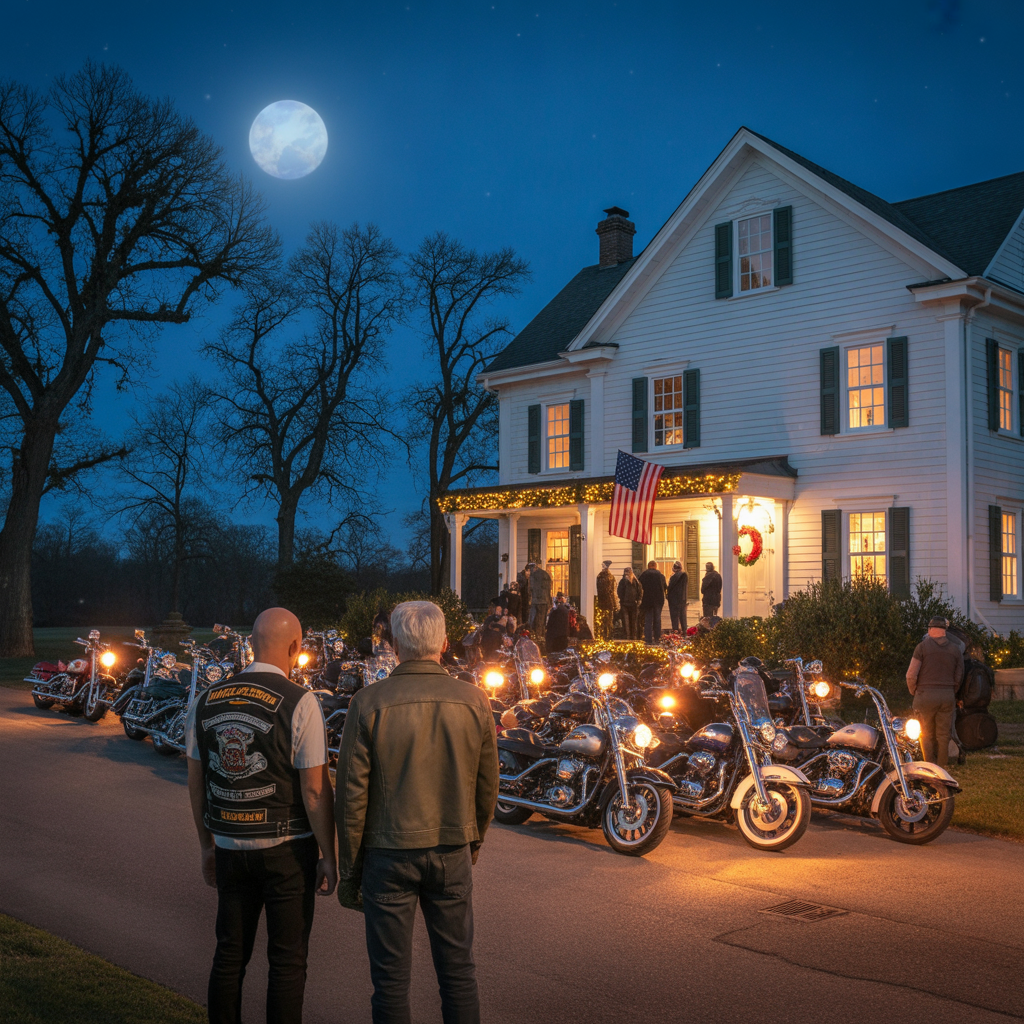
“You didn’t tell me there were that many men,” she said quietly.
Stuart poured himself coffee, the sound of the pot too loud in the quiet.
“I didn’t want you worrying,” he said.
Cassie’s gaze stayed on him.
“I worried anyway.”
Holly cleared her throat softly, like she was reminding them both she was there.
“Your therapist will be here at two,” she said. “Dr. Caldwell.”
Cassie’s fingers curled around a mug.
“Fern,” she said, like she’d already met the name and weighed it.
Stuart looked at Holly.
“She’s good?” he asked.
Holly met his eyes.
“She’s the best I know,” she said. “And she doesn’t scare easy.”
Stuart’s instincts bristled at the idea of someone entering his house, his sanctuary, after everything. But he also knew he couldn’t patch this wound with willpower and barbecue and a shooting range.
Cassie took a breath, steadying herself.
“I’m not broken,” she said, and there was steel there.
Stuart walked over and set a hand on her shoulder, gentle.
“I know,” he said. “But you’re hurt.”
Cassie’s eyes watered, but she blinked it back.
“I’m mad,” she whispered. “And I don’t know where to put it.”
Stuart didn’t have an answer. He had plenty of answers for anger. He’d built a career on turning anger into action. But this was her anger, and the last thing he wanted was to teach her that the only way to survive was to become as hard as him.
“You’ll learn,” he said. “And Fern will help.”
At two o’clock, Dr. Fern Caldwell arrived in a Subaru with dented bumper stickers and a calm that felt earned. She was in her forties, hair tied back, eyes the color of river stones. She didn’t wear a white coat. She wore jeans, boots, and a soft sweater like she was visiting family.
She introduced herself in the doorway, voice steady.
“Cassie,” she said.
Cassie stood up, shoulders tense, like she was bracing for something.
“Hi,” she answered.
Fern’s gaze flicked to Stuart for half a second, a subtle check, then back to Cassie.
“I’m not here to make you relive anything you don’t want to,” Fern said. “I’m here to give you tools. You’re the one in charge.”
Cassie’s throat bobbed.
“Okay,” she said, cautious.
Fern glanced at Holly.
“Could we have the living room?” she asked.
Holly nodded, stood, and gathered her clipboard.
“I’ll be in the kitchen,” she said.
Stuart didn’t move.
Fern looked at him, direct but not confrontational.
“Mr. Mueller,” she said. “If you’re comfortable, I’d like to start with Cassie alone. The first session matters.”
Stuart’s jaw flexed. His body didn’t like leaving Cassie. His mind hated handing control over to someone else. But Cassie looked at him, and in her eyes there was a plea that wasn’t fear—it was autonomy.
“It’s okay, Dad,” she said. “I can do this.”
Stuart nodded once.
“I’ll be right here,” he said.
Cassie’s mouth quirked in a small, tired smile.
“I know.”
He stepped into the kitchen with Holly, hovering near the window like he could guard the house with his eyes. Holly busied herself rinsing dishes that were already clean. It was her way of giving her hands something to do.
“You okay?” she asked quietly.
Stuart stared out at the tree line.
“No,” he said. “But I’m functioning.”
Holly’s voice softened.
“That’s not the same thing.”
Stuart’s eyes flicked to her.
“Don’t,” he said, not harsh, just warning.
Holly held his gaze anyway, because she was the kind of person who’d held pressure on wounds while men screamed, and she didn’t scare easy either.
“I’m not going to tell you what to do,” she said. “I’m going to tell you what I see.”
Stuart stayed silent.
Holly gestured toward the living room where Fern’s voice drifted low, measured.
“I see a man who did what he thought he had to do,” she said. “And I see a man who doesn’t know how to come back from it.”
Stuart swallowed. His throat felt tight.
“I came back from war,” he said.
Holly shook her head.
“You came home,” she corrected. “That’s different.”
Stuart’s coffee mug trembled slightly in his hand. He hated that she noticed.
“I’m fine,” he said automatically.
Holly’s eyes were kind, which made it worse.
“Stuart,” she said, and she rarely used his first name like that. “Fine is a word people use when they’re afraid of what happens if they admit they’re not.”
He didn’t respond. Instead, he listened to the faint murmur of Fern and Cassie in the other room, and he prayed—not to a god he didn’t believe in, but to whatever force in the universe decided whether people broke or bent.
After an hour, Fern stepped into the kitchen alone. Cassie stayed behind, sitting on the couch, staring at the floor like she’d just run a marathon.
Fern’s face was composed, but her eyes held weight.
“She’s carrying a lot,” Fern said.
“What does she need?” he asked.
Fern looked at him. Really looked.
“She needs you to stay steady,” Fern said. “Not aggressive. Not numb. Steady.”
Holly leaned back against the counter.
“And what does he need?” she asked, because she couldn’t help herself.
Fern didn’t flinch.
“He needs someone to tell him the truth,” Fern said. “And he needs to stop pretending he can muscle his way through grief.”
Stuart bristled.
“I’m not grieving,” he said.
Fern’s voice stayed calm.
“You’re grieving the version of your daughter you can’t get back,” she said. “And you’re grieving the version of yourself you used to believe in.”
The words hit like a punch. Stuart’s chest tightened.
Holly set a hand on his arm, grounding.
Fern continued, gentle but firm.
“We’re going to work on Cassie’s nightmares,” she said. “Her body is stuck in the moment. We need to teach it that the moment is over. That she’s safe. That she has control.”
Stuart’s voice was low.
“She’s safe,” he said, like he needed to say it.
Fern nodded.
“She is now,” she agreed. “But safety isn’t just locks and weapons. Safety is also a nervous system that believes it.”
Stuart stared at his hands. The hands that had built a life and ended others.
“How long?” he asked.
Fern didn’t lie.
“Months,” she said. “Maybe years. Trauma changes people. But it doesn’t have to own them.”
Cassie stepped into the doorway then, eyes red but clear.
“I’m tired,” she said.
Holly moved toward her instinctively.
“Come on,” Holly said softly. “Let’s get you upstairs. Rest.”
Cassie looked at Stuart before she moved.
“Dad,” she said.
Stuart’s heart clenched.
“Yeah, baby?”
Cassie hesitated, then forced the words out.
“Fern said the anger is normal,” she said. “That I don’t have to pretend it’s not there.”
Stuart nodded, slow.
“She’s right,” he said.
Cassie swallowed.
“And she said… the part that keeps replaying in my head isn’t what they did,” she said, voice shaking. “It’s the moment I realized nobody was coming. Like I was alone in it.”
Stuart’s eyes burned.
“I came,” he said.
“I know,” Cassie whispered. “But I didn’t know then.”
Stuart stepped forward, careful, like he was approaching something fragile.
“I’m sorry,” he said. “I’m sorry you ever felt alone.”
Cassie’s lip quivered, then she nodded once and let Holly guide her away.
When Cassie was upstairs, Fern stayed a moment longer with Stuart on the back porch. The cold air made their breath visible. Fern’s hands were in her pockets. Stuart’s were wrapped around a mug he didn’t need.
“I’m not your therapist,” Fern said. “But I’m going to say something anyway.”
Stuart waited.
“You can’t keep building your world around the next attack,” Fern said. “If you do, you’ll win every battle and lose your daughter.”
Stuart’s voice came out rough.
“I’d do anything to keep her safe,” he said.
Fern’s gaze didn’t soften.
“I know,” she said. “That’s why I’m worried.”
Two days later, the first federal agent arrived.