“So, we have espionage,” Dana summarized. “We have forgery. We have blackmail. But the question remains: Why? Why would a wealthy real estate family go to such criminal lengths to destroy their own daughter’s company?” Dana turned to the judge. “We found the answer in the bank records of the petitioner.”
The screen changed to a timeline—the 18-minute roundtrip graphic. “On November 12th, two years ago, the date of the alleged loan, Monroe Commercial Holdings transferred $4.2 million to Derek Monroe’s personal account,” Dana explained. “Eighteen minutes later, Derek Monroe transferred that same amount back to a shell company owned by the parent firm. Why move the money in a circle?” Dana asked rhetorically. She clicked the final slide. It was a screenshot of a loan covenant from Liberty Regional Bank.
“Because on that day,” Dana said, pointing to the date, “Monroe Commercial Holdings was facing a liquidity audit. If their cash on hand dropped below $5 million, they would default on their primary loans. They moved the money to create a snapshot, a moment in time where Derek looked liquid, and the company looked like it had expenses. It was accounting fraud to fool their own bank.”
The gasps in the room were audible now. This wasn’t just a family squabble anymore. This was bank fraud. This was federal prison territory.
“And today,” Dana continued, her voice dropping to a steely whisper, “today, Monroe Commercial is facing that same liquidity crisis again. Interest rates are up. Their malls are empty. They are drowning.” She turned and pointed an accusing finger straight at my father. “They didn’t sue Madison Cook because she owed them money. They sued her because she won the Rivergate Project. They needed to seize control of her company so they could access the $120 million in city funds to pay off their own toxic debt. They weren’t trying to save her. They were trying to use her as a human shield to save themselves.”
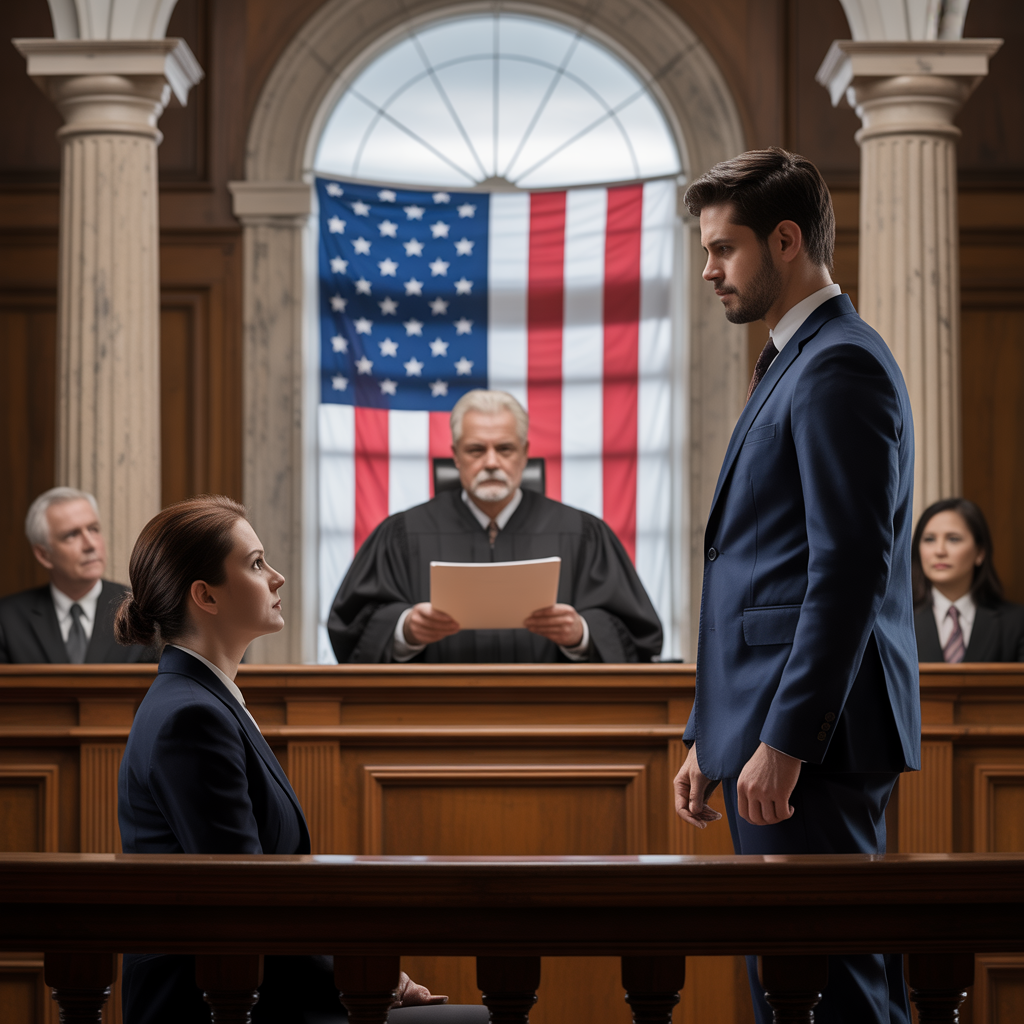
The silence that followed was absolute. It was the silence of a guillotine blade hanging at the top of its arc. Judge Hart looked at the screen. He looked at the metadata. He looked at the 18-minute loop. And then he looked at Derek Monroe.
“Mr. Monroe,” the judge said. “Do you have anything to say?”
Derek opened his mouth. He looked at Croft. Croft stared at the table. He looked at our father. Our father was staring at the floor, a broken gray man.
“I…” Derek croaked. “It was a misunderstanding.”
“A misunderstanding,” Judge Hart repeated. He sounded tired. “You forged a signature. You forged a bank wire. You blackmailed a witness. You filed a false petition in federal court. And you tried to destroy a legitimate business for your own gain.”
The judge picked up his gavel. He didn’t slam it. He held it, weighing it.
“This court finds the involuntary petition filed by Derek Monroe to be without merit,” Judge Hart ruled. “It is dismissed with prejudice. That means you cannot refile it, ever.” He turned a page in his notebook. “Furthermore, due to the egregious nature of the bad faith litigation, the fraud on the court, and the criminal implications of the evidence presented, I am sanctioning the petitioner for the full amount of the debtor’s legal fees. And,” the judge continued, his eyes locking onto Miles Croft, “I am referring the entire record of this proceeding, including the metadata regarding the forgery and the witness tampering allegations, to the United States Attorney’s Office for the Western District of North Carolina for criminal investigation.”
“We are adjourned,” the judge said. He banged the gavel.
For a moment, no one moved. The sound rang in the air, final and devastating. Then the chaos started. Reporters jumped up, rushing for the doors to file their stories. The gallery erupted in whispers. I stood up. I felt light. Physically light. The weight that had been sitting on my chest since I was a child—the weight of needing their approval, of fearing their judgment—was gone.
I looked at the table across the aisle. Derek was still sitting there. He looked like he had been hollowed out. He wasn’t just a man who had lost a lawsuit. He was a man who had just realized that Clause 7 of the grandfather’s trust was about to kick in. He had used family money to attack family. He was disinherited. He was broke. And he was likely going to be indicted.
My mother was weeping. But it wasn’t the performance she had given on day one. This was real. She was crying for the country club membership she would lose. She was crying for the face that had just been ripped off. My father finally looked up. He met my eyes. I didn’t see the Titan of Industry anymore. I saw a fraud. I saw a man who had been playing a shell game for forty years and had finally run out of shells. He looked at me with a mixture of fear and pleading, as if he expected me to fix it. As if he expected the beautiful daughter to step in and say, “It is okay, Dad. I will pay the bill.”
But I wasn’t that daughter anymore.
I turned to Dana. “Thank you,” I said.
“You earned it,” she said, closing her briefcase. “You built the truth. I just presented it.”
I walked out of the courtroom. I didn’t stop to talk to the press. I didn’t stop to gloat at my brother. I walked down the marble hallway, my heels clicking a steady rhythm on the floor. Outside, the sun was blindingly bright. The humidity of Charlotte hit me, thick and familiar. I took a deep breath. It smelled of exhaust and honeysuckle and wet concrete. It smelled like work.
I took my phone out of my pocket. I had seventeen missed calls from my mother. I blocked the number. Then I blocked my father. Then Derek. I opened my email and sent a message to my team at Haven Ridge: The suit is dismissed. We won. Get the crews back to Rivergate. We have concrete to pour at 0700 tomorrow.
I didn’t feel triumphant. I didn’t feel happy, exactly. I felt clean. I felt like a building that had been stripped down to the steel, the rotten wood removed, the weak foundation dug out and replaced with stone. I walked to my car, got in, and drove toward the river. I had a project to build. I had a skyline to change. And for the first time in my life, the name on the building wasn’t going to be Monroe. It was going to be mine.