She was small for her age now, having lost weight during her ordeal that took months to gain back.
The therapist said she was making progress, though the trauma would likely stay with her in some form for the rest of her life.
My son grew bigger and more alert each day, blissfully unaware of the drama that had surrounded his birth.
He smiled and cooed and reached for toys—perfect and innocent, and untouched by any of the darkness that had nearly consumed our family.
Life moved forward because that’s what life does.
But everything was different now.
I was different.
The woman who trusted her sister, who believed family always came through for each other, no longer existed.
In her place was someone harder, more cynical, but also more certain.
I trusted my instincts now without question.
I listened to that voice inside that said something was wrong.
Even when everyone else said I was overreacting.
Brooke wrote me letters from prison.
I burned them without opening them.
There was nothing she could say that would change what happened.
No apology that could undo those three days Autumn spent alone in the dark.
People sometimes asked if I’d ever forgive her.
The question always struck me as absurd.
Forgiveness was for small transgressions—for hurt feelings and broken promises.
What Brooke had done wasn’t something that could be forgiven.
It could only be survived.
Autumn had nightmares about closets for years.
Even now, at ten years old, she refuses to be in a room with a closed door.
She sleeps with three nightlights and gets anxious if she can’t see an exit.
But she’s alive.
She’s smart and funny and loved.
She has a little brother who adores her and a mother who will never, ever let anyone hurt her again.
That’s what I hold on to when the guilt threatens to overwhelm me.
I found her in time.
Despite everything that went wrong, despite all the ways I failed to protect her sooner, I got there in time.
Brooke will be released from prison eventually.
When that day comes, she’ll find that whatever family she once had no longer exists.
My parents might take her back, might try to rebuild some kind of relationship.
That’s their choice to make.
But she’ll never see my children again.
She’ll never get the chance to explain or apologize or ask for another opportunity.
Some doors, once closed, stay that way forever.
The truth that was exposed that day wasn’t just about Brooke’s cruelty or selfishness.
It was about the fragility of trust, the way we convince ourselves that family means unconditional love and unconditional safety.
It was about learning that sometimes the people who should protect us are the ones we need protection from.
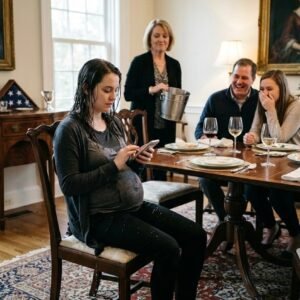
I think about that dinner sometimes—the one where my contractions started.
How normal everything seemed.
How none of us could have imagined what was coming.
Life can change in an instant, in the space between one contraction and the next.
But we survived it.
We’re scarred and changed and will never be the same.
But we survived.