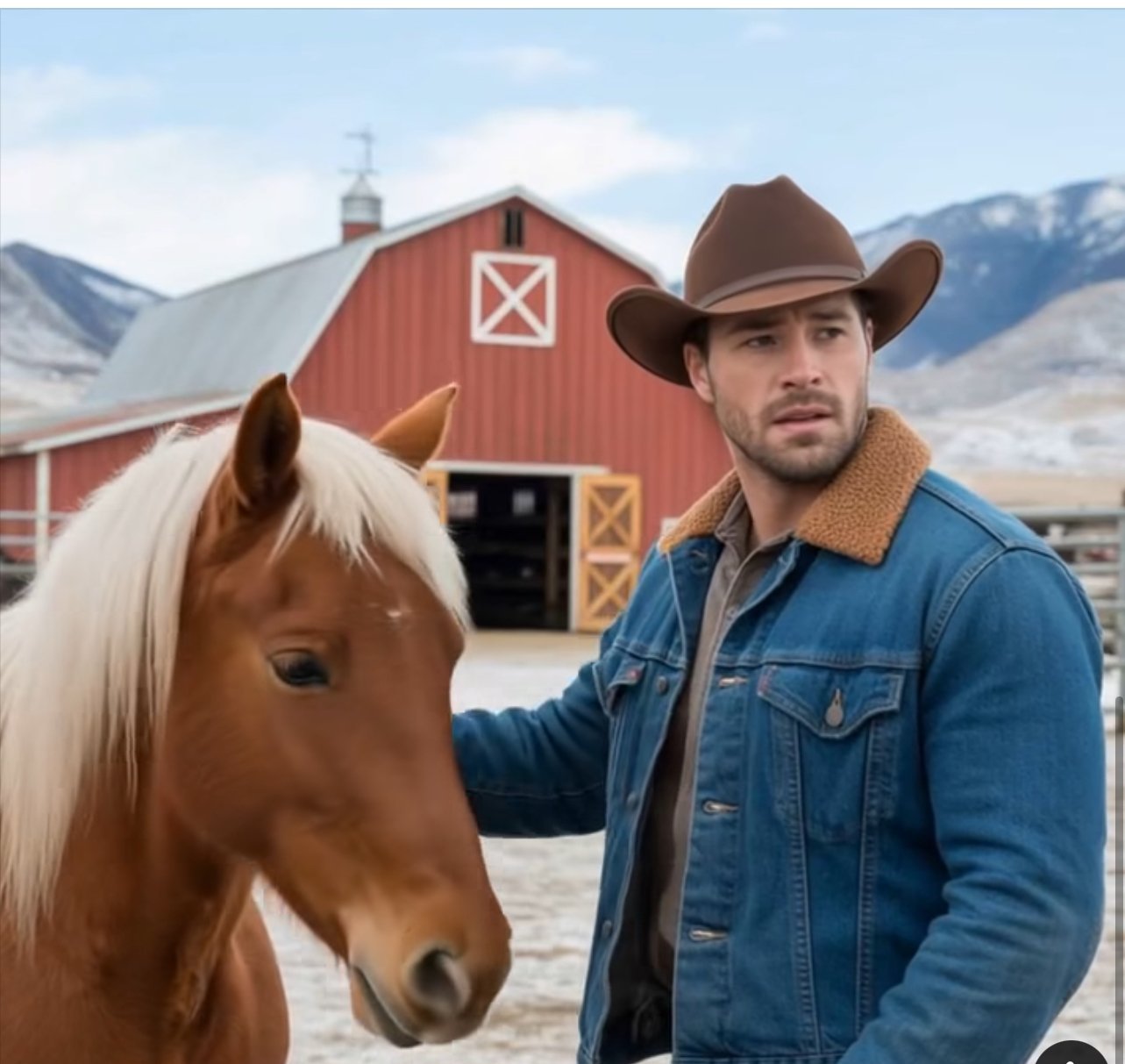
“Haley says you built an empire out of coffee and spite.”
“That’s slander,” I said. “There was also Thai food.”
He laughed. We started talking.
About thrust ratios and server loads. About the nauseating experience of watching your name appear on a badge at a conference and wondering who people think you are before you even open your mouth. He didn’t flinch when I mentioned the McLaren.
He didn’t make a joke about “sugar mama” when the conversation inevitably turned to money. He just nodded, asked what it felt like the first time I signed a wire transfer with more zeroes than my parents’ mortgage, and told me about the time his grad school project almost broke an entire test facility. We started dating.
Slowly. Carefully. I had learned the hard way that it was easier to build a company than to let someone close enough to see the scar tissue.
One night, months into it, we sat on the hood of the Land Cruiser, looking out over a stretch of desert lit only by moonlight. “Do you ever miss them?” he asked. He didn’t specify who.
He didn’t have to. “Sometimes,” I said. “But I can’t tell if I miss them or if I miss the idea of who I wanted them to be.”
He nodded.
“You know missing the idea doesn’t mean you have to go back to the reality, right?” he said. “I know,” I said. And I did.
More and more each day. Two years after the charity rally, Optiflow made headlines again. Not for raising money.
For giving it away. We launched the Bennett Catalyst Fund—a program that took a portion of our profits and funneled it directly into grants for women building automation tools for small businesses. No equity.
No strings. Just checks, mentorship, and access to the playbook we wished we’d had at the start. “Think of it as karmic rebalancing,” Haley said.
“Think of it as scaling the revenge,” Tyler joked. I thought of it as… necessary. For every Savannah who turned “you’ll never” into “watch me,” there were a dozen who believed the first part and never got the chance to test the second.
We held the kickoff in the same resort pavilion where I’d unveiled the McLaren. Same red rock backdrop. Different energy.
This time, the spotlight wasn’t on my car. It was on a group of founders standing on a stage, holding oversize checks and trying not to cry as they talked about quitting jobs, coding in tiny apartments, and wondering if anyone would ever take them seriously. I stood off to the side, watching.
I saw my younger self in their shaking hands. When it was my turn to speak, I kept it simple. “People will tell you to be realistic,” I said.
“What they usually mean is, ‘Don’t make us uncomfortable by outgrowing the limitations we put on you.’ Ignore that. Build anyway.”
I didn’t mention my family. I didn’t need to.
The lesson stood on its own. Kaye reached out once. Not through my phone.
Through email. The subject line was plain. “Hey.”
The body was short.
“I know you probably don’t want to hear from me. I just wanted to say I’m sorry for being awful to you growing up. I thought siding with them was the only way to survive in that house.
It doesn’t excuse anything. I’m working on being better. I hope you’re okay.”
I stared at it for a long time.
I could feel seventeen-year-old me screaming that it wasn’t enough. I could feel thirty-two-year-old me acknowledging that it was, in its own way, a crack in the wall. I wrote back.
“Thank you for saying that,” I replied. “I hope you’re okay too.”
Nothing more. No promises of lunch.
No “let’s catch up.”
Sometimes closure isn’t a dramatic hug in the rain. Sometimes it’s two brief emails crossing an ocean of old dynamics, then drifting back to their separate shores. If you’re still here, you probably want to know if my parents ever changed.
If there was some final reckoning. A phone call. A letter.
A moment where everything clicked into place. There wasn’t. Not in the way people dream about.
From what I hear, they live a quieter life now. Smaller house. Fewer events.
No more bragging rights at the club. They still tell their version of the story when it suits them. The ungrateful daughter.
The risky crypto son. The unfair world that didn’t reward their effort the way they imagine it should have. And me?
I’m a ghost in their narrative. Mentioned only when it makes the plot hit harder. “She has more than she knows what to do with,” I imagine my father saying, shaking his head.
“We raised her,” my mother might add, as if that alone entitles them to a debit card. I don’t correct them. I don’t march into their shrinking circles and present my receipts.
I know who I am. So do the people who matter. People think revenge is about making the other person hurt.
But the older I get, the more I realize: the best revenge is building a life where their absence feels like an upgrade, not a wound. Do I still drive the McLaren? Absolutely.
I take it out on clear mornings when the 101 is quiet and the desert opens up like a runway. I let the engine sing, feel the car press me back into the seat, and remember all the times I was told that certain things “weren’t for girls” or “weren’t realistic.”
Then I go home, park it, and get back to work. Because the car is a trophy.
The life is the win. Sometimes, late at night, I’ll get DMs from strangers who found my story. “My parents always favored my brother.”
“My family laughs every time I talk about my business.”
“They keep telling me to be realistic.”
They ask the same question, over and over.
“How did you know it was okay to walk away?”
Here’s the thing. You never really “know.”
You decide. You decide that your sanity matters more than their approval.
You decide that being used as a financial safety net and emotional punching bag is not the rent you have to pay to be considered a good daughter or a good sibling. You decide that the version of you who exists only to keep other people comfortable is not the one who gets to drive. And then, one day, you hear yourself say four words you never imagined you’d say.
Or “Don’t talk to me like that.”
Or “No, I’m not available.”
Or simply, “No.”
Whatever your version is, it will feel unnatural at first. Your hands will shake. Your heart will race.
You’ll replay the moment a hundred times, wondering if you were too harsh, too cold, too much. You’re not. You’re just new.
New at protecting someone you’ve been trained your whole life to sacrifice. Yourself. If my father were telling this story, he’d probably end with a warning.
Something about respect. About duty. About how families fall apart when kids forget where they came from.
If Mason were telling it, he’d lean on bad luck. The market turned. The timing was off.
Who could have seen it coming? If my mother were telling it, she’d focus on heartbreak. Her daughter, so distant.
Her son, so lost. The sacrifices she made that no one seems to appreciate. Here’s how I choose to end it.
I came from a house that believed resources were finite and respect was conditional. I live now in a life that runs on a different math. Money can be earned, lost, earned again.
Respect is not a prize controlled by the loudest person at the table. And love—real love, the kind that shows up and doesn’t keep score—only grows when it’s not constantly being drained by people who see you as a tool instead of a person. If you grew up like I did, listening to someone tell you all the things you’ll never have, never be, never do, I hope you hear this clearly:
You are allowed to build something beautiful anyway.
You are allowed to have nice things without apologizing for them. You are allowed to say no when the people who doubted you show up with open hands and empty accountability. And you are allowed, finally, to stop trying to prove anything to anyone at all.
Even if that means the only person clapping for you at first is you. Especially then. Thank you for listening to the rest of this story.