I was a problem they’d removed. They may have “forgotten” to wake me up on Christmas morning, but they had never forgotten my number when something needed cleaning up, fixing, or paying. I used to think it was just the role of the mature one.
The responsible oldest daughter. The one who had it “all together.”
Looking back, I was more like an unpaid employee than a real member of the family. From the time I was sixteen until now, at thirty, I’d been the one holding every holiday together with duct tape and color‑coded spreadsheets.
When Lucas threw a tantrum and threatened to cancel Thanksgiving because the mashed potatoes were missing cheese, I remade the entire batch while everyone else watched football in the living room and complained about the refs. When Grandpa and Dad fought over a property dispute on the family land outside of town, I spent hours rewriting their angry emails, mediating phone calls, and convincing Grandpa not to disinherit anyone in a fit of rage. When Hannah had her breakdown because Graham ghosted her for three months and then came back with a ring, I sat beside her on the living room floor, the TV flickering with some late‑night talk show, and said, “You don’t have to say yes if you’re not ready.
You can say no.”
The next day, she said yes. At the engagement party in our parents’ backyard, she stood under strings of fairy lights and thanked my best friend Abby for “always being there.” I sat in the front row, holding a plate of Costco appetizers I’d arranged myself, and she never even looked my way. Those moments used to hurt quietly, in places no one could see.
Now they sounded like alarms I’d been slapping the snooze button on for years. I thought of my twenty‑sixth birthday. That year, dinner was strangely quiet.
No cake. No balloons. No off‑key singing while someone filmed on their phone.
“Everyone’s really busy this year,” Hannah said, shrugging. “Sorry.”
One week later, the entire family packed into an Italian restaurant downtown to celebrate Lucas’s birthday. Eighteen guests.
A giant cake that read, “To the most amazing young man.” A video montage of his baby photos projected onto the wall. I’d been the one to book the table. I’d been the one to pick up the cake.
I’d been the one to call the restaurant back and increase the headcount at the last minute. And me? I was the one who was always fine.
“Don’t worry about Isabelle,” they’d say. “She knows how to take care of herself.”
They were wrong. Knowing how to take care of yourself doesn’t mean you don’t need to be loved.
One summer, I got sick. My fever hit 104 degrees. I lay in bed drenched in sweat, the room spinning, a bottle of generic ibuprofen on the nightstand.
My phone buzzed. Mom: “Did you fix the camping reservation yet? Everyone’s waiting to book their flights.”
Aunt Clara had accidentally booked a campsite in Texas instead of Colorado.
I could barely sit upright, but I still opened my laptop, cancelled the original reservation, found a new one in Estes Park, and sent everyone the updated information. No one asked, “How are you feeling?”
I can’t remember the last time someone in my family asked if I was okay. But I can remember every time I quietly dipped into my savings to reserve cabins, buy Disneyland tickets “for the kids,” or pay for the group’s dinner because Uncle Martin’s card “randomly” didn’t go through.
When I asked Dad for help with Finn’s vet bill – my aging cocker spaniel I’d had since college – he just said, “Pets are the owner’s responsibility, right?”
Apparently, I’d been raising an entire family that refused to take responsibility for themselves. I thought of last year when I took three days off work from my insurance job downtown to help Mom care for Grandpa in the ICU at Flagstaff Medical Center. I slept in the uncomfortable vinyl chair by his bed.
I talked to nurses. I brought coffee to my mother. Hannah never showed up.
At the funeral, she stood at the front of a little mountain church and told stories about fishing with Grandpa at Lake Mary – stories that barely belonged to her. After the service, I packed the memorial boxes, organized leftover food, made sure relatives knew where to go. I drove Grandma home.
Everyone called Hannah “Grandpa’s shining granddaughter.”
I believed, for years, that if I stayed patient and kept giving, they’d one day recognize my worth. But as I stared at that Instagram photo of fourteen people grinning from ear to ear on a trip I’d meticulously planned and paid for, every illusion snapped like brittle glass. I wasn’t invisible.
I’d been made invisible. By people who had grown too comfortable with me always being the one to carry the load, smooth over the cracks, and quietly accept less. That was the moment I realized I’d spent my whole life serving a table I’d never truly been invited to sit at.
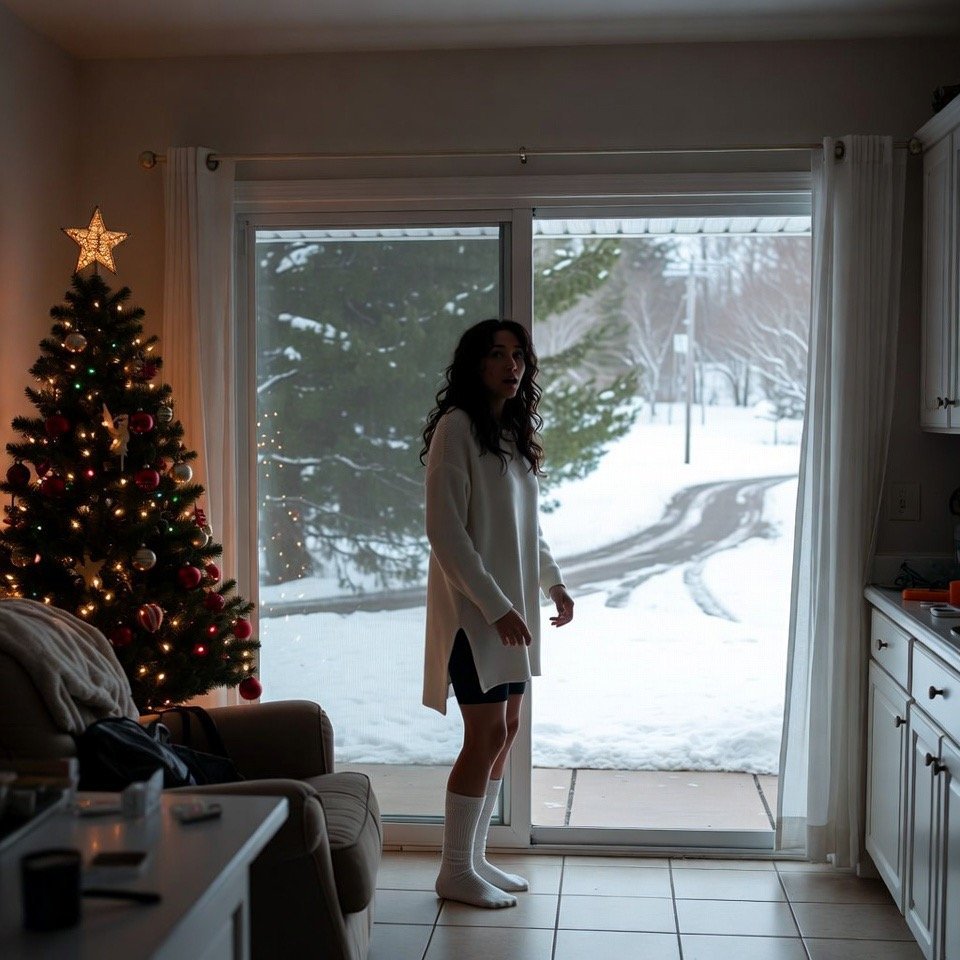
For a while I just sat there, laptop open on my knees, the blue light reflecting off the window. The neighborhood was so still I could hear the distant whistle of a freight train rolling through downtown. Then something inside me shifted.
It wasn’t a scream. It was a click. A decision.
About an hour after realizing I’d been left behind, I opened my laptop again – this time, not to beg my family for explanations, but to decide what I was going to do. For a split second, habit took over. I opened a browser tab and typed “Flights Phoenix to Aspen.” I even clicked on a couple of results.
But then my eyes drifted to the top of my screen. A small icon spun, syncing my iCloud account. A dialogue window popped up.
New messages available from iCloud backup. I clicked. A list of message archives appeared.
Some were familiar: “Family Photos,” “Grocery List,” “Meal Prep.” One stood out: a gray folder labeled:
“famtrip_d23_backup.”
I frowned. Hannah had once used my iCloud account on an old MacBook when hers died during finals. She’d never bothered to shut off the “backup everything” setting.
My hand hovered over the trackpad. They didn’t want me to be part of their trip. But they’d accidentally let me into their truth.
I clicked. The messages loaded slowly, line by line, like a curtain being pulled back in painful inches. The first one was from Lucas.
Lucas: “So it’s settled. Leave at 7:00 a.m. Don’t let her find out beforehand.
Anna already told Mom. She’s still hesitant, but I reassured her. Isabelle will think it’s just a small hiccup.”
Anna.
I knew immediately that was a typo for Hannah. My sister, whose name my brother apparently couldn’t be bothered to spell correctly while plotting how to erase me. Graham replied next.
Graham: “As long as we can still use the reservation, who cares? Cancelling would ruin the whole vacation.”
Uncle Martin chimed in. Uncle Martin: “I don’t want to hear one more complaint about schedules or side dishes this Christmas.”
Complaint.
Schedules. Side dishes. Me.
I kept scrolling, heart pounding against my ribs. Lily, my cousin, wrote a longer message. Lily: “But who’s bringing the check‑in confirmation code?”
Hannah answered.
Hannah: “Seriously, it gets sent to Isabelle’s email. We’ll print it out early and destroy all the copies. She won’t dare call the resort.”
Lucas: “Exactly.
If she finds out she’s been left behind, she’ll make a scene.”
Graham: “Just say it was a misunderstanding. Worst case, buy her a cheap economy ticket and let her fly in later.”
I stopped. My vision blurred at the edges, but not from tears.
From fury. From the sheer humiliation of realizing my family had not only excluded me, but treated me like a walking credit card with a bad personality. Still, I kept scrolling.
I needed to see it all. At the top of the chat window was the group name. “Family Vibes – no Isabelle.”
No shame.
No subtlety. No code words. Just a joke in plain text.
The member list felt like a punch: my parents, Ronald and Judith. My sister Hannah. My brother Lucas.
Aunt Clara and Uncle Martin. Cousins. Their spouses.
Lily and her husband. Graham. Everyone but me.
I scrolled to a message sent exactly one week before, at 11:48 p.m. Hannah: “I know it’ll hurt, but it’s necessary. Isabelle is too rigid.
She turns every vacation into a PowerPoint presentation. I don’t want to feel like I’m attending a board meeting this year.”