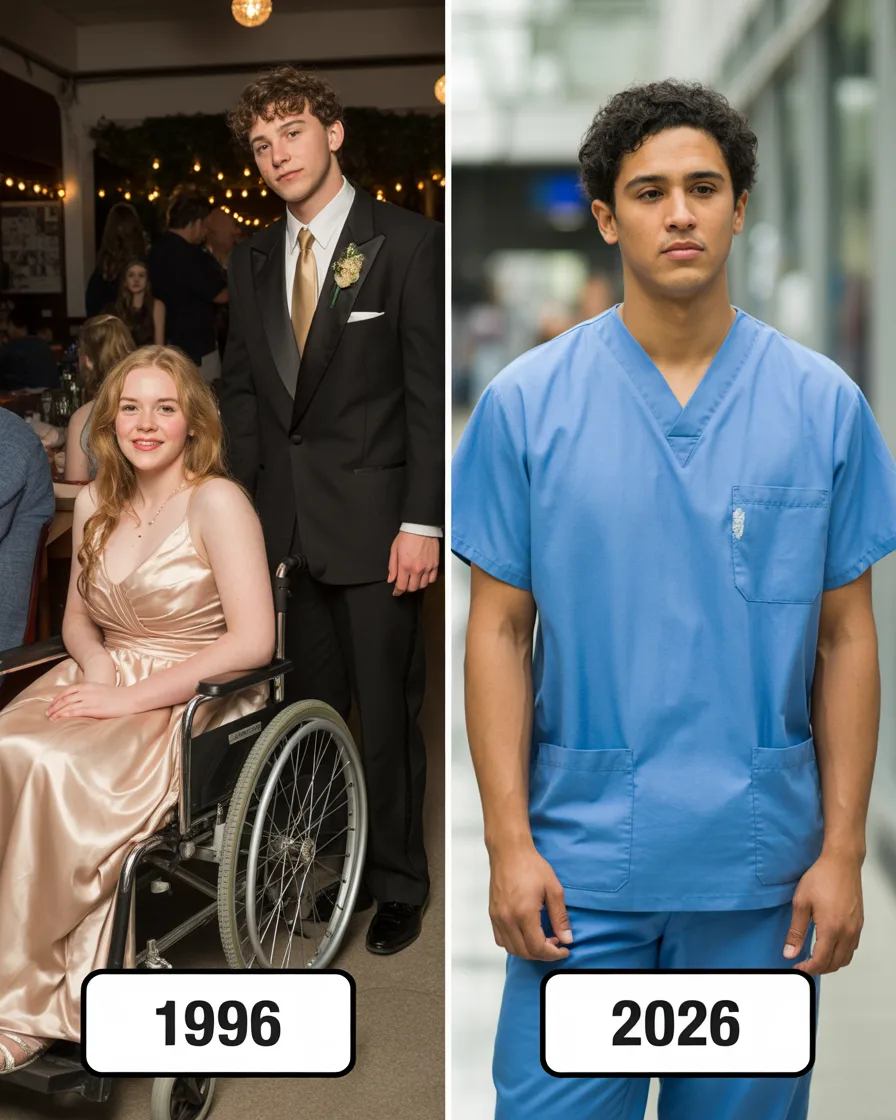
Someone had caught us mid-spin, the chair tilted slightly, both of us laughing at something, and you could see in the picture that neither of us were thinking about who was watching. I brought it to the office without thinking about it much, and left it on my desk, and Marcus saw it. He stopped moving entirely.
“You kept that?”
“Of course I did.”
He picked it up with both hands and looked at it for a long time. Then he said, “I tried to find you after high school.”
I went still. “What?”
“You were just gone.
Someone said your family had moved for treatment. After that my mother got sick and everything got small fast.” He paused. “But I tried.”
“I thought you forgot me,” I said.
He looked at me the way you look at someone who has said something genuinely baffling. “Emily,” he said. “You were the only girl I wanted to find.”
Thirty years of bad timing and unfinished things, and that was the sentence that finally broke me open.
We are together now. Slowly, the way adults are together when they are old enough to understand that slowly is not a failure of commitment but a form of respect. Like people who know what it costs to lose things and don’t waste much time pretending loss isn’t possible.
His mother has proper care now. He runs the training programs at the center full time and consults on every new adaptive project we take on. He is good at it in a way that cannot be manufactured, because he has never once talked down to a single person who walked or rolled or limped through any door he was standing near.
Last month, at the opening of the community center, there was music in the main hall. Good music, loud enough to feel it. Marcus came across the room toward me, and I watched him come, and he held out his hand.
“Would you like to dance?”
I took it. “We already know how,” I said.