They had something quieter and more effective, a version of conflict where my mother’s voice went flat and steady while my father’s got quieter and quieter until it effectively stopped. I heard, Don’t start this again. She’s fine.
She’s always been fine. And then silence, which was its own answer. The next morning he poured me coffee, the first time he had ever done that, and went back to his newspaper without saying anything.
His eyes said, I tried, I am sorry, I am not strong enough. I understood something then that removed the anger from me and replaced it with something heavier. My father was not cruel.
He was a coward in a house where cowardice was the path of least resistance, and he had taken that path so many times it had become the only road he knew. September 14th. My eighteenth birthday.
I woke at 6:12, body clock from two years of Milstone shifts. The house smelled like coffee and nothing else. No special breakfast, no balloons.
Dad came through in his work boots, handed me a white envelope, squeezed my shoulder, and was out the door before I finished reading the card. Inside: a stock balloon photo, a fifty-dollar bill, and five words in his handwriting this time rather than my mother’s. Proud of you.
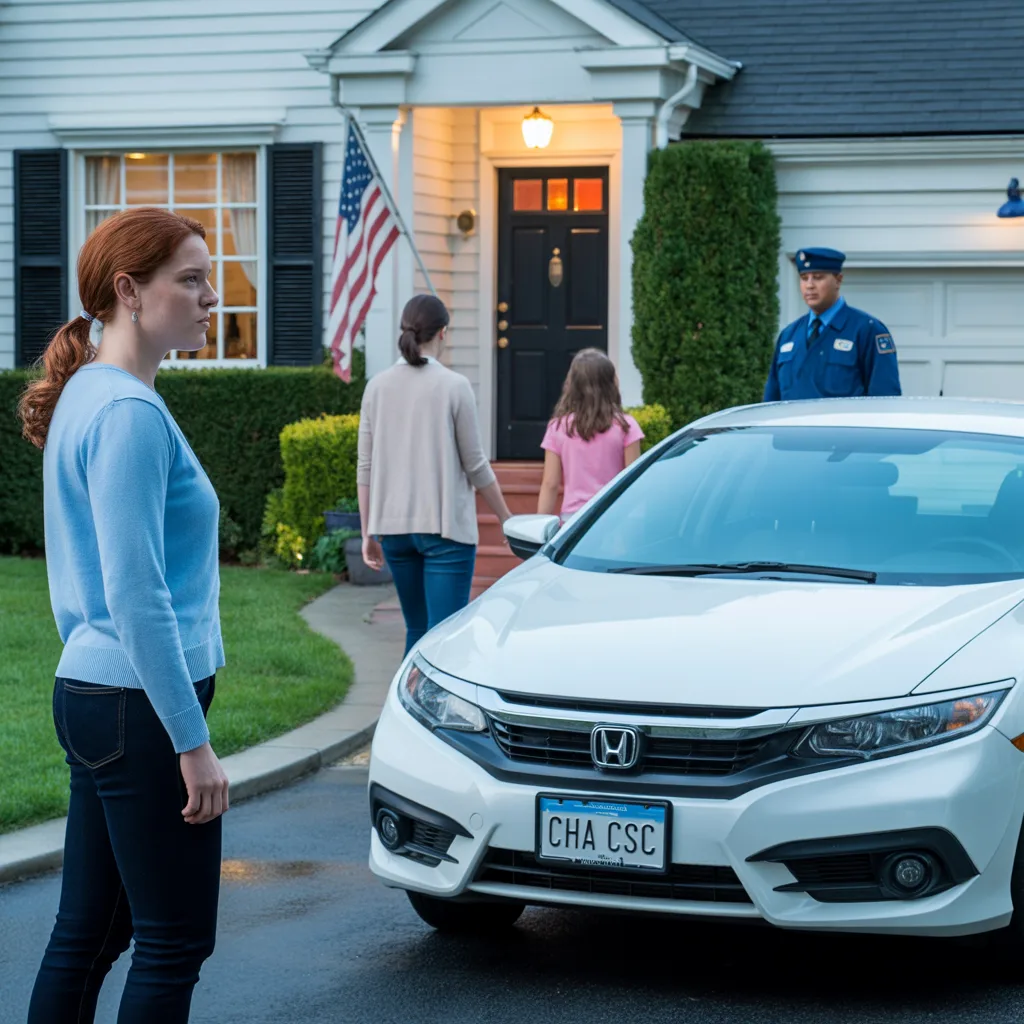
It was the most emotionally direct sentence Keith Foresight had ever committed to paper in my memory, and I put it in the front pocket of my jeans and wore it there all day like a small piece of evidence. My mother came down twenty minutes later and said happy birthday, sweetheart, big eighteen, with the tone she used to wish coworkers a pleasant weekend. Paige appeared at nine-thirty, still in pajamas, hugged me quickly, grabbed her keys, and drove away in the Civic.
I stood in the kitchen holding the fifty-dollar bill and a mug of coffee that had gone cold and thought, I earn more than this in two shifts. But the money was never the point. The money was just the vocabulary for something that did not have a cleaner language.
By five o’clock the house smelled like lasagna and a grocery-store cake sat on the counter with white frosting and blue script that said Happy 18th Audrey, close enough. The doorbell rang at 5:15 and I opened it expecting only Grandma Ruth. I got Grandma Ruth in her emerald blouse, the good one she saved for church and funerals, hair set and pinned back.
Uncle Glenn behind her. Aunt Brenda and her husband Tom. And Mrs.
Whitfield from next door, holding an apple pie with the expression of someone who knew exactly what was happening and had shown up on purpose. My mother appeared from the kitchen with the dish towel still over her shoulder, her face cycling through surprise, confusion, and something approaching alarm. Mother, I said family dinner.
Ruth stepped past her with the calm of someone who has executed a plan down to its last detail. This is family, she said, gesturing at Glenn and Brenda. And Mrs.
Whitfield brought pie. Dad came in from a callout still in his work boots and, finding the situation already in motion, said he would get more chairs. The table was extended with the Thanksgiving leaf.
Extra plates came out. Everything looked ordinary on the surface, except that I watched my grandmother sit at the head of a table she did not own and noticed she had brought no gift bag, no card. She had brought witnesses.
Dinner moved the way dinners move when the table is too full and the elbows are bumping and Glenn is telling a story about a customer who tried to pay for bodywork with lottery tickets. My mother watched Grandma Ruth the way a deer watches headlights. Aunt Brenda, who either did not read the room or read it perfectly depending on your interpretation, turned to me during a lull and asked what I had received for my birthday.
The table went quiet. Not dramatically. The way a room goes quiet when everyone suddenly becomes very interested in their plates.
I looked at mine. The dinner is my gift, I said. Brenda tilted her head.
That is it? Mom inserted herself before the silence could do more damage. We are keeping it simple this year.
Audrey has never been about big gifts. She is very low-maintenance. But Paige got a car for her sixteenth, Brenda said.
She was not being cruel. She was being accurate, which in our family amounted to the same disruption. That was different.
Paige needed it for her activities. And Audrey does not have activities? Audrey has the bus.
Paige shifted in her chair. I mean, Audrey is fine with the bus, right? She said it the way she said most things about my life, in the comfortable third person of someone who has never had to think about it from the inside.
I set my fork down and looked at her. I never said that. Five words.
No volume. Just correction. Plain and final and impossible to unhear.
Paige’s mouth opened slightly. My mother’s hand went to her water glass and did not pick it up. My father stared at a fixed point on the wall behind my head.
Everyone at that table heard it, and nobody could put it back. My mother recovered with her usual speed, redirecting accountability into accusation before anyone could organize a response. So now I am a terrible mother on your birthday?
Nobody said that, my father said, so quietly he was barely audible. You are all sitting here judging me at my own table. I am eating lasagna, Glenn said, but go on.
She turned to me, the tears assembling themselves in the specific way that meant they were being constructed rather than felt. I gave you everything you needed, Audrey. A roof.
Food. School. What more do you want?
I wanted to be treated the same. Life is not always equal. No.
But it should be fair. Something shifted in the room. Not loudly.
But permanently. Brenda set her fork down. Tom looked at his wife.
Mrs. Whitfield reached for the pie. My father’s hand lay flat on the table, the posture of a man who knows the next thing will matter and cannot locate his voice.
Grandma Ruth set her teacup in its saucer. The clink was small and cut through the room like a bell. You are right, Diane, she said.
Life is not equal. She pushed her chair back and stood and smoothed her emerald blouse with both hands, a gesture I had seen a hundred times across my life. The gesture she made when she was about to close something.
She walked to the front door, opened it, looked back at me. Audrey, come outside. Not a question.
The porch light was already on. The streetlights had just come up, that amber Ohio dusk that turns Ridgemont into a movie set for thirty minutes every evening. The air smelled like cut grass and someone’s charcoal grill down the block.
Then I heard it. A low diesel rumble from the end of Maple Hill, growing. Headlights, the large kind that belong to something with more than four tires.
A flatbed tow truck turned onto our street, moving with the deliberate slowness of something that knows its destination and is not rushed about arriving. It pulled into our driveway. On the flatbed, strapped down and gleaming under the streetlight, was a Toyota 4Runner.
Nautical blue. The temporary tags were still in the window. The chrome caught the last of the sunset and threw it back in small gold sparks.
New enough that the tires had not touched road that was not a dealership lot. The driver climbed out. Young, clipboard, steel-toed boots.
He looked at the group of people on the porch like he had arrived in the middle of a church service. I am looking for Audrey Foresight, he said. My voice did not sound like mine.
That is me. He walked over and put a set of keys in my hand. Toyota fob, two metal keys on a plain ring, and a small paper tag tied with twine.
Happy birthday, he said, and pointed at the 4Runner on the flatbed. She is all yours. I looked at the keys.
I looked at the truck. I looked at Grandma Ruth, who was standing beside me on the porch with her hand on my shoulder, light and steady, the hand of a woman who had been waiting two years and six months for this exact moment. She nodded once.
She did not say a word. She did not need to. Behind me, the coffee cup hit the concrete step.