I never knew his name was Brandon Fields. I never knew he was twenty-four years old, that he had a brother named Derek, or that one day I would sit across from him at a wedding reception and pour him champagne and have no understanding whatsoever that I was the reason he was alive and the reason he was missing a leg. Derek took me to meet his family at Thanksgiving of 2006.
That was the first time I met Michael Fields. He came out the front door as though he owned the street. Broad-shouldered, tanned from years of construction work in the Arizona sun, the voice of a man accustomed to being the largest presence in whatever room he occupied.
He had built a successful defense contracting business, building barracks and mess halls and housing units on military bases across the Southwest, and he liked to say he was basically military, just without the uniform. I had heard that kind of thing before from men who wanted the respect without the sacrifice, and I recognized it for what it was the first time I heard it from him. He shook my hand too hard and looked me over in the evaluating way of someone conducting an appraisal, and he asked what I did.
I said military intelligence. He laughed. Not the warm variety.
The dismissive variety, the laugh of a man who has already decided what to think and is using the laugh to confirm the decision publicly. Intelligence, he said. That’s just a fancy word for reading emails, isn’t it?
My guys pour concrete in 120-degree heat. That’s real work. Derek told him to knock it off.
Michael waved it away like a fly. I had spent eleven months in Fallujah intercepting communications that had kept soldiers alive, sleeping on a cot in a plywood shack, eating MREs in a room with no windows. And this man, who had never worn a uniform a single day in his life, was telling me I had a desk job.
I smiled. I helped Linda set the table. I did not say another word about it.
That pattern persisted for eighteen years. Every holiday, every gathering, every occasion that required me to be in Michael Fields’s house, he found a way to diminish what I did and what I was. He introduced me to strangers as Derek’s wife, omitting my rank and my career as though they were irrelevant details he had not been told.
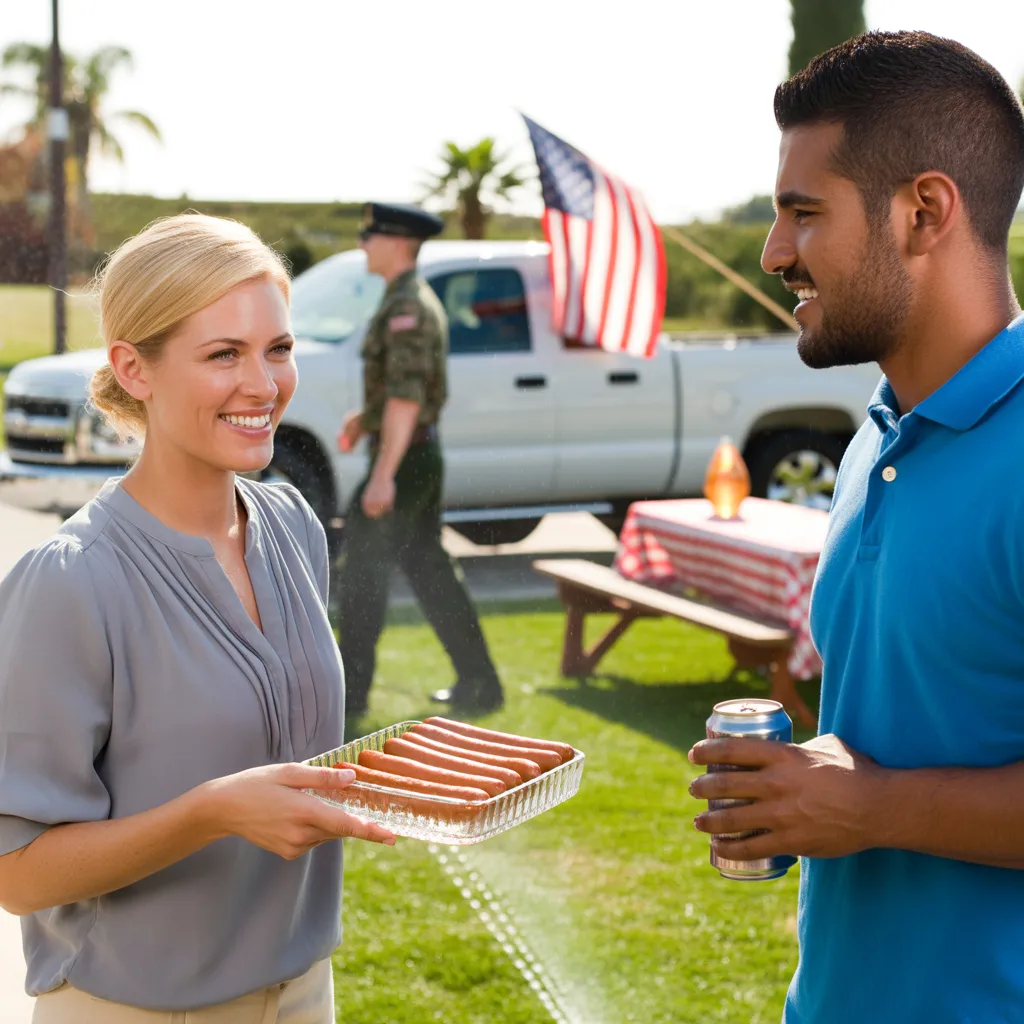
He made jokes about paper-pushing at tables full of relatives who laughed or looked away. He said at a Fourth of July barbecue that real heroes were the guys on the ground, not the ones in air-conditioned tents. I had just returned from eight months in the intelligence fusion cell at Bagram, in a room that hit 110 degrees because the air conditioning broke in April and nobody fixed it until September.
I smiled. I helped Linda with the dishes. I swallowed every comment like a stone and carried it home in my chest, and Derek would apologize in the car every time, and I would tell him it was fine, which was the kind of lie that is necessary for the continuation of a shared life but that accumulates interest.
In 2018 I was promoted to lieutenant colonel. By the summer of 2024 I was forty-two years old and had served for twenty years with two combat deployments, a top-secret clearance with compartmented access, and a career that had produced work briefed at the highest levels of the American national security apparatus. And every Thanksgiving, my father-in-law still called me a paper pusher.
Labor Day weekend of 2024. Derek and I flew to Tucson for the annual Fields family cookout, which had been a fixed point in our calendar for nearly two decades. I spent the morning before we left making a brisket dish from Derek’s grandmother’s recipe, the one Linda had taught me the first year we were married.
I packed it carefully in a cooler and brought it on the plane, because that was the kind of person I was, the kind who shows up with food and helps set the table and does not make the holiday harder for the people who are trying to hold it together. We pulled up to Michael’s house around noon. The backyard was full, thirty-plus relatives spread across folding tables and lawn chairs, the smell of charcoal and mesquite, classic rock from a portable speaker, children running through a sprinkler.
A postcard of a summer afternoon. Derek went inside to find his mother. I walked around the side of the house toward the backyard gate carrying the brisket dish in both hands.
Michael was standing at the gate with a beer in his right hand and his left hand resting on the latch. He saw me coming and did not move. I stopped three feet from the gate and said hey, Michael, I brought the brisket.
He did not look at the dish. He looked at me, and then he said it at a volume calculated to carry to the cousins at the nearest table, to Derek’s aunt Carol who was working on the potato salad, to the right side of the yard that went quiet. Nobody invited you.
I stood there. I did not speak. I did not move.
He continued. This is a Fields family cookout. You’re a cook.
Always were. He took a sip of his beer. A couple of cousins looked away.
Aunt Carol stared at her plate. Nobody said a word. I set the brisket dish on the patio table beside the gate.
I nodded once, slowly, in the way my father used to nod when he was choosing not to fight. Then I turned to leave. Not dramatically, not tearfully, just the deliberate movement of a person who has decided that the available options have been reduced to one.
I could hear the sprinkler. I could hear the music. I could hear my own shoes on the concrete and eighteen years of silence pressing on my chest like weight.
That was when the silver pickup pulled into the driveway. Brandon Fields stepped out of the truck. He was forty-four now, still lean, still quiet, the prosthetic leg visible below his cargo shorts.
He had not been to a family event since Christmas of 2021 and I had not seen him in years. He saw me walking toward the driveway. Then he looked past me and saw his father at the gate with the beer, looking satisfied.
Brandon’s face changed in the way that faces change when a person who has been carrying something for a long time and has been waiting for a specific moment to set it down finally arrives at that moment. He walked toward me. He said my name.
He came closer and looked at me, really looked, and then he looked at his father. What are you doing, Brandon said. His voice was tight in a specific way.
Michael shrugged. Just keeping it family, son. Brandon grabbed his father’s arm.
Not roughly, but with the firm grip of someone who has made a decision. His hand was shaking. He said: Dad.
She saved me in Fallujah. Michael stared at him. The yard went silent.
The children stopped running. Brandon said she intercepted the transmission that rerouted the convoy. If she had not caught it, thirty of them would have driven into a kill zone.
He would not be injured. He would be dead. He rolled up his left sleeve and showed the scar that ran from his collarbone to his elbow, shrapnel damage from the IED, surgical scars from the field hospital.
He said she was twenty-two years old. The yard was holding itself very still. Michael’s hand dropped from the gate.
He took a step back. His beer hung loose at his side. Brandon was not finished.
He said: You didn’t know? You never asked. Not once.
Not one single time in eighteen years did you ask your daughter-in-law what she actually did in the Army. You just decided she was nothing. Derek had come out the back door and was frozen on the porch.
Linda had her hand over her mouth. Megan was crying. Thirty relatives were looking at Michael Fields, and Michael Fields was looking at the ground.
Brandon turned to me. His eyes were wet. He said he had not known it was me until two years earlier, that he had tracked down the declassified intelligence report through a Freedom of Information request, that my name was on the intercept log.
Second Lieutenant Christina Cook. Signals intercept team. First Infantry Division.
Fallujah. He said he should have said something sooner, and he was sorry. I did not say anything.