I didn’t slam the door. I didn’t lock it for drama. I just closed it slowly, deliberately.
Behind me, the house sighed like it had waited a long time for someone to finally do that.
I didn’t hear from him for a week. No calls, no letters, not even a guilt-ridden knock. The silence didn’t feel like peace yet. It felt like the eye of something—calm before a choice.
Then came the email. The subject line was short.
Request for mediation.
The sender: Evelyn Groves.
She’d written it like a business letter—formal, punctuated, capitalized where emotions used to live.
Dear Edith, Thomas and I believe it would be in everyone’s best interest to have a mediated discussion. There are several misunderstandings and legal complications that should be resolved before this situation becomes unnecessarily public or escalates further. We are willing to meet at a neutral location. If you agree, please respond with availability. We hope to handle this with maturity and respect.
I didn’t reply—not because I didn’t have words, but because they no longer deserved mine.
I printed the email, folded it in half, and placed it under the ceramic paperweight Ray gave me the year he forgot our anniversary—a small apology shaped like a lighthouse. It had once felt romantic. Now it felt more like a warning.
Two days later, a letter arrived from their lawyer.
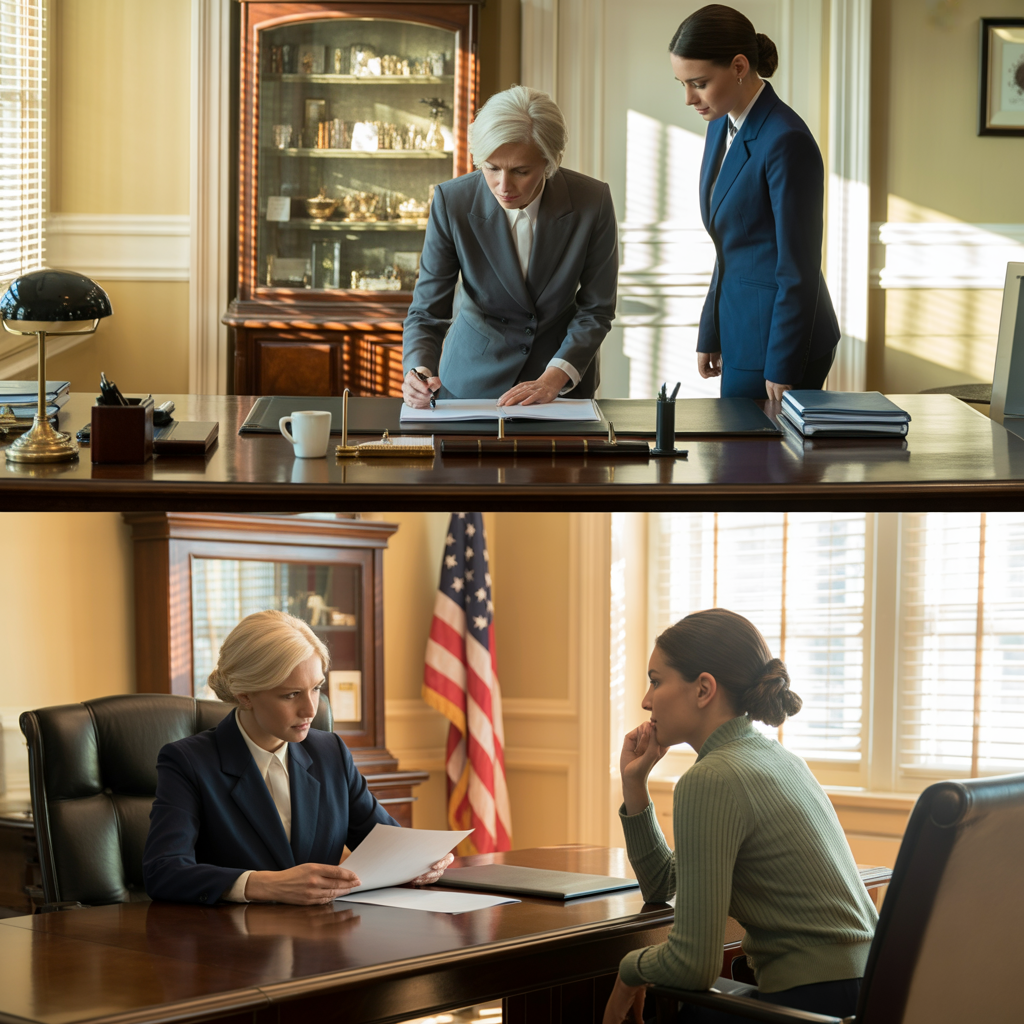
I opened it with steady hands, sitting at the dining room table with my tea and the low hum of the radio behind me. The name on the letterhead was unfamiliar, but the tone was all too known—polite, pressure-laced, cloaked in suggestion, sharpened by money.
Our clients, Mr. and Mrs. Groves, believe that recent changes made to estate planning documents were done under emotional duress and without sufficient legal guidance. We are requesting a review of the decisions involving financial transfers and will allocations, especially as they relate to the trust now in Ms. Emma Groves’s name.
I read the entire letter, then again, and I smiled—because desperation has a scent, and they were wearing it like cologne.
I called Deborah the next morning and told her what came. She asked me to read it out loud. I did.
She chuckled halfway through. “You want me to respond?”
“No,” I said. “I want you to wait. Let’s give them more rope.”
“You sure?”
“I’m seventy-eight,” I said. “I’ve lived through war, loss, childbirth, a business collapse, and a husband who died on a Tuesday but left love behind like it was interest on a loan. I’ve survived worse than a letterhead.”
Deborah laughed. “You know, you’re kind of terrifying now.”
“I should have been sooner.”
Later that day, I called Emma. She answered on the second ring.
“Grandma, everything okay?”
“I got a letter,” I said.
There was a pause on her end, and in my mind I saw her tightening, bracing.
“They want mediation,” I said. “Evelyn wrote first, then their lawyer.”
Emma didn’t speak for a moment. When she finally did, her voice was low. “I can give it back, Grandma. The trust. If it’s going to—”
“No,” I said.
“But if they—”
“No,” I said again. “You’re not giving back what wasn’t taken. You didn’t ask for this. I gave it to you. That matters.”
“I don’t want to make things worse.”
“You’re not,” I said. “You’re what made things better.”
She let out a breath, and I heard it shake a little.
“They’ll probably come after you next,” I added. “Guilt, threats, family dinners with silence and heavy eyes. Just know I trust you.”
“I won’t fold,” she said. “I promise.”
“I know.”
That night, I sat in the living room with the lamp low and the letter beside me. I ran my fingers over the embossed name of their lawyer—a man who probably thought a seventy-eight-year-old woman with no formal education would tremble at a cease-and-desist tone.
He didn’t know I used to fix commercial plumbing valves with my bare hands. That I could calculate compound interest faster than his interns. That I once saved our store from foreclosure by selling fifty lawnmowers in a weekend because I promised every customer a home-baked pie.
I don’t scare easy.
Let them send letters. Let them call it war.
I’ve been in battles where the enemy wore grief, not Gucci.
This wasn’t a war. This was a reckoning.
The next escalation didn’t come by mail.
It came by knock—slow, deliberate. Not neighborly, not nervous. The kind of knock meant to announce control.
I didn’t move at first. I was in the back room going through winter linens, but the knocking continued—measured, patient.
By the time I opened the front door, Evelyn was standing on my porch in a camel-colored coat. Her hair was pulled back so tightly it looked like a mask. She held a clipboard in her arms—not a purse, not a bag, not even gloves, though the morning was cold enough to sting.
“Good morning, Edith,” she said, as if this were normal.
“It’s not,” I said, and didn’t invite her in.
She didn’t wait—she stepped forward like my doorway belonged to her. I stood in the threshold, blocking the entrance.
She adjusted the clipboard. “I thought we could speak face to face. You haven’t responded to any of our communications.”
“That’s intentional.”
She smiled—polite, sharp. “I understand you’re upset.”
“I’m not upset,” I said. “I’m uninterested.”
Her eyes flicked past me into the house, searching for signs: a mess, a forgotten stove, something she could weaponize.
“You’ve made decisions that affect our entire family.”
“No,” I said. “I made decisions that affect my money. You’re not entitled to either.”
Evelyn shifted her stance. I saw the tightness in her jaw, the cracks behind the politeness.
“You’re making this difficult for Emma.”
“She’s managing just fine.”
“She’s being manipulated. You’ve always had a strange influence over her.”
I almost laughed. “You’re mistaking love for influence. Easy to do when you’ve never felt either.”
That did it. Her eyes hardened. She held out the clipboard like a final offering.
“I’m here to offer one final proposal. If you dissolve the trust and return the funds to a central family account, we’ll drop all legal inquiries and handle everything quietly. No damage to reputations. No unnecessary attention.”
I didn’t take the clipboard.
“You think I’m afraid of attention?” I asked.
“I think you’re not thinking clearly. This hurts everyone.”
“This protects everyone from him,” I said.
She took a breath. “He’s your son.”
I nodded. “And you’re his mirror.”
For a long moment, neither of us moved.
Then she dropped the polite act entirely. “You’re burning the bridge,” she said flatly.
“No,” I replied. “You two set it on fire years ago. I just stopped pretending it was a path.”
She turned sharply and walked down the steps, heels clicking like accusations. The clipboard stayed in her hands, unsigned.
I stood in the doorway and watched her go, the wind tugging at her coat. Just before she reached the car, she turned back.
“You’ve taught Emma to be cruel.”
I smiled. “No. I’ve taught her not to inherit silence.”
Then I closed the door.
This time I did lock it—not out of fear, but finality.
Later that evening, I found a voicemail from Emma.
“Grandma, did she come by? I heard from Dad. He said something about a last olive branch. I just… I’m worried. You okay?”
I called her back right away. Her voice was tight when she answered.
“I’m fine,” I said gently. “And she brought a clipboard, not an olive branch.”
“Did you sign anything?”
“I don’t sign lies.”
She went quiet, and I could hear her breathing, trying to steady something inside herself.
“They told me I shouldn’t meet them without you,” she said. “They said you were unstable. That you manipulated the bank, the lawyer, me.”
I let that sit for a second. “And do you believe them?”
“No,” she said. “But it still stung. Hearing it from him.”
“I know,” I said.
We were both silent for a while, sitting in different houses with the same ache—the ache of realizing family can disappoint you deeper than any stranger.
Finally, she said, “I’m not giving it back. The trust. I don’t care what they threaten.”
“I know,” I whispered. And I did.
Because Emma, for all her youth, had inherited something I’d nearly forgotten I had to pass down. Not just money—backbone.