We’re here to share what we know — but don’t take it as medical advice. Talk to your medical provider if you have questions.
Most of us have experienced acne at some point, but knowing what kind of acne you’re dealing with is essential to finding an effective treatment.
For blackheads, following a skincare routine and applying an over-the-counter topical cream will often do the trick.
But something like cystic acne, which forms deep inside the pores, may need a prescription from a dermatologist.
This guide explains the different types of acne, its causes, and how acne progresses.
We’ll also explain how to treat breakouts and share some ingredients that work for mild, moderate, and severe acne.
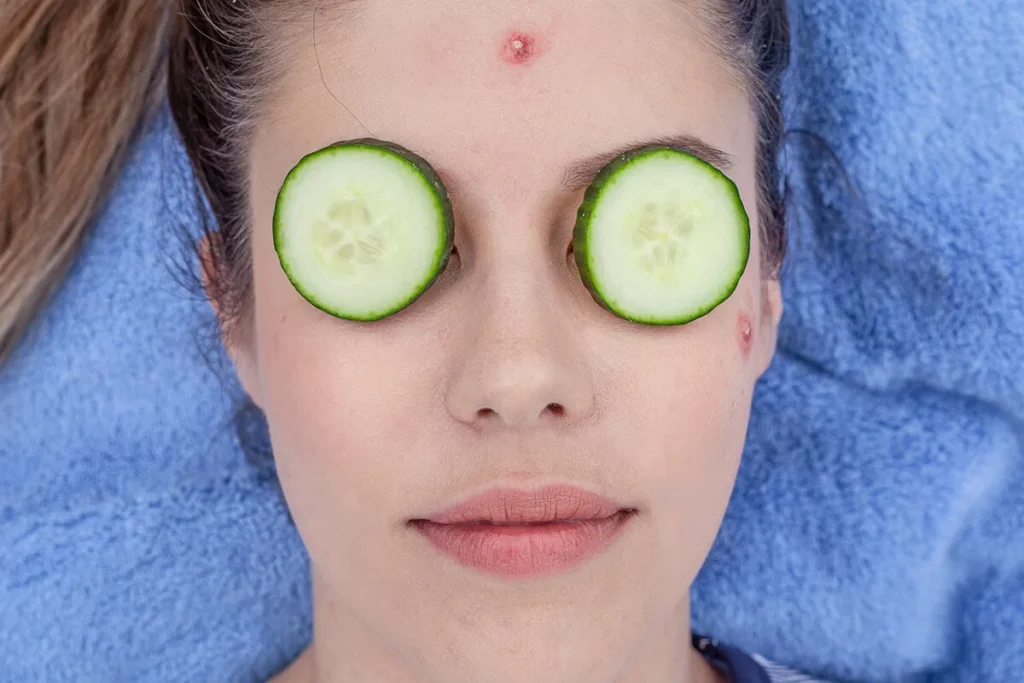
Acne vulgaris is a chronic skin condition that begins with clogged pores.
It manifests in many ways—everything from non-inflammatory blackheads to inflammatory cysts can fall under the acne umbrella.
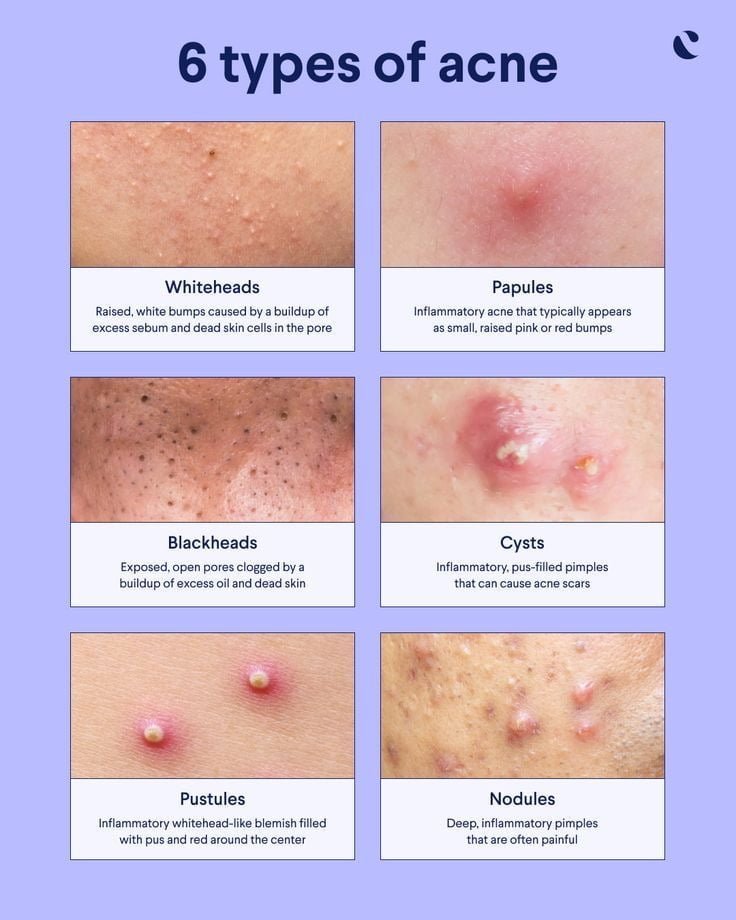
Acne types include blackheads, whiteheads, papules, pustules, and cysts (or nodules).
The differences between the acne types depend on inflammation and whether the blemish is pus-filled, at the skin’s surface, or buried deep in the dermis.
Research shows that some degree of inflammation is involved at every stage of acne vulgaris.¹ But most dermatology providers separate acne into two categories: non-inflammatory and inflammatory.
Non-inflammatory acne includes open and closed comedones (blackheads and whiteheads).
Inflammatory lesions include what most people think of as pimples (papules and pustules), as well as nodules or cysts that form deep inside clogged pores.
Here are the differences between the various types of acne:
Non-inflammatory acne forms open and closed comedones that aren’t red or painful to the touch. There are two types:
- Whiteheads: Small clogged pores that look like little white bumps because of trapped oil and dead skin cells. Whiteheads are closed comedones because they’re not open to the skin’s surface. Instead, they form a white, pus-filled head (hence the name!).
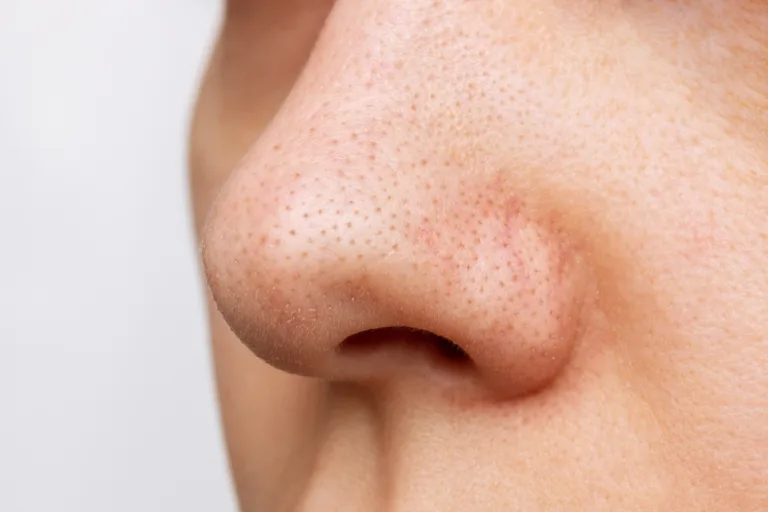
- Blackheads: Small clogged pores that turn black because the trapped oil and dead skin cells are exposed to the air. Blackheads are called open comedones because they’re exposed to the skin’s surface.
Inflammatory acne manifests as red, painful, inflamed lesions that vary in size. Smaller lesions are called papules and pustules, while larger lesions are cysts or nodules. Here are the differences:
- Papules: Tender bumps with redness and swelling caused by inflammation. Papules are usually less than 5 millimeters in size and don’t form a head.
- Pustules: “Squeezable” inflamed pimples with a visible central core of pus (that white sludge most people know all too well!). Pustules are usually raised and can be anywhere from 1-5 millimeters in size.
- Nodules: Large, firm, reddish lumps that extend deeper than a papule and are often painful. Nodules feel hard and almost knot-like to the touch. They can last for weeks and may require a dermatologist or dermatology provider’s help to treat.
- Cysts: These are painful, under-the-skin pimples (sometimes referred to as blind pimples or invisible pimples) that may take a long time to go away. Cysts (aka cystic acne) are inflamed bumps that run deep under the skin’s surface. The difference between cysts and nodules is that cysts generally contain pus.²
Don’t let the name fool you—“fungal acne” isn’t really acne. It’s caused by an overgrowth of Malassezia. It’s an acneiform, more accurately referred to as Malassezia or Pityrosporum folliculitis. It forms clusters of small, uniform pimples that tend to spread across a central area, like the forehead, jaw, chest, or back. “Fungal acne” can be itchy and may form pockets of white or yellow pus.³
Not every clogged pore or pimple will go through the same stages.
That means not everyone with a whitehead or blackhead will experience full-blown pustular acne (thank goodness!).
If you treat your skin regularly with the right stuff, like your Curology personalized prescription formula, you can potentially help prevent mild acne such as clogged pores from growing into bigger problems.
- Mild acne appears as a few papules, whiteheads, and/or blackheads close to the skin’s surface. It’s mostly non-inflammatory.
- Moderate acne appears as more than a few comedones, papules, and/or pustules. It’s generally more likely to be inflammatory.
- Severe acne occurs when clogged pores result in a lot of pimples, redness, and inflammation. Large cysts or nodules (greater than 5 millimeters in size) are common.
Dead skin cells and excess oil (sebum) mix together to clog pores.
Normally, dead skin cells slough off on their own, but when there’s too much sebum, build-up can occur that backs up the sloughing process. Acne-causing bacteria, Cutibacterium acnes (formerly known as Propionibacterium acnes) also plays a role along with multiple other complex mechanisms.⁴
It’s a perfect storm of factors that could turn one little pimple into a full-blown breakout—especially if you squeeze, pinch, or pop!
How to treat acne depends on what type of blemish you’re treating. Clogged pores without inflammation can be treated differently from full-blown cystic acne. Here are the basics of pimple management:
- Clogged pores without inflammation (blackheads and whiteheads). A proper skincare routine is your first defense against non-inflammatory acne, including a cleanser, treatment cream, and moisturizer. Many over-the-counter treatment options will do the trick. Look for ingredients that exfoliate the skin’s surface and control sebum, like alpha-hydroxy acids (AHAs) and beta-hydroxy acids (BHAs). AHAs and BHAs are available in treatment creams, gels, lotions, and facial cleansers.
- Inflamed lesions (papules, pustules, and cysts). When pores become inflamed, prescription acne treatment is generally a better option—not only will you be working under the expert care of a dermatology provider, you’ll be using ingredients proven to fight acne. Prescription-strength clindamycin and tretinoin can treat and help prevent inflamed acne. And remember, the big difference between papules and pustules and cysts or nodules is size and severity. Picking, squeezing, or popping inflamed pimples may make them worse.
Inflamed lesions (papules, pustules, and cysts). When pores become inflamed, prescription acne treatment is generally a better option—not only will you be working under the expert care of a dermatology provider, you’ll be using ingredients proven to fight acne. Prescription-strength clindamycin and tretinoin can treat and help prevent inflamed acne. And remember, the big difference between papules and pustules and cysts or nodules is size and severity. Picking, squeezing, or popping inflamed pimples may make them worse.
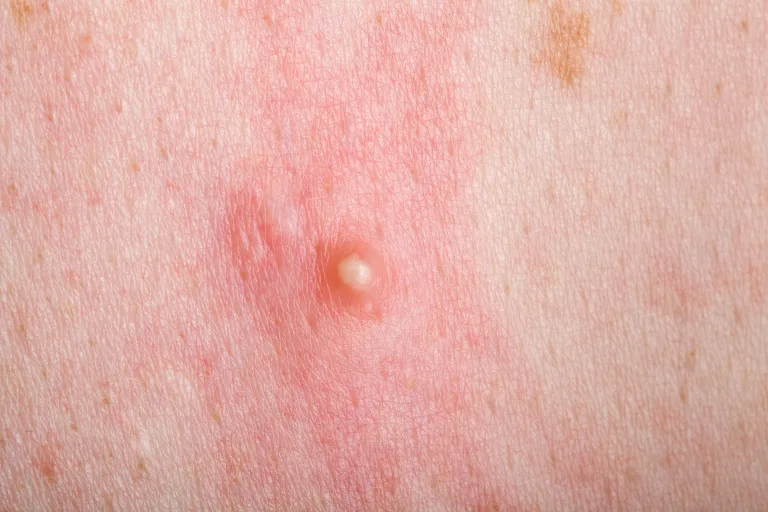
Fungal acne. The first step to treating “fungal acne” is to help prevent the environment that makes it thrive. Do your laundry regularly, shower after sweating, and consider adding a skincare product with zinc pyrithione to your routine. Use ingredients with antimicrobial properties that help stop the growth of acne-causing fungus and bacteria.
Fungal acne. The first step to treating “fungal acne” is to help prevent the environment that makes it thrive. Do your laundry regularly, shower after sweating, and consider adding a skincare product with zinc pyrithione to your routine. Use ingredients with antimicrobial properties that help stop the growth of acne-causing fungus and bacteria.
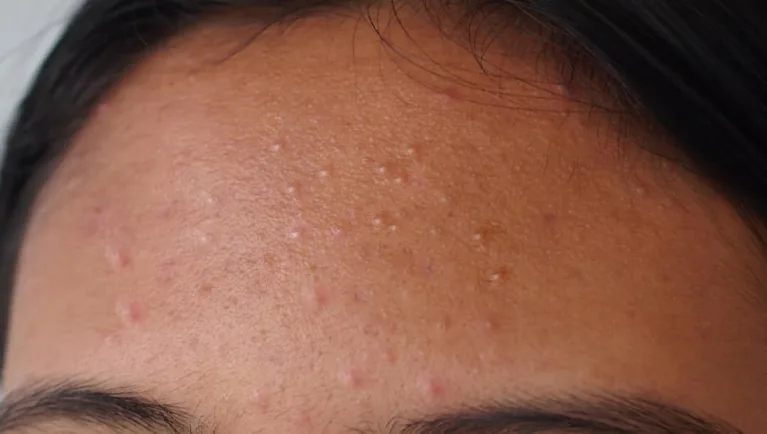
- Pomade acne. Hair care products can also clog pores. Pomade is a waxy or water-based hair styling product that gives hair a shiny appearance. It’s such a common culprit of acne around the hairline that it’s referred to as pomade acne.
Pomade acne. Hair care products can also clog pores. Pomade is a waxy or water-based hair styling product that gives hair a shiny appearance. It’s such a common culprit of acne around the hairline that it’s referred to as pomade acne.
You can try an overnight hydrocolloid bandage in a pinch!
Source: curology.com