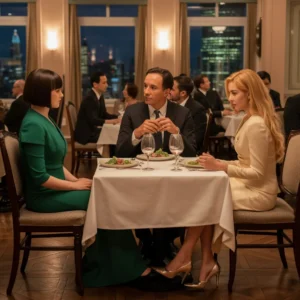
The evening had been a masterclass in calculated charm. Eric had arrived at my doorstep with a bouquet of deep-red roses—not the generic supermarket bundle, but an artisanal arrangement that spoke of taste and intention. He was polished, well-spoken, and had an uncanny knack for making me feel like the only person in the room. Throughout dinner, he listened with a focused intensity that bordered on magnetic. He checked every box of the modern fairy tale.
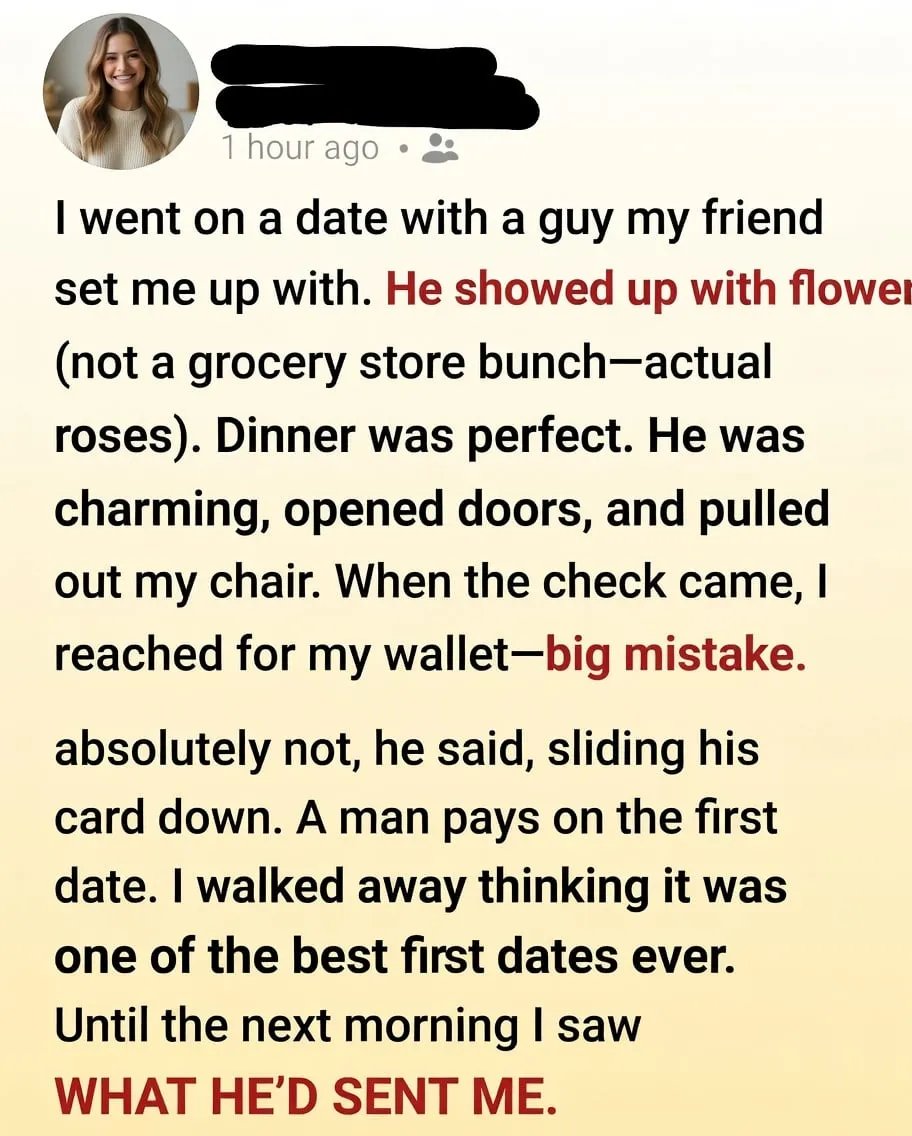
When the bill arrived, I reached for my purse, but he intercepted the movement with a soft, confident smile. “Absolutely not,” he said, his tone leaving no room for negotiation. “A man pays on the first date. It’s non-negotiable.”
At the time, I didn’t analyze it. I didn’t see it as a declaration of power; I saw it as a refreshing, old-school embrace of chivalry. I went home that night wrapped in a bubble of warm, fuzzy optimism, convinced that I had finally navigated the wasteland of modern dating and found something solid. I fell asleep imagining what the next date would bring.
Then, the sun rose, and the illusion evaporated.
My phone buzzed at 8:00 AM with a notification from Eric. I opened the message, expecting a “Had a great time, can’t wait to see you again” sentiment. Instead, I stared at a spreadsheet.
It was an itemized list.
Premium Floral Arrangement: $75.00
Dining Experience (Appetizers, Entrees, Wine): $180.00
Convenience Fee (Travel & Time): $50.00
Below the list, there was no request for reimbursement, which would have been bizarre enough. There was a list of “payment options.” He had outlined a sequence of expected behaviors: a guaranteed second date, a specific number of compliments, an invitation to my place, and a “minimum investment of emotional labor.”
My stomach plummeted. The chivalry hadn’t been a gesture of interest; it was a down payment. He wasn’t looking for a partner; he was looking for a return on investment. The “perfect gentleman” act was merely the cost of doing business, and I was the acquisition he expected to turn a profit on.
I showed the message to my best friend, who was over for coffee. Her boyfriend was sitting nearby, catching the tail end of our conversation, and he didn’t just get angry—he got creative. He snatched the phone, typed out a reply, and hit send before I could even process what was happening.
His response was a masterpiece of biting, surgical satire. He sent Eric back an itemized invoice of his own:
Listening to your unsolicited work stories: $100.00
Forced laughter at your mediocre jokes: $50.00
Emotional energy expended on your ego: $200.00
The total cost of your company: Priceless, and you’re in the red.
The reaction was instantaneous. Eric’s response was a frantic, incoherent wall of text. He cycled through defensive outrage, gaslighting, and finally, a pathetic, wounded-ego declaration that I had “missed out on a great guy” and that I was “clearly too damaged to appreciate a real provider.”
I didn’t feel the need to offer a rebuttal. I didn’t need to explain the concepts of consent, reciprocity, or simple human decency. Explanations are for people who are capable of understanding them, and Eric was clearly operating in a marketplace of one.
I watched the bubbles on my screen for a moment as he continued to type his grievances, then I simply pressed Block.
The silence that followed was the most refreshing thing I’d felt in months. I had spent the night thinking I was a guest at a romantic dinner; it turned out I had been a product at a retail store, and I was just grateful that the transaction had been canceled before the return policy expired.
That morning, I learned a lesson that has since become my North Star: real connection is organic, messy, and entirely free of charge. If someone feels the need to bill you for their presence, they are already bankrupt. I made myself a fresh cup of coffee, looked out at the morning sun, and moved on—knowing that while I might have “missed out” on Eric, I had successfully dodged an entire lifetime of his overhead costs.