
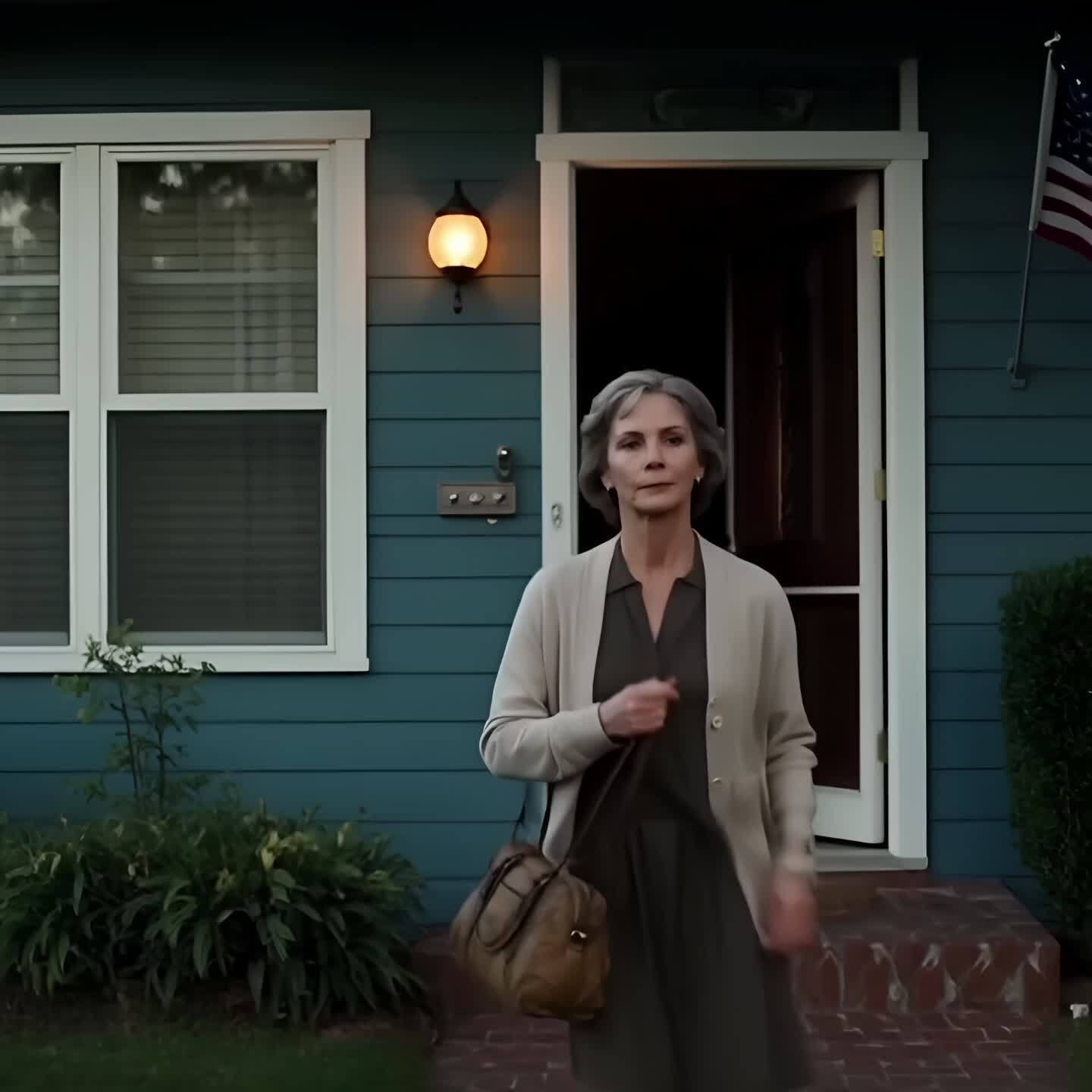
Marcus and Jessica sat on the opposite side of the courtroom with their lawyer—a sharp-looking woman in an expensive suit who seemed very confident.
Jessica wore a soft yellow sweater and almost no makeup.
Planned innocence.
Marcus wouldn’t look at me.
Judge Sarah Miller entered at 9:15 sharp.
She was in her sixties with steel-gray hair and an expression that suggested she’d seen every family lie there was.
“This is a petition for grandparent visitation,” she began, looking over her glasses at both sides. “Mrs. Henderson, you’re saying you’ve been denied access to your grandchildren without good reason. Mr. Henderson, you’re opposing this petition. Let’s begin.”
Thomas stood.
“Your honor, we will show that Mrs. Henderson had a real, loving relationship with her grandchildren for the first years of their lives and that this relationship was slowly ended without good reason. We have fifteen witnesses prepared to testify to Mrs. Henderson’s character and her bond with these children.”
Jessica’s lawyer, Miss Davis, stood next.
“Your honor, the other side will show that Mrs. Henderson repeatedly crossed boundaries, made the mother feel inadequate, and created tension in the home. The parents have every right to limit contact with anyone who disturbs their family peace—including a grandmother.”
The first witness was Linda from my support group.
She described seeing me with Emma at a playground four years ago—how patient I’d been teaching her to slide, how naturally I’d played with her.
Miss Davis questioned her.
“Miss Linda, you met Mrs. Henderson once, four years ago, at a playground. That hardly makes you able to judge her current relationship with these children, does it?”
“I know love when I see it,” Linda said firmly. “And I saw it that day.”
Robert spoke next.
He described the Marcus he’d known—friendly, social, connected—and the isolated man he’d become.
“Jessica doesn’t like him having friends she doesn’t approve of,” he said. “She’s cut him off from everyone who knew him before her.”
“Objection,” Miss Davis snapped. “The witness is speculating about my client’s motives.”
“Agreed,” Judge Miller said. “Stick to facts, Mr. Robert.”
“Fact,” Robert said. “Marcus used to call me every week. After he married Jessica, the calls stopped.
“Fact: I invited him to my birthday party last year. Jessica told me no. Marcus didn’t even know about it. I know because he mentioned wanting to see me on a weekend that was the same weekend as my party.”
The judge wrote something down.
Thomas called me to the stand.
I told the court about the births of my grandchildren.
The time I’d spent with them.
The sudden loss of contact.
The door closed in my face.
The seventy-two calls that showed panic the moment I became unreachable.
“Mrs. Henderson,” Thomas asked, “did you ever criticize Jessica’s parenting?”
“I offered help when asked. I never went against her decisions.”
“Did you show up without warning frequently?”
“That was the first and only time. I called weeks in advance for every other visit.”
Then Miss Davis stood.
“Mrs. Henderson, you admit you showed up at their home without warning.”
“Correct.”
“And your son told you to leave.”
“Yes.”
“But instead of respecting his wishes, you stayed in Florida, hired a lawyer, and began legal action against your own family.”
“I stayed because something was wrong,” I said. “A mother knows.”
“A mother knows,” Miss Davis repeated, dripping mockery. “Or a controlling woman can’t accept she’s no longer the center of her son’s life.”
“Objection,” Thomas said.
“Sustained,” Judge Miller said.
Miss Davis smiled.
“Mrs. Henderson, have you ever had treatment for anxiety or depression?”
My stomach dropped.
“I saw a counselor after my divorce thirty-two years ago.”
“That’s a yes or no.”
“Yes, but—”
“And you sometimes drink wine, correct?”
“Socially, yes.”
“How much would you say you drink in a week?”
Thomas was on his feet.
“This is irrelevant and prejudicial.”
“Your honor, it speaks to stability,” Miss Davis argued.
“I’ll allow it,” Judge Miller warned, “but tread carefully, counselor.”
“I have a glass of wine with dinner maybe once a week,” I said clearly. “I’ve never had a drinking problem.”
“But you were treated for mental health issues.”
“Counseling after a divorce isn’t a mental health issue,” I said. “It’s called being human.”
“No more questions.”
Then Jessica took the stand.
And I watched her perform.
She spoke softly, dabbed at her eyes, described me as too much, too critical.
She said I told her she was feeding Tyler wrong.
A complete lie.
“I tried to be patient,” she said, her voice trembling just enough to sound fragile. “But Carol made me feel like I wasn’t good enough. Every visit became a source of worry. I dreaded seeing her car pull up. Marcus noticed how stressed I was.”
“Mrs. Henderson, you say Carol was critical. Give specific examples. Dates. Exact words.”
“Well, I—”
“She had a tone,” Jessica said.
“A tone,” Thomas repeated. “Describe it.”
“It was judging. But it was three years ago. I don’t remember exact—”
“You remember the feeling,” Thomas said, “but you can’t recall what was actually said.”
Jessica’s calm cracked.
“She knows what she did.”
“Mrs. Henderson,” Thomas continued, “you called your mother-in-law seventy-two times the night she didn’t return home. Why?”
“I was worried about her safety.”
“Were you,” Thomas asked, “or were you worried about losing control?”
“Objection,” Miss Davis snapped.
“Sustained,” Judge Miller said. “Rephrase.”
“Mrs. Henderson,” Thomas said, “if you were genuinely concerned for Carol’s safety, why didn’t you call the police? Why didn’t you file a missing person report?”
Jessica blinked.
“I—we thought she’d come back.”
“You thought she’d come back,” Thomas said, “or you expected her to come back? Because there’s a difference between concern and control.”
Jessica’s face flushed.
“She’s manipulative,” Jessica said. “She can’t accept that Marcus chose me.”
“Chose you,” Thomas said, “or was isolated until you were the only voice left?”
“Your honor,” Miss Davis protested, “counsel is harassing my client.”
“Denied,” Judge Miller said. “Answer the question, Mrs. Henderson.”
Jessica’s mask broke.
“Marcus doesn’t need anyone else. I’m enough for him. His mother was controlling his whole life, and I freed him.”
The words hit the air like a dropped glass.
For a heartbeat, nobody moved.
Jessica stopped, realizing what she’d said.
The courtroom went silent.
Judge Miller looked up.
“You freed him from his mother.”
Jessica tried to recover.
“That’s not what I meant.”
“I think that’s exactly what you meant,” Judge Miller said quietly.
She removed her glasses and set them on the bench.
Slow.
Deliberate.
A judge preparing to cut through performance.
“I’ve presided over family court for nineteen years,” she said. “I’ve seen genuine concerns about grandparent interference, and I’ve seen what’s happening here: parental separation disguised as boundary setting.”
Jessica’s face went white.
Marcus shifted uncomfortably.
“Mrs. Jessica Henderson,” the judge continued, “your words revealed more than you intended. ‘I freed him’ is not the language of healthy boundaries. It’s the language of control.”
Miss Davis started to stand.
“Your honor—”
“I’m not finished, counselor,” Judge Miller said.
The tone shut down the room.
She turned to Marcus.
“Mr. Henderson, I watched you today. You barely looked at your mother while your wife described freeing you from her. You didn’t contradict your wife. You didn’t defend your mother against accusations that witnesses have disputed. Why?”
Marcus opened his mouth.
Closed it.
Looked at Jessica.
Even now.
Seeking permission.
“Because he can’t,” I said quietly.
Thomas touched my arm in warning, but the judge heard me.
“Mrs. Henderson,” Judge Miller said, “do you have something to add?”
“May I, your honor, briefly?”
I stood.
My legs were steady.
“My son was raised to think for himself,” I said. “To question. To stand up for what’s right. The man sitting across from me doesn’t do any of those things anymore. He checks his wife’s face before he answers. He’s lost touch with everyone who knew him before her.”
“That’s not a husband respecting his wife,” I said. “That’s a hostage situation.”
“That’s offensive,” Jessica burst out.
“You’re calling me a bad person because I won’t let you control our lives.”
“Controlling your lives would be showing up every day,” I said, “making demands, inserting myself into every decision. I did none of those things. I asked to visit my grandchildren. That’s not control. That’s love.”
“You’re manipulating this court,” Jessica snapped.
“Enough,” Judge Miller said.
Her gavel cracked.
“Mrs. Jessica Henderson, sit down now.”
Jessica sat, red with anger.
The judge turned to Marcus.