I stepped inside. The bell on the door tinkled softly. A girl barely out of high school looked up from behind the counter and gave me a genuine smile.
“Looking for something in particular?” she asked. “Yes,” I said. “Something that makes me feel like myself again.”
She didn’t laugh, just nodded and started showing me the racks.
I chose a navy wool coat with a subtle herringbone pattern and deep pockets. It wasn’t new, but it was warm and solid and well made. I tried it on.
It fit like it had been waiting for me. When I paid in cash, the girl wrapped it in tissue as if it were a gift. “You look sharp,” she said.
“Thank you,” I replied. “I feel sharp.”
That night, I walked home in that coat. It was just cold enough to justify it.
Joyce was on the porch with Franklin, sipping wine from a coffee mug. “Where you been?” she asked. “Bought a coat.”
She whistled.
“Look at you. Classy lady.”
We went inside and split a can of chili. The heater buzzed like it was clearing its throat.
The floor creaked under Joyce’s heavy slippers. It was noisy in the way old houses are, a kind of comforting noise—like a body you’ve lived in long enough to recognize by sound. Later, I stood in front of the mirror in my little room.
I turned left, then right. Ran my hand along the fabric of the coat. It wasn’t just clothing.
It was proof. I was still here—still standing, still capable of choosing something for myself. For once, no one else had a say.
The phone was still off. I hadn’t turned it on since I landed. I didn’t miss it.
I missed people sometimes, but not the kind who leave you by a fake potted plant at an airport and never look back. In the mornings, I worked. By noon, I walked.
In the evenings, I read or listened to Joyce’s rants about city politics. Every few days, I bought myself something small—a pair of wool socks, a crossword book, real tea instead of the dusty bag she kept in a tin above the fridge. I was beginning to understand that there was a life here.
Not a grand one, but a good one. And it belonged to me. By the second week, the ache in my feet began to fade.
My hands remembered how to carry plates without spilling. I could clear a four-top in under two minutes. Heather still didn’t say much, but one morning she brought me a cinnamon roll wrapped in foil.
“Too many,” she muttered, sliding it across the counter. “Take one.”
That was her way of saying I belonged. I settled into a rhythm.
Monday to Friday, I worked mornings. Saturday, I took long walks through unfamiliar neighborhoods. On Sunday, I let myself rest.
Joyce didn’t hover. She didn’t ask where I was going or why I was late. She just grunted when I came in and poured me a glass of something from a box.
One evening, she came home with a stack of mail. “Something for you,” she said, tossing an envelope onto the table. It had no return address—just my name in a familiar looping script.
I stared at it for a moment before opening it. Inside was a single sheet of lined paper. Grandma, where are you?
I didn’t need to see the name. I knew the handwriting. Kieran—my oldest grandchild, the only one who used to visit without being asked.
The only one who once spent an afternoon building a birdhouse with me, then painted it bright red and said, “This will be the coolest place in the whole yard.”
The letter was short, just a few lines. “Dad and Lisa are freaking out. They said you disappeared.
No one’s heard from you. I’ve been checking every day. I miss you.
Please let me know you’re okay.”
There was a phone number scribbled at the bottom. His new one. I sat with the letter in my lap, reading it twice.
Then I folded it carefully and tucked it into the drawer of my nightstand. I didn’t call. Not yet.
But something inside me softened. The next day, I stood at the cafe register counting change when Heather said, “You’ve got a visitor.”
I turned. A man in a gray windbreaker stood just inside the door, peering at the menu like it was written in another language.
He looked to be in his early eighties—neatly dressed, clean-shaven, a little unsteady on his feet. When he spotted me, he smiled. “You the one who knows how to make real coffee?” he asked.
I poured him a cup and set it down. “Cream and sugar?” I asked. “Just cream,” he said.
“Two splashes.”
We didn’t talk much at first. He drank slowly, folded the newspaper someone had left behind, and left a tip that was more generous than necessary. He came back the next day, and the day after that.
By Thursday, I learned his name was Arthur. Widowed. Two sons—one in Boston, one in Arizona.
We didn’t talk about them much. Mostly we discussed birds. He liked cardinals.
I liked finches. We both agreed crows were smarter than people gave them credit for. On Friday, he brought in a picture of his wife.
“Married forty-six years,” he said. “She made better coffee than this, but you come close.”
I smiled and refilled his cup. Later that evening, I stood by the window in my room, watching the wind stir the leaves outside.
I thought of Arthur’s hands wrapped around the mug, Kieran’s letter, the navy coat hanging on the back of my door. There were still gaps in this new life. Still quiet aches in the middle of the night.
But something was taking shape. Not a return to what I’d lost. A turning toward something I hadn’t known I could find.
It wasn’t forgiveness. It was freedom. The phone stayed off.
I kept it in the bottom drawer of my nightstand, wrapped in a clean handkerchief—like something sacred or dangerous. And I wasn’t yet sure which. Joyce didn’t ask.
She wasn’t the type. But one evening, while we shelled peas in the kitchen, she said, “You hiding or healing?”
I looked up from the colander. “Both,” I said.
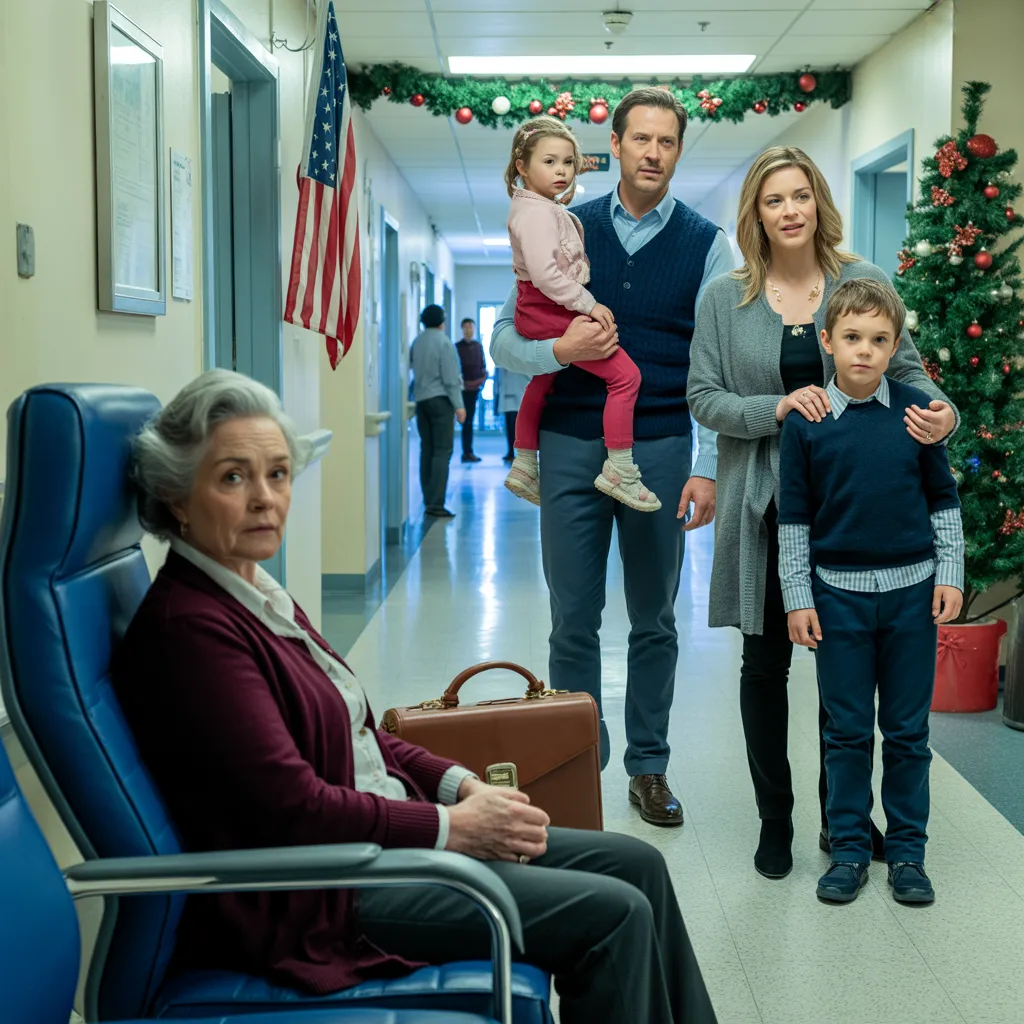
She nodded once and went back to the peas. It had been three weeks—three weeks since the airport, since the lounge chair with the broken armrest, since the cheap plastic water bottle Adam pressed into my hand before disappearing. Not a single call had come through.
Not one attempt that I’d seen to find me. Except Kieran. Every now and then I opened his letter.
The creases were softening from use. His handwriting reminded me of his mother—the same long loops, the same nervous tilt to the right. But I still didn’t call.
It wasn’t punishment. I wasn’t cruel. I just wasn’t ready to open the door they’d closed without blinking.
At the cafe, Heather didn’t say much, but she started saving me the crossword page from the morning paper. “You look like the kind of person who finishes what they start,” she said. Arthur came every day now—always at 9:10, always in that same gray jacket.
He didn’t flirt. Not exactly. But he lingered a little longer with each visit, told more stories, asked more questions—the kind of questions that aren’t nosy, just curious.
One morning, he asked, “How come a woman like you working the breakfast shift in a place like this?”
I looked at him over the rim of the coffee pot. “Because someone left me at an airport lounge like a bag they didn’t want to carry anymore.”
He blinked. “I’m sorry,” he said.
And meant it. “Don’t be,” I said. “I got on a better flight.”
That earned a soft laugh.
He reached for his cup, then paused. “You ever think of calling them?”
“Every day,” I said. “And every day I don’t.”
He didn’t press.
Just nodded and drank his coffee. When I got home that afternoon, Joyce was in the backyard spreading mulch. “Get any news?” she asked without looking up.
“No,” I said. And then, maybe because I needed to hear it out loud, I added, “But I think they know I’m gone now.”
That night, I turned the phone on. It buzzed like a dying insect.
Thirty-two missed calls. Eighteen messages. The oldest was from Lisa—a frantic voice message from the day of their flight.
“Martha, we thought you were in the bathroom. Please call us. We’re boarding.”
A lie.