“Isabella,” he said, fear creeping into his voice.
“What are you going to do?”
“I’m going to protect myself,” I said. “Since nobody else will.”
I put a ten‑dollar bill on the table for the coffee I hadn’t touched. “Goodbye, Dad.”
I walked out of the diner.
The sun was shining on the parking lot, but the world looked different. The colors were sharper. The edges were harder.
I felt a cold clarity settle over me. The sadness was gone. The guilt was gone.
They had crossed a line they couldn’t uncross. They had stolen my identity. They had betrayed me in the deepest way possible.
I wasn’t a daughter anymore. I wasn’t a sister. I was a victim of a crime.
And I was going to act like it. I got in my car and pulled out my phone. I didn’t call the bank yet.
I searched for a lawyer. Not a family lawyer. A fraud lawyer.
Mitchell & Associates, the website read. Specializing in financial fraud and identity theft. I pressed the call button.
“Mitchell & Associates, how can I help you?” a crisp voice answered. “My name is Isabella,” I said. My voice was steady.
“I need to report a major theft. And the perpetrators are my family.”
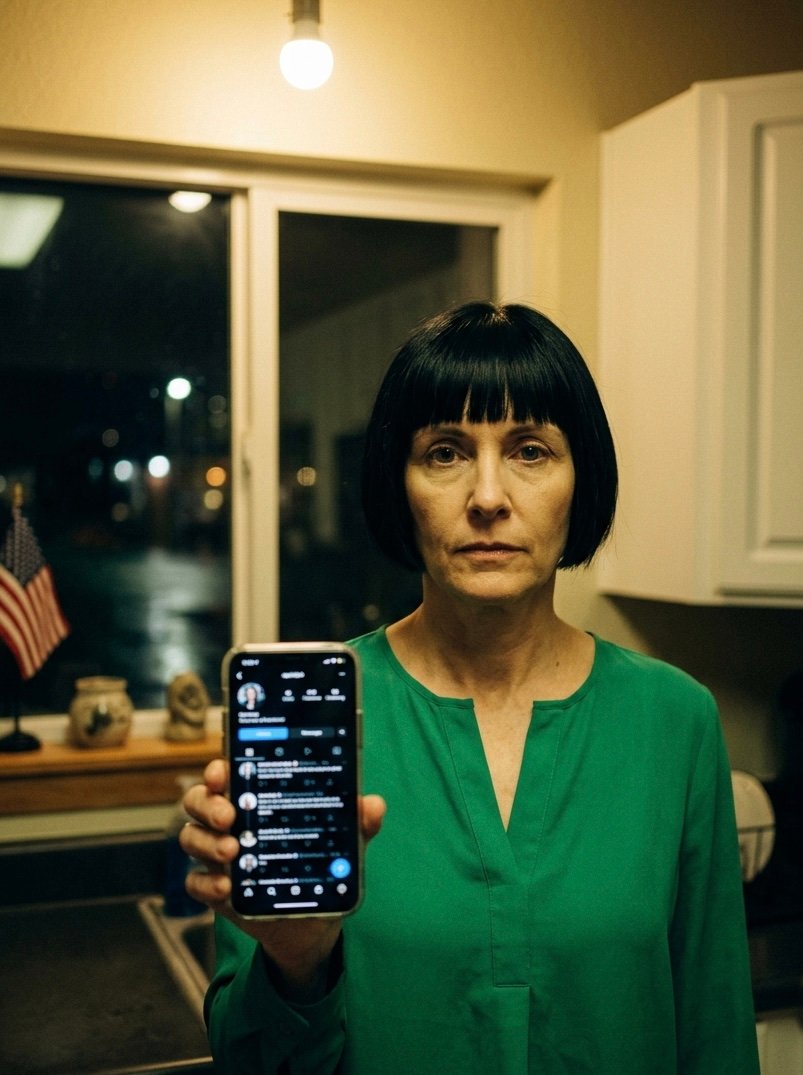
That was ten years ago. Now, standing in my small kitchen at two in the morning, watching the city through the glass while my phone buzzed on my bed, I knew exactly why they were calling.
The past doesn’t stay buried. Especially when you buried it under legal papers and court orders. They were in trouble again.
And they had remembered the one person who used to fix everything. But that version of me had died in a vinyl booth in a roadside diner the day my father told me my strength was the reason I’d been betrayed. The phone buzzed again.
Call number thirty‑seven. I walked back into the bedroom and picked it up. I didn’t swipe to answer.
I swiped to unlock. Because what Mom didn’t know was that I’d always had a plan. Ten years ago, after I walked out of that diner, I didn’t go home to cry.
I didn’t call my friends to vent. I went straight to the downtown office building where Mitchell & Associates rented a floor. Their office was the opposite of my family’s house.
Cool. Quiet. It smelled like paper and old wood and strong coffee.
No screaming. No guilt trips. Just facts.
Mr. Mitchell was a man in his sixties with wire‑rimmed glasses and a voice like gravel. He listened to my story without interrupting, his pen scratching across a yellow legal pad.
When I finished—when I told him about the forged signatures, the loans, the boutique that existed only in my sister’s fantasies—my throat ached. He didn’t tell me I was cruel. He didn’t say, But they’re your family.
He took off his glasses and cleaned them with a handkerchief. “Isabella,” he said calmly, “you have two choices.”
“Choice A: you accept this debt. You pay off the two hundred thousand dollars plus interest.
It will take you twenty years. You will likely never own a home. Your credit will be ruined.
And this is the important part—” he paused, putting his glasses back on, “—they will do it again. Because fraud is habit‑forming.”
I stared at my hands folded in my lap. “Choice B,” he continued.
“You file an affidavit of identity theft. You report the loans as fraudulent. The banks will launch an investigation.
They will pursue the people who took the money. You will be cleared. But your family will face criminal charges.”
I looked up.
My hands had stopped shaking. “Choice B,” I said. “Are you sure?” he asked.
“This isn’t something you can undo. Once the wheels turn, they turn.”
“I’m sure,” I said. The next few weeks were a blur of paperwork and signatures.
I didn’t act out of rage. I acted like a surgeon removing a tumor. It had to be precise.
If I let my emotions in, I might hesitate. I might answer the phone when Mom called. So I became a robot.
I closed every bank account I had ever shared with them. I opened new ones at a different bank in a different county. I put a fraud alert on my credit report so tight that even I had trouble opening a new card.
Mr. Mitchell and I built the file. We pulled the loan applications.
I saw my name signed in handwriting that looked almost like mine but with a loopy flourish at the end. My mother’s style. I saw fake employment letters Elina had typed up on her laptop.
I saw false addresses. False phone numbers. It was a mountain of lies.
Mr. Mitchell sent the initial letters to the banks. My client did not authorize these transactions.
The banks froze the funds immediately. The boutique lease was canceled before Elina could buy a single mannequin. The money dried up.
I waited for the explosion. It happened three days later. My phone blew up.
Hundreds of calls. Texts that swung wildly from begging to threatening. How could you do this?
They froze the account. Elina is crying. The police were asking questions.
I didn’t read them all. Mr. Mitchell advised me to change my number, so I did.
I got a new SIM card. I disconnected the old landline at my apartment. Then I moved.
New city. New apartment. New job at a different firm.
I didn’t tell anyone from my old life where I was going. I needed a complete quarantine. For the first year, I was terrified.
I checked the peephole before opening my door. I jumped every time someone knocked. I scanned the parking lot for my mother’s silver sedan.
But they never came. That’s the thing about users. They’re lazy.
They want the easy path. Tracking me down would have required effort. It would have required money.
They didn’t have either. So they let me go. Over the last ten years, I rebuilt my life.
I paid off my student loans. I bought my apartment—a small but sunlit condo with a view of the river and a dishwasher that felt like luxury. I traveled to Italy on a carefully budgeted vacation and ate pasta in Rome that didn’t come from a jar.
I made friends who liked me for me, not for what I could buy them. But I never fully relaxed. I kept the file.
The Mitchell file. A thick black binder containing copies of every forged document, every police report number, every letter from every bank confirming the fraud. I kept it in a fireproof safe bolted to the floor of my closet, behind my winter boots.
I checked my credit every month. I checked public records every year. From a distance, I watched my family like a scientist watching bacteria in a petri dish.
I saw when Elina got married. I saw when she got divorced six months later. I saw when Mom took out a second mortgage on the house.
I wasn’t angry anymore. I was just prepared. So tonight, when the phone rang thirty‑five times, I wasn’t panicked because I didn’t know what was happening.
I was panicked because I knew the time had finally come. The silence was over. The check had come due.
I stared at the phone in my hand. The screen had gone dark, but the little notification light still blinked, a steady blue pulse. Blink.
Blink. Blink. I took a deep breath, walked back into the bedroom, and sat on the edge of the bed.
I slid my thumb across the screen and hit “Call.”
It rang once. “Isabella.” Mom’s voice. It wasn’t the strong, commanding voice that used to fill our New Jersey house like thunder.
It was high, thin, and terrified. She sounded old. “Hello, Mother,” I said.
My own voice surprised me. It was calm. Steady.
It sounded like the voice of the woman I had become, not the girl who used to flinch at the sound of her footsteps. “Oh, thank God. Thank God you answered,” she babbled.
“We didn’t know if you still had this number. Well, we didn’t have it. Sarah found it.”
“I see,” I said.
“Isabella, you have to come home,” she blurted. “I am home,” I said. “I live here.”
“No, I mean you have to come here.
To the house. Tonight. Now.”
“It’s two‑thirty in the morning,” I said.
“I’m not going anywhere.”
“You don’t understand,” she shrieked. The thin veneer of politeness cracked instantly. “The police were here.
Detectives. They took Elina’s laptop. They froze her accounts again.