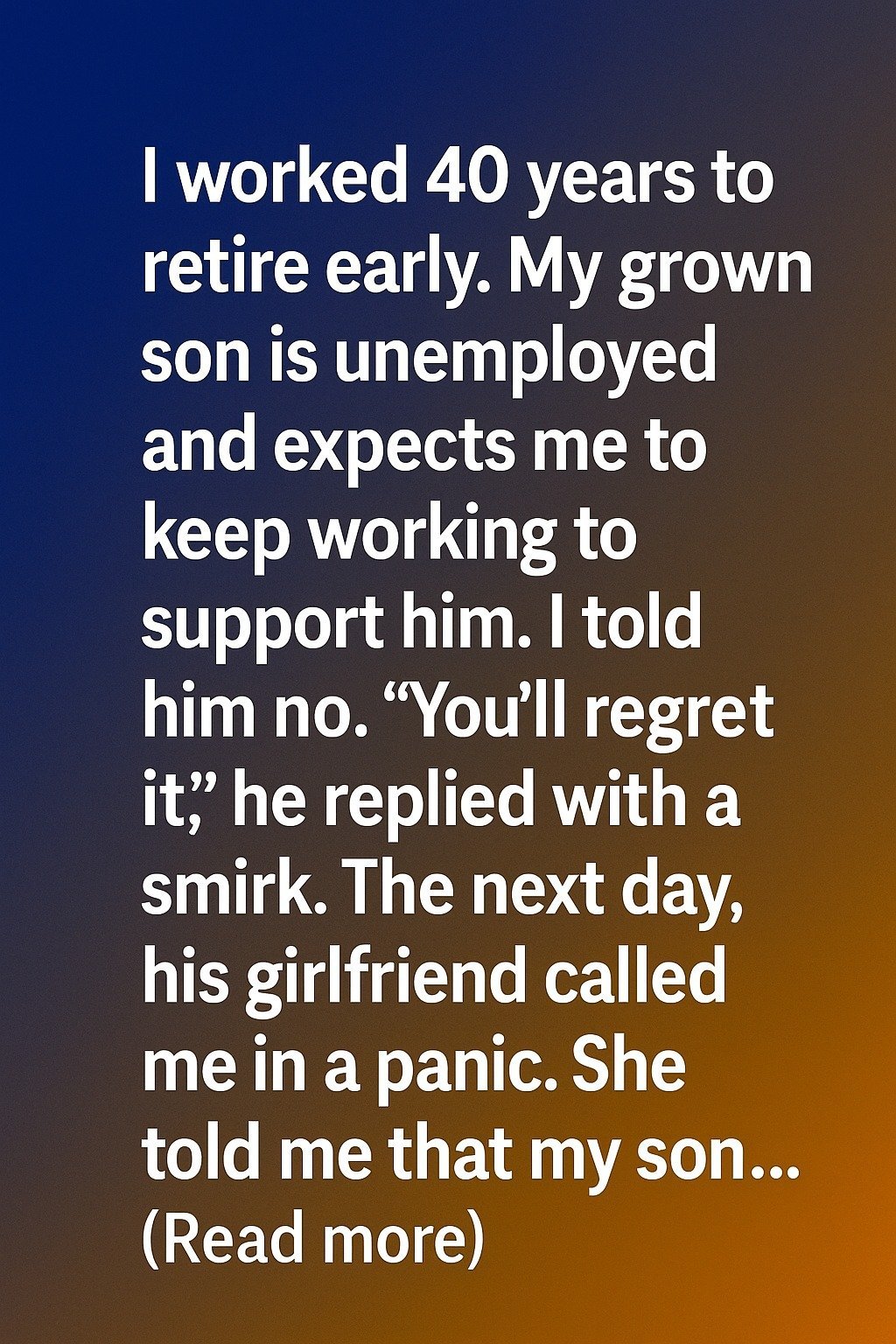
I spent 40 years working tirelessly, saving every penny, and planning carefully so I could retire early and finally enjoy some peace. When that day came, I was overjoyed. I imagined traveling, gardening, and spending time with my grandchildren without worrying about deadlines or alarm clocks.My grown son, however, had different expectations.
He had been struggling to find stable work, and instead of seeking new opportunities, he began to rely on me financially. One evening, he came to me and said, “You’ll need to keep working so you can help me out.”
I took a deep breath and gently told him, “I love you, but I’ve worked my whole life for this moment. I can’t keep working just to support you.
It’s time for you to take responsibility.”He didn’t take it well. With a smirk, he said, “You’ll regret this.” His words stung, but I stood firm, knowing this was necessary for both of us to grow.The very next day, his girlfriend called me in a panic. She explained that my son was feeling overwhelmed and discouraged.
He wasn’t angry—he was simply afraid of facing the world on his own. That’s when I realized his reaction came not from selfishness, but from fear of failure.I went to see him. We sat down and had a long, heartfelt conversation.
I reassured him that while I wouldn’t provide unlimited financial support, I would always be there emotionally and help him plan his next steps. Together, we made a plan for him to search for jobs and even consider some additional training to build his confidence.In the end, this difficult moment strengthened our relationship. I learned that saying “no” can be an act of love, especially when it encourages someone to stand on their own two feet.
And my son learned that independence doesn’t mean facing life alone—it just means taking the first brave step forward.