The Funny Moment That Eased My Fears at the Doctor’s Office

For as long as I can remember, the sterile, clinical environment of a doctor’s office—with its signature scent of rubbing alcohol, the harsh buzz of fluorescent lights, and the unmistakable, rhythmic crinkle of exam table paper—acted as a trigger for a very specific, deep-seated anxiety. It was a vulnerability I couldn’t quite shake, no matter how many times I told myself that the procedure was routine and necessary.

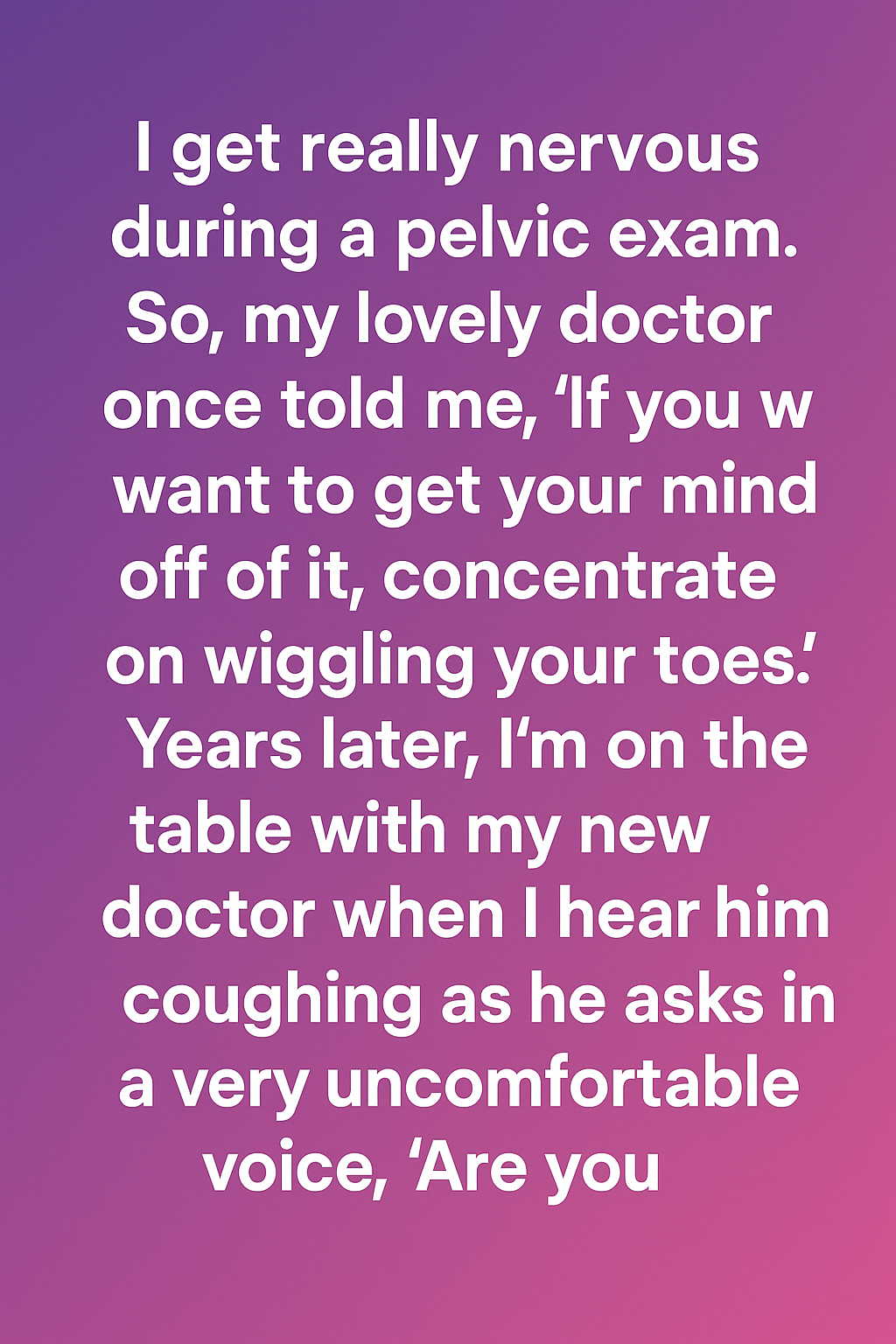
Years ago, during one of those particularly tense afternoons, I had a doctor who seemed to sense my discomfort before I even voiced it. She didn’t offer a platitude or rush through the process. Instead, she paused, looked at me with a steady, compassionate gaze, and offered a piece of advice that sounded almost comically simple.

“If you want to calm your mind when it feels like it’s racing,” she said, her smile warm and genuine, “focus entirely on wiggling your toes.”

It sounded absurd. In the middle of an uncomfortable medical procedure, how could a tiny, rhythmic movement of my feet possibly matter? But as I focused my concentration downward, forcing my toes to curl and uncurl, something shifted. It acted like a grounding rod, pulling my scattered, anxious thoughts away from the fear and back into the physical reality of my own body. It was a silent, internal act of agency.

Over the next few years, that “toe-wiggling trick” evolved from a medical coping mechanism into a portable survival kit. I used it during the terrifying minutes before a job interview, during a turbulent flight over the Atlantic, and even during an intense, high-stakes presentation at work. It became my quiet way of saying, I am here, I am grounded, and I am in control. I never imagined, however, that this strange little habit would eventually lead to a moment of unexpected, life-affirming connection.

The day came for an appointment with a new specialist. The office felt particularly clinical, and my old nerves returned with a vengeance. As I sat on the edge of the exam table, the familiar anxiety began to build, and without even thinking, I started the rhythmic dance of my toes inside my socks.

The room was heavy with silence. The doctor was focused on his notes, the only sound the scratching of his pen. Suddenly, he paused. I heard him clear his throat, a nervous, bewildered sound. He shifted his weight and asked in a tone that was half-amused, half-confused, “Um… I don’t mean to pry, but… are you… dancing?”

I looked down, realizing my feet were moving with a focused intensity I hadn’t realized was so visible. The sheer absurdity of the question caught me off guard, and I burst into a laugh that felt like it had been held in for years. The tension in the room, which had been thick enough to cut, simply evaporated. The doctor, seeing my reaction, dropped his formal posture and started to chuckle, too.

“I’m sorry!” I said, still laughing as I explained the advice my former doctor had given me all those years ago. “It’s my secret weapon against the exam table jitters.”

The doctor grinned, a look of genuine delight washing over his face. “That is actually brilliant,” he admitted, shaking his head. “I have so many patients who struggle with the exact same anxiety. I think I’m going to start sharing that trick.”

In that instant, the gap between the “doctor” and the “patient” bridged. We weren’t just two strangers in a sterile room; we were two people sharing a moment of human warmth. As I left the office, the lingering hum of anxiety was gone, replaced by a profound sense of gratitude.

It was a beautiful reminder that kindness has a way of traveling through time, leaping from person to person like a relay runner passing a baton. That first doctor didn’t just treat a patient; she gave me a gift that I eventually passed on to a new doctor, who would now pass it on to countless others. Sometimes, the most significant changes in our lives aren’t driven by grand, sweeping gestures, but by the smallest, most human acts of care. And that day, my wiggling toes didn’t just calm my nerves—they sparked a ripple effect of laughter, connection, and peace that followed me long after I walked out the door.

Related Posts

I came home ahead of schedule and discovered my daughter and husband behind a closed door — their revelation left me stunned

A splitting headache sent me home early, and I hoped for a quiet afternoon alone. But seeing my daughter, who should’ve been at school, and her stepdad…

After 10 Years of Marriage, One Quiet Decision Changed Everything

For ten long years, our life together had followed an incredibly quiet, predictable rhythm. It was the kind of existence that looked flawless from the outside—morning coffee…

When His Mother Attacked Our Family, My Husband’s Words Shook Everyone Into Silence

For nearly nine long years, my marriage had been subjected to the quiet, toxic undercurrent of family gossip. My husband, Mateo, is seven years younger than me….

My Husband Always Showered Before Me—One Morning, Something Felt Different

☕ The Ordinary Morning: When Love Asks Us to Listen Every morning in our home followed the exact same gentle rhythm. My husband would shower first while…

The Hardest Choice I Ever Made—And the Peace I Found Years Later

At seventeen years old, I found myself standing at a terrifying, isolated crossroads I had never once expected to face. In a matter of hours, my entire…

I Learned the Truth About My Son—But Love Never Changed

I still remember the exact Tuesday afternoon when the foundation of my entire reality shifted—quietly, unexpectedly, and without a single shred of warning. My son was eight…