I am sixty years old, and I live a quiet, highly organized life in a modest apartment in the heart of Valencia. I have always prided myself on keeping my daily routines steady and my personal finances meticulously tracked. Or at least, that was the peaceful fairy tale I desperately believed until a chaotic Tuesday afternoon changed the trajectory of my family forever.
I was standing in my kitchen, calmly chopping fresh vegetables for a pot of broth, when a sharp, furious scream suddenly echoed through the concrete stairwell. It pierced right through my heavy front door as if the oak frame were wide open.
“DARLING, YOUR MOTHER CHANGED THE PASSWORD! I CAN’T USE HER CREDIT CARD ANYMORE! WE ARE COMPLETELY STRANDED!”
It was Lucía—my daughter-in-law. Her voice was dripping with an aggressive, unbridled outrage, shouting down the hallway as if she had been personally, maliciously betrayed by an enemy—even though the bank account in question had never belonged to her for a single second. I slowly wiped my hands on a kitchen towel, took a deep, steadying breath, and stood perfectly still in the center of the room.
Two minutes later, a violent, heavy pounding shook my front door. These weren’t polite knocks; they were the angry, demanding thuds of a family ambush.
“Mom! Open the door right now!” My son Javier’s voice sounded dangerously strained before I even managed to reach the brass handle.
When I flung the door open, Javier’s face was flush red, a thick vein pulsing aggressively along the side of his neck. Lucía stood directly behind his shoulder, her eyes blazing with a calculated fury while she gripped her smartphone tightly against her chest like it was a piece of criminal evidence.
“You left us completely stranded!” Javier snapped, marching into my foyer without an invitation. “Right at the supermarket checkout line! The cashier declined your card in front of a dozen people. Lucía said you deliberately changed your online banking password without telling us. Do you have any idea how humiliating that was for my household?”
Lucía stepped forward, her chin tilted high. “I am just out here trying to manage the daily expenses of this family,” she said with a sharp, icy edge. “But your mother clearly enjoys micromanaging and controlling absolutely everything we do.”
Something old, heavy, and profoundly painful stirred deep inside my chest—not because of her rehearsed venom, but because of Javier. It broke my heart to see how instantly and seamlessly my own flesh and blood assumed I was the villain of the story. Even so, I kept my voice entirely stone-cold and steady.
“Come inside,” I said, stepping backward to clear the threshold. “Sit down at the dining table.”
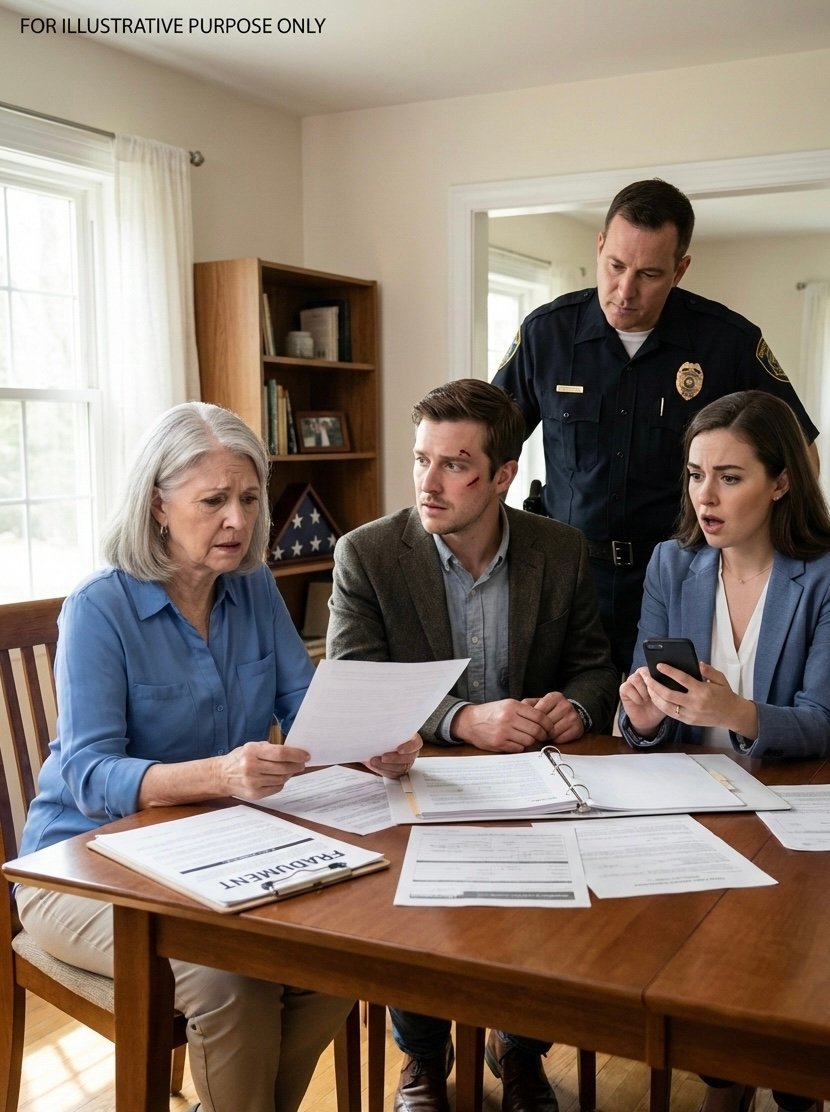
Javier stormed into my living room like a blind bull ready to charge a red cape. Lucía scanned the apartment, her eyes darting across my furniture as if she were actively searching for proof that I was secretly hoarding a hidden wealth from them. On the polished dining table lay a thick, gray folder I had carefully prepared that exact morning: printed official bank statements, flagged screenshots, and a highly detailed, chronological list of transactions with dates, times, and store locations.
“What on earth is this?” Javier asked, his brow furrowing as he glared at the paperwork.
“The financial information you completely refused to look at for weeks because you chose to protect her lies instead,” I replied calmly, pulling out a chair.
Lucía let out a short, dismissive laugh, rolling her eyes toward the ceiling. “Oh, please, Carmen. Are you seriously going to give us a boring lecture on budgeting right now?”
Without saying a word, I slid the first printed sheet across the table, my finger pointing directly at the highlighted figures: 689 euros spent at a high-end designer clothing store. 312 euros at a luxury restaurant downtown. Three massive cash withdrawals from specialized ATMs on the outskirts of Valencia—machines I had never visited in my entire life.
“I… I didn’t make these purchases,” Javier murmured, his arrogant confidence rapidly fading as his eyes locked onto the statements.
Lucía quickly folded her arms defensively. “Those are completely normal household expenses, Javier. And your mother explicitly said we could use her emergency card whenever we needed a hand.”
“I said the card was strictly reserved for medical emergencies,” I countered, my voice low and unyielding. “And I explicitly stated that you were required to ask for my permission before a single euro left that account.”
At that exact micro-second, the apartment doorbell rang. Once. Then again, louder.
“And before anyone starts shouting at me again,” I said quietly, leaning back in my chair, “you are about to meet the professionals who actually called me from the corporate branch this morning.”
The bell rang a third time, more insistently. For the very first time since entering my apartment, the smug, entitled smile completely vanished from Lucía’s face.
When I opened the front door, Nuria Calatayud was standing on my welcome mat wearing a sharp, dark business suit, a heavy leather folder tucked securely under her arm and a high-security corporate identification badge clipped to her jacket. Beside her stood a tall man with the composed, formidable look of a seasoned civil servant: Officer Marcos from the National Police.
They hadn’t arrived with flashing sirens or dramatic shouting. They had arrived with cold, legally binding documentation.
“Mrs. Carmen Roldán?” Nuria verified politely.
“Yes. Please come inside,” I replied, ushering them toward the dining area.
I could feel Javier’s entire body tense up behind me. Lucía remained completely frozen near the hallway corridor, her jaw locked tight, her mind clearly racing as she struggled to remember which specific version of the story she had spun for her husband. Nuria sat down at the head of the table and opened her folder with a professional finality.
“We detected a series of highly unusual, high-velocity fraudulent activities on your credit card linked directly to your retirement account,” Nuria explained, looking directly at me. “Yesterday afternoon, our automated security systems contacted you to confirm several large charges. Since you verified under recorded line that you did not authorize these transactions, we immediately activated our advanced fraud prevention protocol.”
“Fraud?” Javier stammered, looking bewildered.
Lucía quickly jumped into the conversation, her voice pitched high with a frantic, desperate panic. “This is just a massive family misunderstanding, officers! Carmen gave us full legal access to use the card. Now she’s just regretting her generosity and trying to fabricate a story to make us look like common criminals!”
Officer Marcos remained completely calm, his expression entirely unreadable as he placed a heavily stamped police report on top of the gray folder. “We are not tracking standard grocery expenses, ma’am. We are tracking a pattern of systematic identity theft.”
Javier looked at me, his eyes wide with a sudden, pleading uncertainty. “Mom… did you… did you give Lucía your secret PIN number?”
“No, Javier,” I replied, looking my son dead in the eye. “Never. I have never shared my personal identification codes with a soul.”
Lucía let out a sharp, hysterical laugh. “Well, someone must have easily guessed it then! Carmen writes everything down in those stupid little notebooks she keeps hidden in her bedroom drawers!”
Officer Marcos leaned forward, his voice dropping into a deep, authoritative tone that cut through her noise. “Ma’am, we are not here to discuss this woman’s handwriting habits. We are here because, in addition to these unauthorized ATM withdrawals, an official high-interest loan application was submitted in Mrs. Carmen’s legal name at a major electronics retailer. The application used her private national identity number and a forged digital signature.”
A cold, heavy shiver passed right through my spine—not out of surprise, but out of a devastating confirmation. I had already seen the pre-approval email notification hit my inbox at dawn.
“A loan?” Javier asked, utterly shocked, turning his head toward his wife.
Nuria turned the legal document around, her pen tapping a specific box labeled Authorized Secondary Party. Printed there in clear, bold digital ink was a single name: Lucía Martínez.
The silence that followed inside my living room was incredibly fragile and heavy, suffocating the air right out of our lungs.
“That doesn’t legally prove a single thing,” Lucía whispered weakly, her face turning a ghostly shade of white. “It must be some sort of technical mistake by the bank’s automated system.”
“It isn’t a mistake, Lucía,” I said slowly, my voice dripping with a profound disappointment. “That approval email arrived in my personal inbox. And the security recovery protocol for that ‘mistake’ includes your exact cell phone number.”