My son, Ethan, has always been fiercely, almost stubbornly independent. When he packed his bags for a prestigious out-of-state university last year, he made it clear he wanted to handle the world on his own terms. Our regular phone calls had fallen into a predictable, hurried routine. He would call while walking between lectures, talk a mile a minute about his busy schedule, casually mention he needed a little extra grocery money, and hang up within five minutes. I accepted it because that’s what raising a young man looks like—you teach them to fly, and then you watch them leave the nest.
But last Tuesday, the universe sent a signal flare right through my receiver.
It was a quiet, rainy afternoon when my phone buzzed. I answered, expecting his usual rushed, energetic greeting. Instead, the line was heavy with a thick, echoing silence.
“Hey, Mom,” he said softly.
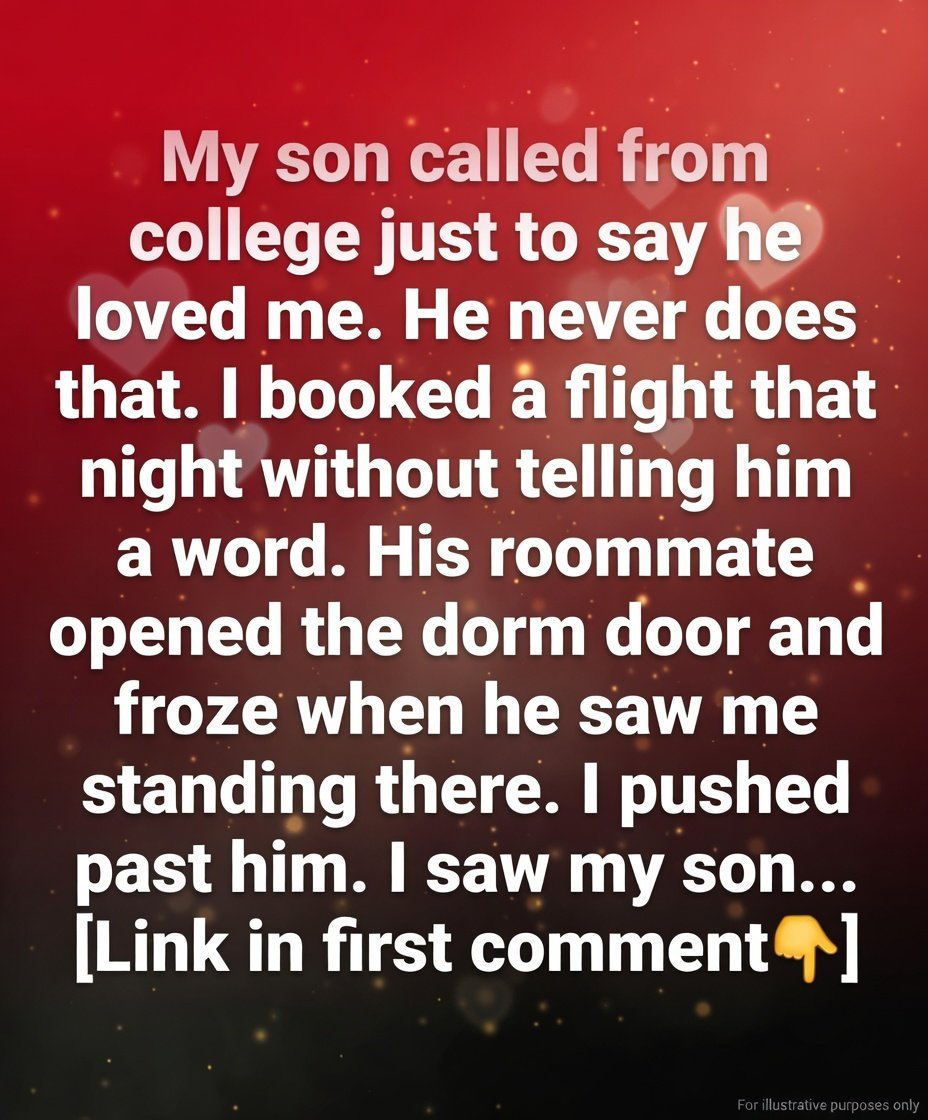
His voice sounded completely different. It was gentler, slower, and possessed a quiet, fragile warmth that I hadn’t heard since he was a little boy crawling into my bed during a thunderstorm. He didn’t complain about his grueling midterms. He didn’t ask for a transfer to his bank account. He didn’t mention his roommates. He just sat on the other end of the line, listening to the sound of my voice, and right before he hung up, he whispered: “I just wanted to call and tell you that I love you, Mom. Really.”
The line went dead. I sat at my kitchen table for thirty minutes, the cold phone still clutched tightly against my ear, my heart hammering a frantic rhythm against my ribs. For a boy who keeps his deep emotions locked behind a wall of pride, those three words didn’t feel like a sweet gesture. They felt like a desperate cry for help disguised as a goodbye.
I didn’t call him back to interrogate him, and I didn’t text him a list of worried questions. A mother’s intuition doesn’t ask for permission. I closed my laptop, looked at my husband, and booked a cross-country flight departing that exact evening.
The travel was a sleepless, agonizing blur. Every minute on that aircraft felt like a lifetime as my mind raced through the absolute worst-case scenarios. Was he in danger? Was he failing? Had someone broken his heart? I hadn’t told him I was coming because I didn’t want him to put up his usual defensive “I’m fine” wall.
The next morning, I stood outside his third-floor dorm room, my hands shaking as I knocked firmly on the wood. I prayed to God I was just an overreacting, paranoid mother.
The door swung open. It was his roommate, a young man who usually greeted me with a loud smile. But the moment his eyes landed on my face, his expression fell into a look of pure, immense relief. The silence inside that small room was heavy, suffocating, and dark. The blinds were completely drawn, blocking out the morning sun.
I stepped inside, and my soul shattered.
Ethan was sitting in the corner by the window, surrounded by a literal mountain of textbook papers, unwashed laundry, and half-eaten meals. He looked thinner, pasty, and more profoundly exhausted than I had ever seen a human being look. He was staring at a blank computer screen, his shoulders hunched as if he was trying to shield himself from the world.
The moment he turned his head and our eyes met, the shock on his face lasted for a split second—and then it completely melted into raw, unadulterated vulnerability. His lower lip began to tremble violently.
I didn’t utter a single word of lecture. I didn’t ask him why his room was a mess, and I didn’t demand answers. I simply dropped my suitcase, walked across the cluttered floor, and threw my arms around his neck, pulling his heavy head down onto my shoulder.
The moment my hands touched his back, the dam broke. Ethan collapsed into my arms, his chest heaving as he wept silently into my coat, his hands gripping my sleeves so tightly his knuckles turned stark white. I held him with every ounce of strength I possessed, feeling the crushing, invisible weight of the world finally lift off his young shoulders as he realized he didn’t have to carry the burden entirely alone anymore.
He hadn’t called me because of a sudden tragedy or a dramatic failure. He called because the unrelenting, suffocating pressure of “making it” in a hyper-competitive new life was slowly, quietly breaking him in half. He was drowning in anxiety, isolated in a crowded campus, and too proud to admit to his friends or his father that he was slipping beneath the surface. He had reached out to the only safe harbor he had left.
I stayed in that college town for three solid days. I didn’t try to “re-engineer” his life or force him into a doctor’s office immediately. I just cleaned his room, opened the windows to let the fresh air back in, cooked his favorite meals on a tiny hotplate, and sat on his bed and listened. We talked about the small things—his routines, the specific professors that stressed him out, and the heavy expectations he had been hiding behind his brave face.
By the third evening, as the sun went down over the campus trees, I looked across the table at him. The hollow, dead look in his eyes was entirely gone. The familiar, bright spark was back, his posture was steadier, and his face looked lighter, relaxed, and finally at absolute peace. He had a plan now, and more importantly, he knew his mother was standing right behind him.
As my flight soared back home into the clouds, I looked out the window and realized a profound truth. As parents, we so often wait for a massive, catastrophic crisis to finally show up and rescue the people we love. But sometimes, the most fiercely powerful thing a mother can do is simply trust her gut, pack a bag, and be there before they even have to ask.
Our job as mothers isn’t just to catch our children after they hit the jagged rocks below. Our ultimate calling is to stand in the storm, look them in the eyes, and remind them that no matter how loud, terrifying, or overwhelming this world gets, they always have a safe, unconditional home to return to.