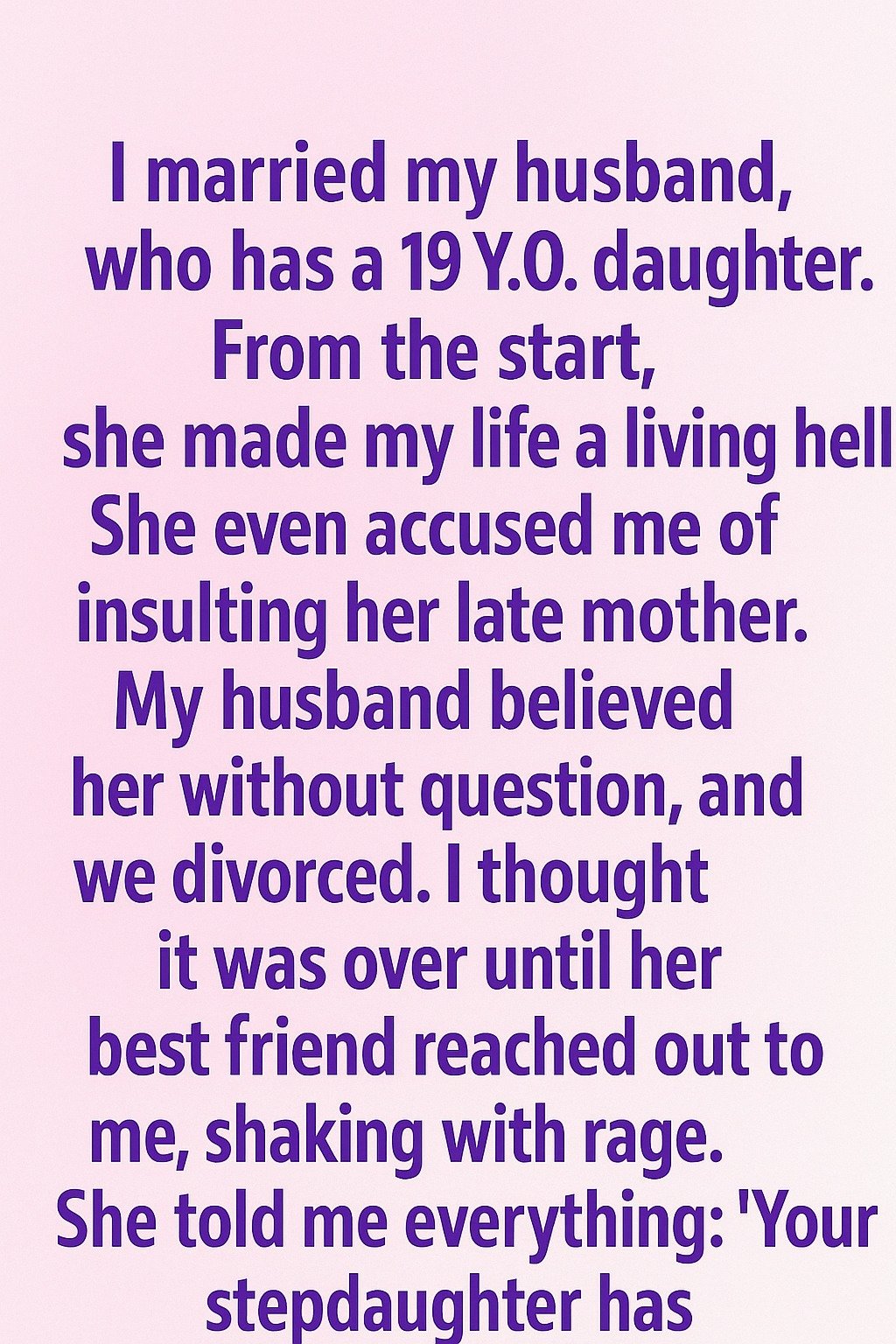
When I married my ex-husband, I knew blending a family wouldn’t be easy. He was a widower, and his 19-year-old daughter was still fiercely guarding the memory of her late mother. From the very first day I moved in, she made my life a living nightmare. She twisted my words, rejected every single home-cooked meal I made, and eventually leveled the ultimate accusation: she told her father I was actively disrespecting her mother’s memory.
It was a blatant lie, born out of pure malice. But my husband, completely blinded by his own grief and a terrifying fear of losing his daughter’s loyalty, didn’t ask questions. He believed her without hesitation. The constant suspicion, the cold shoulders, and the overwhelming sadness eventually broke our vows. Defeated, I packed my bags, and we quietly signed the divorce papers. I thought that painful chapter of my life was buried forever.
Four months later, I was sitting alone at a quiet coffee shop, finally starting to rebuild my life. My phone buzzed with a message from an unlisted number. It read: “Please, I need to see you. It’s about what happened with your husband and his daughter. I’m her best friend.”
My stomach twisted into knots. I almost deleted it, but curiosity won. An hour later, her best friend was sitting across from me, her hands trembling as she held a coffee cup. She couldn’t keep the secret anymore. She confessed everything. She told me that my former stepdaughter had broken down in tears the night before, admitting that she had entirely fabricated the lies about me out of jealousy and a desperate fear of being replaced in her father’s heart.
The very next day, my phone rang. It was my ex-husband. The anger and defensiveness that used to define his voice during our marriage were completely gone. He sounded hollow, exhausted, and deeply ashamed.
He didn’t make excuses. He admitted that his grief had clouded his vision and that his fear of his daughter running away had turned him into a husband who abandoned his wife when she needed him most. He begged for my forgiveness, his voice cracking over the line.
I took a long, deep breath. The months of crying myself to sleep, the public humiliation of a failed marriage, and the broken trust didn’t disappear. But as I listened to him, I realized that holding onto bitterness would only keep me chained to their tragedy. “I forgive you,” I told him softly. Not because our marriage was magically fixed, but because I refused to carry their weight anymore.
A month after that phone call, a handwritten letter arrived in my mailbox. The handwriting was uneven, the ink slightly smeared by what looked like dried tears. It was from his daughter. In her own words, she laid bare the raw agony of losing her mom, admitting how threatened she felt by my presence and how deeply she regretted destroying her father’s happiness.
I sat at my kitchen table and wrote her back, genuinely wishing her healing and strength on her journey through grief.
We didn’t try to get back together. We didn’t try to rebuild the shattered pieces of a broken household. But we did something much more powerful—we let go of the anger. Sometimes, life doesn’t give you a fairy-tale ending where everyone lives happily ever after under the same roof. Instead, it gives you the grace to walk away with your head held high, knowing that forgiveness is the ultimate form of peace.